

$2,500–$20,000: Vault Door Costs for U.S. Homeowners and RFQ Checklist
A residential vault door typically runs $3,000 to $5,000 for an entry-level model, $5,000 to $9,000 for mid-range configurations, and $9,000 or more for premium or custom-built doors, based on supply pricing alone. Installation, concrete work, and electrical hookups usually add several thousand dollars on top of that. The final number depends heavily on size, steel thickness, and lock type.
TL;DR:
- The cost of a vault door varies significantly with features: entry-level models start around $2,500 to $5,000, mid-range models range from $5,000 to $9,000, and premium or custom doors can exceed $9,000 and reach over $20,000.
- Steel thickness, composite layers, certified ratings, lock hardware complexity, size, swing direction, and custom finishes are key factors influencing the price differences between identical-looking doors.
- Installation and site work, including concrete coring, structural reinforcement, electrical wiring, and testing, can add several thousand dollars beyond the supply price, often representing the largest additional expense.
- When requesting quotes, homeowners should specify scope, resistance level, size, lock type, and finishing details, and compare line items rather than lump sums to avoid costly misunderstandings.
- Proper maintenance, such as lock servicing and occasional repairs, should be budgeted for over the door’s lifetime, with warranty support impacting overall long-term costs.
Table of Contents
- How Much Does a Vault Door Cost? Price Ranges at a Glance
- What Drives Vault Door Pricing Up or Down?
- What Does Vault Door Installation Cost Beyond the Door Itself?
- How Do You Get Accurate, Comparable Vault Door Quotes?
- Ways to Save on a Vault Door (Without Cutting Corners on Safety)
- What Does a Vault Door Cost Over Its Lifetime?
- Considerations When Buying a Vault Door
- Get a Vault Door Quote That Actually Matches Your Budget
- Sources
- FAQ
How Much Does a Vault Door Cost? Price Ranges at a Glance
Vault door pricing splits cleanly into three tiers, and knowing which one fits your situation before you start calling suppliers saves a lot of wasted phone time. These figures reflect factory-direct supply pricing, meaning the door and frame only, not installation.
Entry-level doors ($2,500 to $5,000) typically come in standard outswing configurations with basic mechanical locks, single-layer steel construction, and limited size options. Vendors regularly list supply-only prices in this range for standard 80-inch by 30-inch residential sizes. Some promotional or “value” configurations even dip under $3,000, though you should always confirm what’s actually included before getting excited about that number.
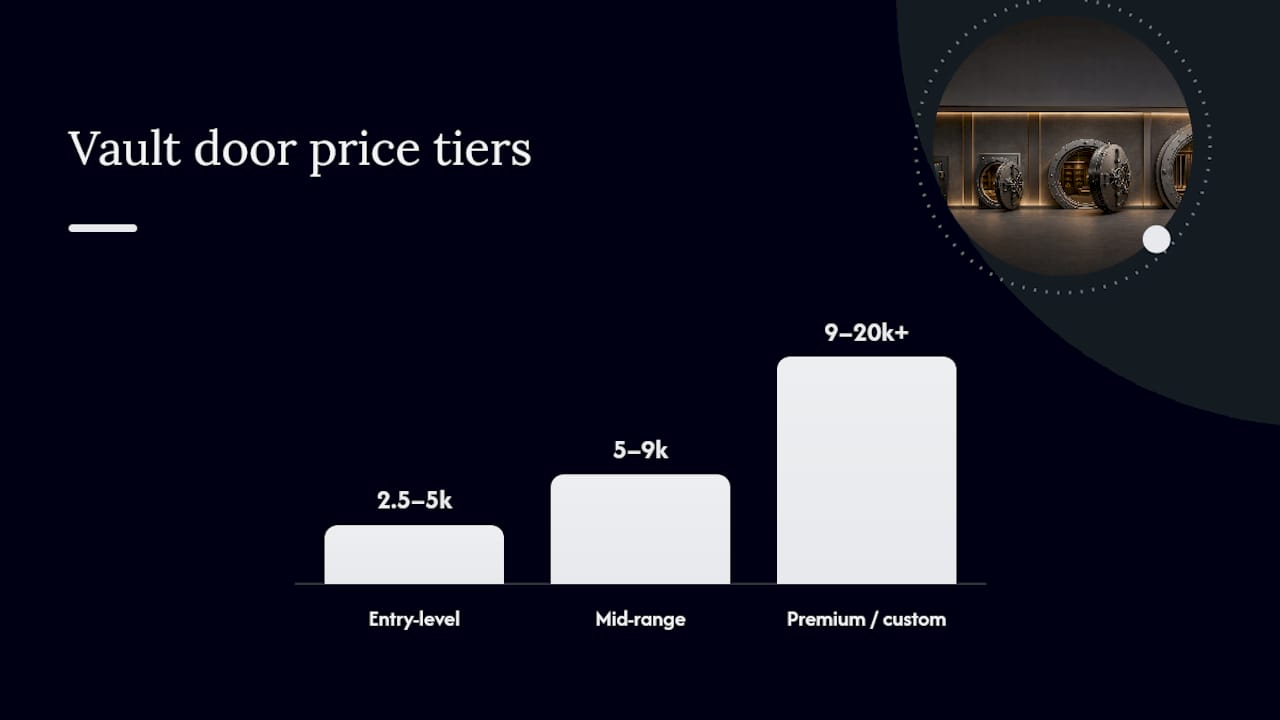
Mid-range doors ($5,000 to $9,000) add upgraded boltwork, better fire ratings, and often a choice between electronic and mechanical locks. VaultPro USA’s Professional Series illustrates this tier well: an 80-inch by 30-inch outswing door starts around $3,310, while a 96-inch by 40-inch outswing model runs closer to $6,300. Jump to the largest configurations and inswing versions, and pricing climbs toward $8,280 or higher.
Premium and custom doors ($9,000 and up) bring ballistic layers, motorized locking, and cladding that matches your home’s interior. Fortified Estate’s custom vault room doors commonly start around $9,000 and can exceed $20,000 depending on the ballistic package, automation, and finish work. VaultPro’s Elite Series shows the same pattern: an 80 inch by 30 inch outswing door starts near $4,945, while larger Elite configurations push toward $9,995 to $10,445.
| Tier | Supply Price Range | Typical Features |
|---|---|---|
| Entry-level | $2,500 to $5,000 | Standard sizes, mechanical locks, single-layer steel |
| Mid-range | $5,000 to $9,000 | Upgraded boltwork, better fire rating, electronic lock option |
| Premium/custom | $9,000 to $20,000+ | Ballistic layers, motorized locks, custom cladding |
Notice something in those numbers? Size doesn’t scale price in a straight line.
What Drives Vault Door Pricing Up or Down?
Two doors that look identical in a catalog photo can carry wildly different price tags, and the gap almost always comes down to five factors.
Steel thickness and composite layers sit at the top of the list. A basic single-plate door costs far less to manufacture than one with layered composite panels designed to resist drilling, torching, or ballistic impact. Adding even one additional layer of hardened material can shift a door from the entry tier into mid-range pricing.
Certified ratings versus fabricated construction matters more than most buyers realize. A door tested and rated by an independent lab costs more than a heavy fabricated door built to “look” secure without formal testing. You’re paying for verified performance, not just mass.
Lock hardware and boltwork complexity is where a lot of the premium tier’s price lives. A basic mechanical combination lock with a handful of bolts costs a fraction of what a UL-listed electronic lock with 10 or 12 heavy bolts and relocking devices costs. Multi-user electronic locks with audit trails push the price higher still.
Size, frame depth, and swing direction all matter more than they seem like they should. Outswing doors are generally cheaper than inswing, since inswing designs need extra engineering to keep the door from being pried at the hinge side. Larger openings and deeper frames also mean more steel and more precise fabrication, which is why cost increases faster than square footage would suggest.
Cosmetic cladding and custom finishes are the most optional item on this list and the easiest place to control cost. Wood veneer panels, custom paint, or a finish that matches existing cabinetry can add hundreds to thousands of dollars without improving security at all.
- Steel thickness and composite/ballistic layers
- Certified lab ratings versus uncertified fabrication
- Lock type and boltwork count
- Size, frame depth, and swing direction
- Cladding, paint, and custom finish work
Pro Tip: If budget is tight, spend on boltwork and lock rating before you spend on cosmetic cladding. A plain steel door with a certified lock protects you far better than a beautifully finished door with basic hardware.
What Does Vault Door Installation Cost Beyond the Door Itself?
The door price is only one line item on the real invoice. Installation and site work routinely add anywhere from a few hundred dollars to several thousand, and this is where budget surprises happen most often.
- Concrete coring and frame set. Cutting through existing concrete or block walls to set the frame, then grouting it in place, requires skilled labor and can run into the low thousands depending on wall thickness and access.
- Structural reinforcement. Older homes sometimes need additional framing or footing work to support a door that can weigh over 1,000 pounds, since heavier doors bring more complex logistics than lighter safe-room doors.
- Delivery and rigging. Curbside drop-off is cheap. Getting an 800 to 1,500 pound door up a flight of stairs or through a tight basement doorway with a crane or rigging equipment is not, and this single line item can rival the cost of concrete work.
- Electrical and low-voltage wiring. Electronic locks, keypad backlighting, and any tie-in to an alarm system need dedicated wiring, which usually means an electrician on-site for at least part of a day.
- Commissioning and acceptance testing. A proper installation ends with the installer testing the lock, boltwork, and door alignment, then documenting that everything performs as specified.
Vault door systems are best budgeted as a full security-engineering package rather than a single product purchase, and installation, anchoring, and commissioning commonly add thousands to the base door price. That gap between “ex works” pricing, meaning the door alone at the factory, and turnkey pricing, meaning delivered and fully installed, is the single biggest source of quote confusion homeowners run into. Always ask which one you’re looking at before comparing two numbers.
How Do You Get Accurate, Comparable Vault Door Quotes?
Comparing vault door quotes is nearly impossible unless every supplier is pricing the exact same scope. A $4,500 quote and a $7,000 quote mean nothing side by side if one includes installation and the other doesn’t.
Start by freezing your specifications before you contact anyone:
- Resistance level or certified rating you need
- Clear opening size (width and height)
- Swing direction (inswing or outswing)
- Lock type and number of users who need access
- Finish and cladding preference
Then request quotes broken into line items rather than one lump sum. Because supply price is only part of the total, installation, anchoring, and integration are frequent sources of mismatch between quotes that look comparable but aren’t.
- Door and frame supply price
- Delivery and handling (note crane or rigging separately)
- Installation labor, including concrete or framing work
- Electrical and low-voltage integration
- Commissioning, testing, and documentation
- Warranty terms and what triggers a service call
Ask directly about warranty length, whether spare parts are stocked domestically, and whether a technician can reach your property without a long-distance service charge. Also confirm your timeline and site-access assumptions in writing. A supplier who assumes ground-level access with a loading dock will quote differently than one told about a narrow basement stairwell, and that mismatch shows up as a change order later, not before.
Ways to Save on a Vault Door (Without Cutting Corners on Safety)
A few smart choices can trim a meaningful amount off your total cost without gutting the protection you’re actually paying for.
- Choose standard sizes. Off-the-shelf 80 inch by 30 inch or 96 inch by 40 inch doors avoid the custom fabrication surcharge that comes with odd dimensions.
- Start mechanical, upgrade later. A quality mechanical lock costs less upfront than electronic hardware, and most doors are designed so you can add an electronic lock down the road.
- Phase the project. Install the door and frame now, add cladding, alarm integration, or a second access method in a later budget cycle.
- Compare against lighter alternatives. A reinforced safe-room door or heavy-duty steel exterior door costs less than a true vault door, and might be enough depending on what you’re protecting. Our comparison of vault doors versus safe room doors walks through that trade-off in more detail.
Where you shouldn’t compromise is on the actual resistance rating for genuinely high-value contents like firearms, jewelry, or important documents. A budget door under $3,000 can be a smart value pick, but only after you’ve confirmed it includes a proper frame and realistic installation scope, not just the panel itself.
Pro Tip: Ask any supplier quoting a suspiciously low price exactly what “installation” includes. If the answer is vague, assume it means delivery to your driveway and nothing more.
What Does a Vault Door Cost Over Its Lifetime?
The purchase price is not the last check you’ll write. A vault door is largely maintenance-free compared to electronic security systems, but it isn’t zero-maintenance.
Mechanical locks generally need occasional professional servicing, lubrication, and periodic combination changes, which most homeowners handle for well under $200 a visit if they use a qualified locksmith or the door’s manufacturer network. Electronic locks add battery replacement and occasional firmware or keypad servicing, usually a smaller expense but a more frequent one.
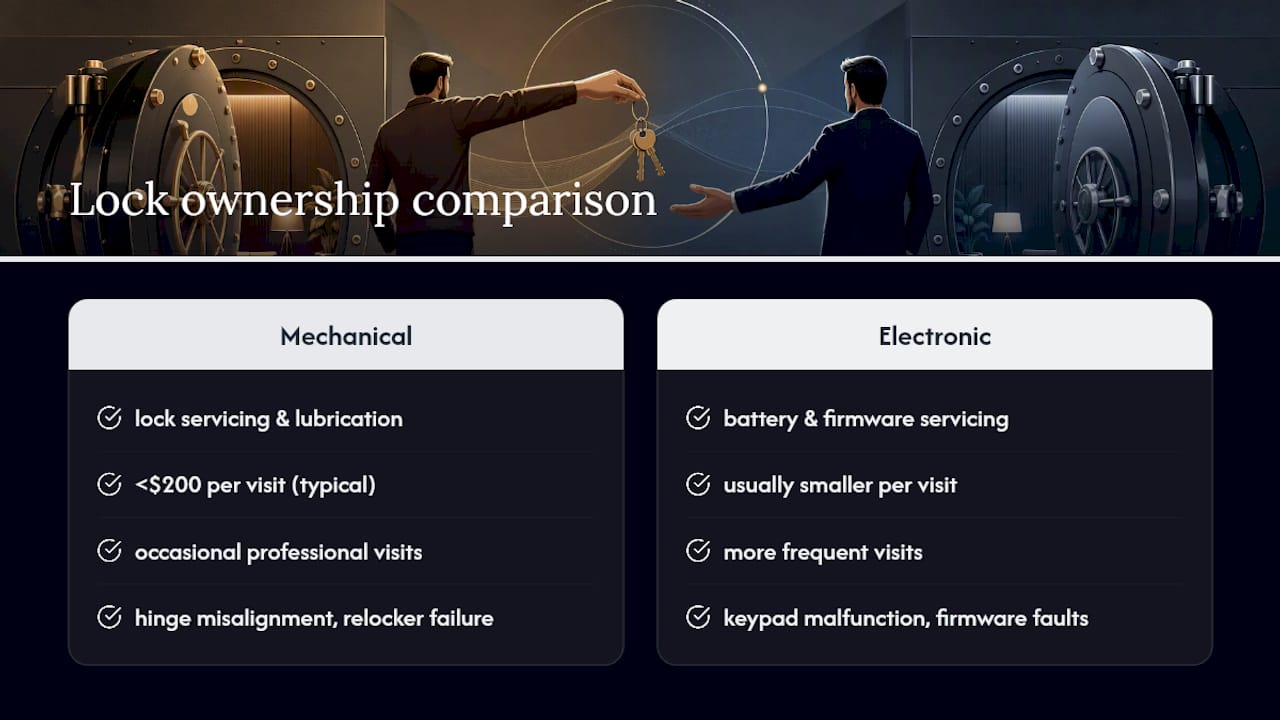
Repairs are rare on a well-installed door, but they happen. Hinge misalignment from a shifted frame, a failed relocking device after a break-in attempt, or a keypad malfunction are the most common service calls. Costs vary widely depending on whether parts need to be shipped or a technician needs to travel, which is exactly why warranty terms and local service availability matter as much as the sticker price when you’re comparing suppliers. A door with a strong warranty and accessible service network can cost more upfront and still work out cheaper over a decade than a bargain door with no local support.
Considerations When Buying a Vault Door
Most homeowners shopping for a vault door make the same mistake: they compare sticker prices without confirming scope, then feel blindsided when installation adds thousands they didn’t budget for. We’d rather see you compare fully-loaded numbers from the start.
Our installation guides and product listings for American Security vault doors, including the ProFit and VD8030BF models, exist because the door itself is only half the decision. The other half is who backs it once it’s in your wall.
Turnkey service can cost more than a bare supply price, and it is often worth considering. A local installer who can source parts and answer a service call years later may be preferable to a marginally cheaper door with no support behind it.
— Safes and Security Solutions
Get a Vault Door Quote That Actually Matches Your Budget
This provider offers a streamlined option to compare vault door options alongside safes, fire-resistant filing cabinets, and security systems commonly sought by homeowners, with free shipping within the continental U.S.
If a full vault door isn’t your immediate need, our Gardall Matte Finish Safes offer a strong middle step between a basic lockbox and a permanent installed door, and they ship the same way. For jewelry specifically, the Gardall JS1718-W-C Jewelry Safe with velvet-lined drawers is worth a look before you commit to a full vault build-out. And if fire protection for documents or firearms is the priority, the American Security UL1511 UL Listed 2 Hour Home Fire Safe is UL-rated and ready to ship now.
Browse current vault door inventory and safe selections, and request pricing details directly through the vendor’s site to obtain numbers tailored to specific home requirements rather than generic estimates.
Sources
The price ranges cited here draw from factory-direct pricing tables at VaultPro USA’s Professional Series and Elite Series, custom-door estimates from Fortified Estate, and installed-system guidance from SectorSource. For frame and interior door trade-offs, One Day Doors & Closets offers useful general guidance on finish and installation considerations.
FAQ
How much does a vault door cost?
A residential vault door typically costs $2,500 to $5,000 for entry-level models, $5,000 to $9,000 for mid-range doors, and $9,000 or more for premium or custom builds, based on factory-direct supply pricing. Installation and site work usually add several thousand dollars beyond that supply price.
What is the typical cost of a bulletproof door?
Ballistic-rated vault doors sit at the premium end of the market, generally starting around $9,000 and sometimes exceeding $20,000 depending on the ballistic layer thickness and additional features like motorized locking. The exact price depends on the certified protection level and door size.
How much is a Fort Knox vault door?
Pricing on branded vault doors varies by dealer and configuration, and current prices are best confirmed directly with the seller rather than quoted generically. As a general benchmark, comparable heavy-duty residential vault doors from factory-direct manufacturers run from roughly $5,000 to $9,995 depending on size and lock type.
How much is a bank vault door worth?
Commercial bank vault doors are engineered to a different standard than residential doors, with far heavier steel, certified ratings, and complex boltwork, and they routinely cost tens of thousands of dollars new. Reclaimed or antique bank vault doors sold for residential use vary widely in price based on condition, size, and collector demand rather than following a standard pricing table.
Does the vault door price include installation?
No. Most published vault door prices, including factory-direct pricing, cover the door and frame only. Concrete work, delivery, rigging, electrical hookups, and commissioning are typically quoted separately and can add thousands more to the total.