

When a Safe Relocker Fires: What Owners and Technicians Should Do
A safe relocker is a mechanical or thermal backup device that permanently deadlocks the boltwork the moment someone attacks the primary lock. It buys time by turning a defeated lock into a jammed one, but that same design means a fired relocker almost always requires a trained safe technician to open. If yours has triggered, don’t force the door: treat it as a service call, not a DIY project.
TL;DR:
- Relockers, whether internal or external, are activated by violent attacks, such as drilling, punch, or thermal assaults, and permanently deadlock the safe’s boltwork.
- Glass relockers can be triggered by impactful shocks during transport, requiring notification of a technician before moving the safe to prevent accidental firing.
- After a relocker fires, repairs involve precise diagnostics and replacement of damaged parts, with photographs and detailed reports needed for insurance claims.
- A relocker significantly delays an intruder but must be paired with other layered defenses like hardplate and quality locking mechanisms for effective security.
- Proper installation, compatibility checks, and professional service are critical to avoid damage, accidental firing, or lockout during maintenance or relocations.
Table of Contents
- What a Relocker Is and Why Safes Use One
- RLT vs. RLD: The Two Relocker Families
- What Sets Off a Relocker and What Happens Next
- Installing a Relocker: What Technicians Need to Check
- Moving a Safe Without Accidentally Firing the Relocker
- What Happens When a Relocker Fires: Repair and Recovery
- How Much Protection Does a Relocker Actually Add?
- How Safes and Security Solutions Helps You Handle Relockers
- Safes Built for Relocker-Ready Boltwork
- Sources
- FAQ
What a Relocker Is and Why Safes Use One
A relocker exists for one reason: to keep a safe locked even after the primary lock has been beaten. Manufacturers classify these devices into two basic families, internal relock triggers and external relocking devices, and both do the same job through different hardware.
A normal bolt retracts when the lock turns correctly. A relocker doesn’t care whether the combination was right. It cares whether something violent happened to the lock body, the cover plate, or the boltwork itself. If it detects that kind of trauma, it fires a secondary bolt or pin that jams the boltwork in place, independent of whatever the main lock is doing.
That distinction matters for a few reasons manufacturers build around:
- It forces an attacker who has already beaten the primary lock to start over with a second, often harder, entry method.
- It slows down drill attacks and punch attacks that would otherwise open the door in minutes.
- It leaves physical evidence that the safe was tampered with, which matters for insurance claims and law enforcement reports.
Champion Safe Co. and other manufacturers group relockers with hardplate and inner door steel as part of a layered door defense system, not a standalone feature.
RLT vs. RLD: The Two Relocker Families
Every relocker you’ll encounter falls into one of two categories, and the difference comes down to where the device lives and what sets it off.
- Internal relock triggers (RLT) sit inside or on the back of the lock body itself. A blow strong enough to separate the lock’s back cover releases a spring-loaded trigger piece that drives into the bolt, deadlocking it in place. These are common on mechanical combination locks because the lock body is a natural point of attack.
- External relocking devices (RLD) mount separately from the lock, usually to the boltwork or the interior of the door itself. They respond to broader trauma to the door rather than just the lock body, which makes them useful against attacks that bypass the lock entirely.
Within those two families, two specific mechanisms show up again and again. Glass relockers use a sheet of tempered glass that holds back spring-loaded bolts under tension; break the glass and those bolts fire instantly. Thermal relockers rely on a fusible link, a small soldered joint that separates once it hits a specific temperature, releasing bolts as a defense against torch and thermal lance attacks. Both are inexpensive, reliable, and almost impossible to defeat without specialized knowledge of that specific safe’s internals.
What Sets Off a Relocker and What Happens Next
Relockers fire in response to specific, usually violent, attack signatures. Drilling near the lock, punch attacks aimed at knocking the lock spindle loose, and hammer strikes that crack or separate the lock’s back cover are the most common triggers for internal relock triggers. Torch and thermal lance attacks heat the boltwork or lock area enough to melt a fusible link, firing thermal relockers before the attacker gets through the wall of the safe.
Glass relockers respond to a different kind of stress. Any impact sharp enough to crack the tempered glass plate releases the bolts it was holding back, regardless of whether the attack was aimed at the lock or somewhere else on the door.
Once triggered, the immediate result is the same across types: the boltwork locks solid, independent of the main lock, and stays that way.
- Drilling or punch attacks that expose or crack the lock’s back cover trip internal relock triggers.
- Hammer strikes that collapse the lock cover do the same, even without full penetration.
- Torch or thermal lance heat melts fusible links in thermal relockers.
- Sharp impacts crack the glass plate in glass relockers, releasing spring bolts instantly.
- A fired relocker often leaves visible damage or a distinct jammed feel, both useful as tamper evidence for insurers.
Installing a Relocker: What Technicians Need to Check
Relocker placement isn’t universal, and getting it wrong causes more service calls than the devices themselves. Most internal relock triggers attach to the back cover of the lock body, while external relocking devices mount to the boltwork or the interior door skin, depending on the model and manufacturer.
A few things installers should confirm before final assembly:
- Screw engagement depth matters. Too shallow and the trigger won’t seat correctly under stress; too deep and it can interfere with normal bolt travel.
- Mechanical locks and electronic locks have different back-cover geometries, so a relocker rated for one won’t always bolt onto the other without a compatibility check.
- Alignment with the boltwork channel needs verification before the door is closed for the first time, not after.
- Manufacturer documentation, including the exact model number and torque specs, should be kept with the safe’s service records.
Pro Tip: Always request the manufacturer’s relocker compatibility sheet before swapping a lock on an older safe. A lock upgrade that ignores the original relocker mounting points is one of the most common causes of accidental lockouts we see reported.
Checking lock type compatibility early also avoids a costly rework, especially for anyone comparing mechanical and electronic lock options before an installation.
Moving a Safe Without Accidentally Firing the Relocker
Glass relockers are the biggest transport risk in the entire safe security category. The tempered glass plate holds bolts under spring tension, and a hard bump, drop, or even aggressive tilting during a move can crack that glass and fire the device with zero warning.
- Notify the manufacturer or a qualified technician before any move involving a safe with a glass relocker.
- Ask whether the relocker can be temporarily secured or disabled per the manufacturer’s procedure, and use movers experienced specifically with safes, not general furniture movers.
- If firing happens anyway, stop moving the safe immediately and call a technician rather than attempting to reopen it yourself.
What Happens When a Relocker Fires: Repair and Recovery
A fired relocker is a technician job, full stop. There’s no combination reset or reset switch involved. The technician’s process usually starts with diagnosis, identifying exactly which component fired and how, since that determines whether the fix is a selective drill point or a full component swap.
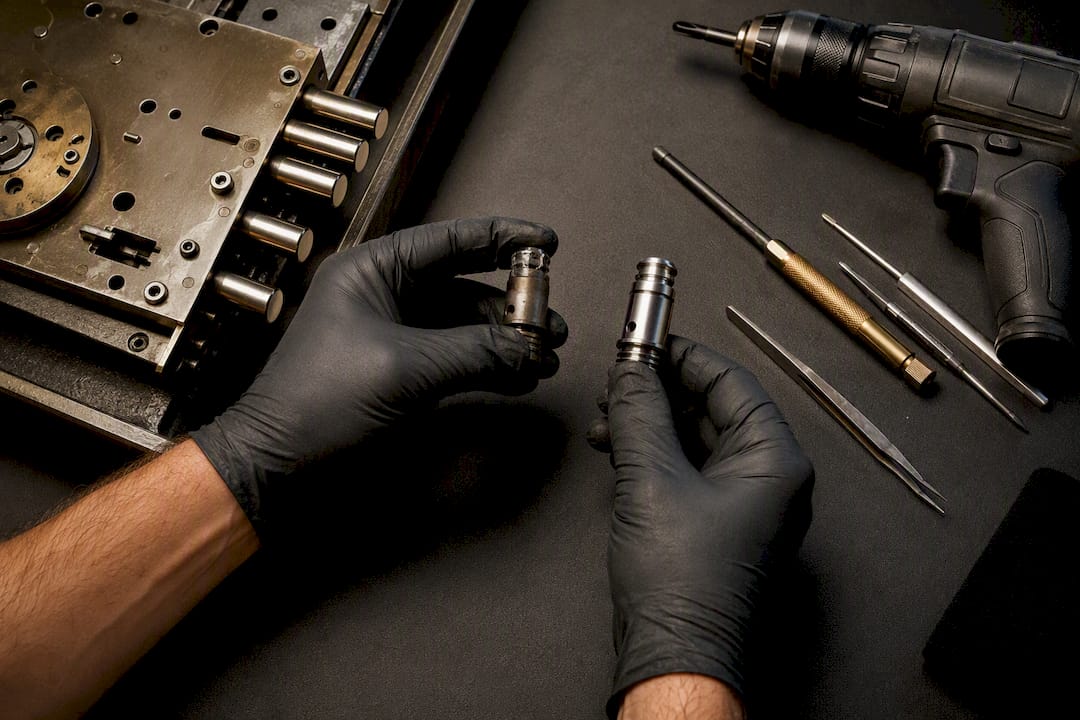
From there, experienced technicians use selective entry techniques to reach the fired trigger or bolt without unnecessary drilling elsewhere on the door, replace the damaged relocker parts, reassemble, and test the lock through several open and close cycles before handing the safe back.
If the firing happened during an actual break-in attempt, a few extra steps protect you financially:
- Photograph the damage before any repair work begins.
- Keep every service receipt and diagnostic report from the technician.
- Request a written repair report that specifically documents the relocker firing, since insurers often ask for this as proof of forced entry.
How Much Protection Does a Relocker Actually Add?
A relocker adds real delay, but it isn’t a standalone defense. Its whole job is forcing an attacker who has already beaten the primary lock into a second, harder problem, and that increased time and complexity is the entire point of the device.
Relockers work best paired with hardplate around the lock, quality boltwork, and a properly rated lock, not as a substitute for any of them.
Layered defense in practice: manufacturers publish relockers alongside hardplate and inner door steel as parts of the same door defense system, never as a single fix for burglary resistance.
A few realistic limits worth knowing:
- Nuisance firing can happen if a thermal relocker’s fusible link is specified for too low a temperature.
- Glass relockers add transport fragility that owners have to plan around.
- Once fired, the safe is inaccessible to the owner until a technician intervenes, which is the tradeoff for the added security.
- High-risk storage (cash rooms, pharmacy safes, jewelry safes) benefits most from specifying relockers explicitly at purchase time rather than as an afterthought.
How Safes and Security Solutions Helps You Handle Relockers
Some providers carry burglary-resistant safes built with relocker-ready boltwork and publish technical resources to help owners understand what they’re buying before installation day. If your relocker has already fired or you’re planning an installation, the right move is contacting a certified safe technician for hands-on service, not attempting a fix yourself. Teams can assist with model compatibility questions and direct customers to technicians in their area when a referral is needed.
— Safes and Security Solutions
Safes Built for Relocker-Ready Boltwork
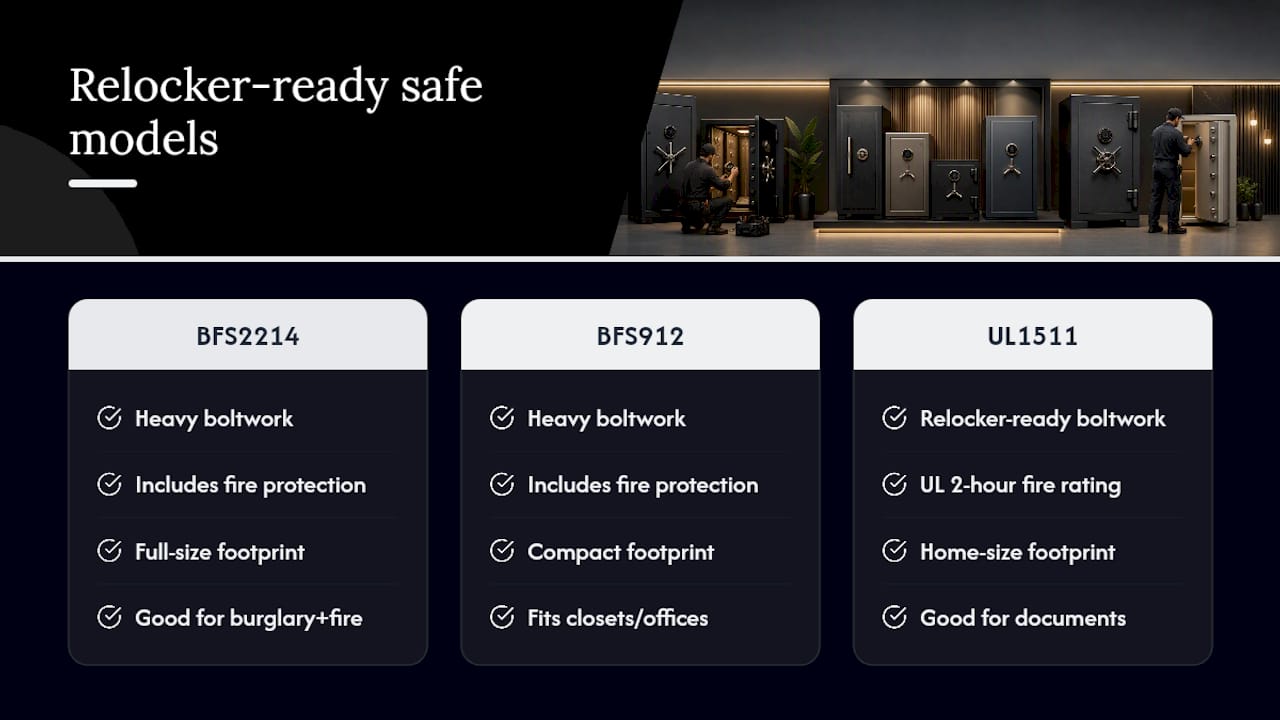
If you’re shopping for a safe specifically because you want relocker protection built in from the start, a few models stand out for how their boltwork and lock integration is designed. The American Security BFS2214 Burglary and Fire Safe pairs heavy boltwork with fire protection, a solid pick for anyone who wants both burglary delay and heat resistance in one unit. For a smaller footprint without giving up the same boltwork philosophy, the American Security BFS912 Burglary and Fire Safe fits tighter spaces like closets or home offices. If fire rating matters more than burglary rating for your situation, such as protecting documents rather than cash or jewelry, the American Security UL1511 UL Listed 2 Hour Home Fire Safe is worth a look.
Before you buy, request the technical spec sheet for whichever model you’re considering and confirm the exact relocker configuration with a sales representative. If you already own a safe and just need installation or post-firing service scheduled, reach out through Safes and Security Direct to get connected with the right next step.
Sources
- Relocker — Wikipedia
- Relocker — LockWiki
- Relock Devices on Safes: Internal Relockers — Hoogerhyde Safe & Lock
FAQ
What Is the Lock on a Safe Called?
The primary mechanism is usually called a combination lock or electronic keypad lock, while the backup device that deadlocks the safe on attack is the relocker, either an internal relock trigger or an external relocking device.
What Are the Common Problems With Safe Locks?
The most frequent issues are worn combination dials, dead batteries in electronic locks, and accidental relocker firing from impact damage during moves or forced-entry attempts, all of which typically require a certified technician to resolve.
How Do You Open a Safe Lock if You Forgot the Code?
You need a certified safe technician, since forcing the lock risks triggering the relocker and permanently deadlocking the boltwork, turning a simple lockout into a drilling job.
What Is the Best Safe Lock?
There’s no single best option since it depends on use case, but UL-rated mechanical and electronic locks paired with a properly specified relocker, like those found on Safes and Security Solutions’s burglary-resistant safes, give the strongest combination of resistance and tamper evidence.