

Why Use Smart Shelf Security: A 2026 Retail Guide
TL;DR:
- Smart shelf security combines sensors and AI to monitor inventory, prevent theft, and ensure accurate stock counts. Proper implementation and integration with existing systems improve inventory accuracy, staff efficiency, and customer satisfaction. Focus on high-value zones, pilot tests with clear goals, and disciplined deployment for the best return on investment.
Smart shelf security is the practice of combining weight sensors, RFID tags, and AI-driven analytics to monitor inventory continuously, detect theft in real time, and maintain accurate stock counts without manual intervention. Retailers and warehouse managers face a problem that traditional methods simply cannot solve at scale. Global losses from out-of-stock events reach an estimated $1.2 trillion annually. That number reflects not just theft but also the compounding cost of empty shelves, missed sales, and wasted labor. Understanding why use smart shelf security starts with recognizing that the technology shifts loss prevention from reactive to proactive, giving operations teams the data they need before a problem becomes a loss.
Why use smart shelf security: the technology explained
Smart shelf security works by embedding sensors directly into shelving units and connecting them to a central analytics platform. Each sensor type captures a different signal, and together they build a complete picture of shelf activity.
The core sensor types used in modern systems include:
- Weight sensors: Detect changes in shelf load down to the gram. A product removed without a corresponding sale triggers an immediate alert.
- RFID tags: Track individual items by unique identifier, recording every movement from shelf to checkout or exit.
- Computer vision: Cameras mounted above or within shelving units identify product removal, misplacement, and suspicious behavior patterns.
- Pressure mats and proximity sensors: Used in high-value display cases to detect unauthorized access.
The data from these sensors feeds into an AI layer that distinguishes normal shopping behavior from theft or inventory errors. A customer picking up a product and returning it looks different from a product being concealed. Machine learning models trained on thousands of such interactions make that distinction reliably. Smart shelf systems trigger alerts for inventory changes that have no matching point-of-sale transaction, which is the clearest signal of a theft event or a scanning error.
Integration with existing POS, ERP, and inventory management systems is what makes the data useful beyond the shelf itself. When shelf sensor data flows directly into an ERP system, replenishment orders generate automatically, and loss prevention teams receive contextual alerts rather than raw sensor noise. Integrating shelf data into ERP or POS systems ensures notifications are actionable rather than ambient noise that staff learn to ignore.

Pro Tip: Start with weight sensors in your highest-value product zones before deploying computer vision store-wide. Weight data is tamper-proof and requires less infrastructure than a full camera network.
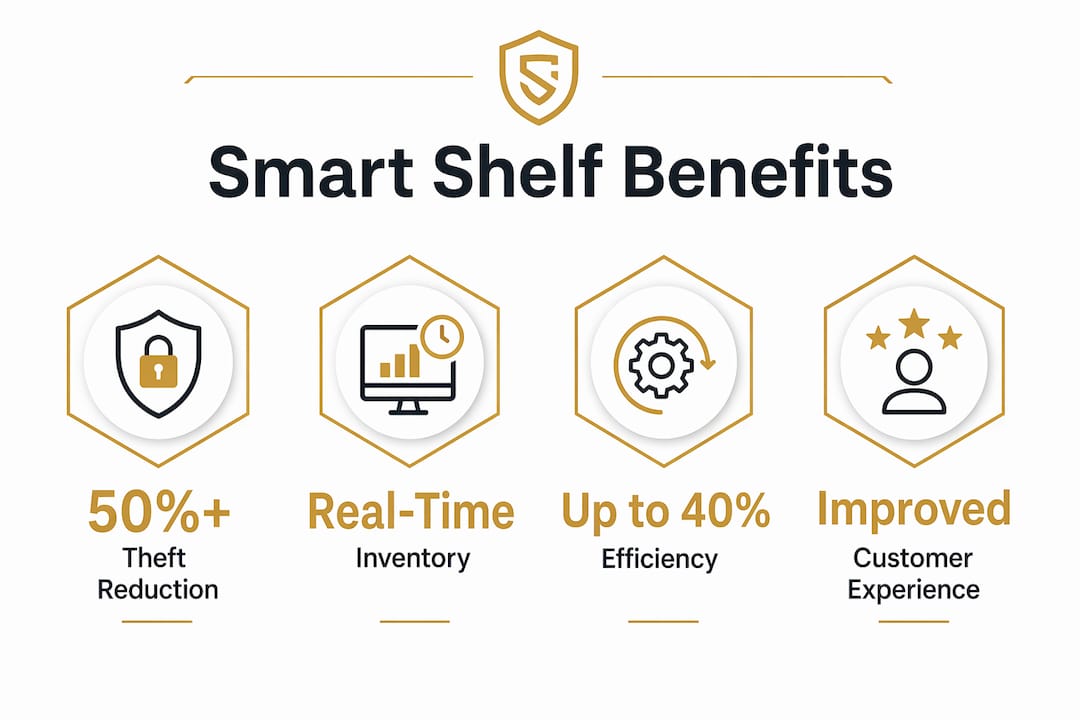
What are the key benefits of smart shelf security for retailers?
The advantages of smart shelf systems go well beyond theft prevention. The technology delivers measurable gains across inventory accuracy, staff efficiency, and customer satisfaction.
Real-time inventory visibility
Smart shelves eliminate the gap between physical stock and recorded stock. Traditional cycle counts happen weekly or monthly. Sensor-based systems update inventory records continuously. That accuracy directly reduces out-of-stock events, which are among the most costly problems in retail operations.
Theft detection that actually works
Retailers using shelf visibility technology have more than doubled their theft identification rates while reducing the investigative effort required. That is a significant operational shift. Loss prevention teams spend less time reviewing hours of footage and more time acting on specific, verified alerts.
Operational efficiency gains
Smart shelves reduce manual stock counts and improve accuracy, freeing staff for customer-facing tasks. A team that previously spent hours counting stock can redirect that time to service, merchandising, or fulfillment. The labor savings alone often justify the technology investment within the first year of deployment.
A better customer experience
Consistent stock availability is the most direct driver of customer satisfaction in physical retail. When shelves are monitored continuously, replenishment happens faster, and customers find what they came for. That reliability builds repeat visits and protects revenue that empty shelves would otherwise lose.
Smarter loss prevention strategy
The shift from counting shrink to understanding it is where smart shelf technology creates its deepest value. Transitioning from counting shrink to understanding it enables loss prevention teams to act precisely and efficiently. Instead of broad surveillance, teams focus resources on specific products, times, and locations where data shows the highest risk.
Secure shelving with integrated access controls deters theft while maintaining open merchandising, which means customers still have easy access to products while high-risk items stay protected. That balance matters in environments where locking everything away kills sales.
What challenges should you expect when implementing smart shelf security?
Smart shelf technology delivers strong results when deployed correctly. Deployed carelessly, it creates new operational problems that can undermine the entire investment.
The most common pitfalls include:
- Alert fatigue: Poorly tuned sensors generate nuisance alarms that cause staff to ignore real theft alerts. A system that cries wolf too often becomes invisible to the people who need to act on it.
- Poor zone selection: Deploying sensors store-wide from day one spreads budget thin and dilutes impact. Smart shelves work best in high-value or high-risk zones rather than across every shelf in the building.
- Integration gaps: A shelf sensor that does not connect to your POS or ERP system produces data that lives in a silo. Siloed data requires manual review, which defeats the purpose of automation.
- Staff resistance: Teams that view the technology as surveillance rather than support will work around it. Operational buy-in requires clear communication about what the system does and how it helps staff do their jobs.
Pro Tip: Frame smart shelf technology to your team as an automatic replenishment trigger, not a monitoring tool. Staff who see it reducing their manual counting workload adopt it faster and maintain it better.
Operational change management is the factor most often underestimated. Staff must see smart shelving as a tool that aids their tasks, such as automating replenishment, to accept it and use it correctly. Technology that staff resist becomes technology that fails.
How to apply smart shelf security solutions effectively
Effective deployment starts with matching the right technology to the specific inventory problem you are solving. Not every sensor type fits every environment.
| Technology | Best use case | Key limitation |
|---|---|---|
| Weight sensors | High-value items, pharmacy, electronics | Requires precise calibration per SKU |
| RFID tags | Apparel, warehouse pallets, high-volume SKUs | Tag cost adds up at scale |
| Computer vision | Wide-area monitoring, behavior analysis | Privacy considerations, higher infrastructure cost |
| Combined systems | Enterprise retail, high-shrink categories | Higher upfront investment |
Aligning RFID, computer vision, and smart shelves to specific inventory bottlenecks produces better results than deploying a single technology everywhere. A pharmacy with high-value medications benefits most from weight sensors and access controls. A large apparel warehouse benefits most from RFID at the pallet and rack level.
Pilot programs with clear KPIs and staff adoption strategies deliver higher success and ROI than full rollouts without a testing phase. Define what success looks like before you deploy. Measure shrink reduction, out-of-stock frequency, and staff time saved. Those metrics justify expansion and guide refinement.
Cross-department collaboration is not optional. Loss prevention, IT, store operations, and procurement all touch the data that smart shelf systems generate. When those teams share a common dashboard and agreed-upon alert thresholds, the system functions as designed. When they operate in silos, alerts get missed and data goes unused.
Physics-based weight sensors provide tamper-proof, reliable data that cameras or RFID alone cannot match for theft detection. Weight changes create an unassailable record of shelf activity that is harder to defeat than a camera angle or an RFID tag that has been removed. For the highest-risk product categories, weight-based detection is the most reliable foundation. The same principle applies when you think about securing valuable assets in any physical environment: physics-based barriers and sensors consistently outperform systems that rely solely on visual monitoring.
Understanding how security cameras deter theft complements smart shelf sensor data. Cameras provide the visual record that confirms what sensors detect, making investigations faster and prosecutions more defensible.
Key Takeaways
Smart shelf security reduces theft and improves inventory accuracy by combining weight sensors, RFID, and AI analytics that trigger real-time alerts when stock changes occur without a matching sale.
| Point | Details |
|---|---|
| Start with high-risk zones | Deploy sensors in high-value areas first to maximize ROI before expanding store-wide. |
| Integrate with ERP and POS | Connect shelf data to existing systems so alerts are contextual and staff can act immediately. |
| Tune sensors to prevent alert fatigue | Poorly calibrated sensors cause staff to ignore alerts, which eliminates the system’s core value. |
| Run a pilot with defined KPIs | Measure shrink reduction and out-of-stock rates during a pilot phase before committing to full deployment. |
| Frame technology as a staff aid | Teams that see smart shelves as a replenishment tool adopt the technology faster and maintain it better. |
What I’ve learned about smart shelf security after years in the field
The retailers who get the most from smart shelf technology are not the ones with the biggest budgets. They are the ones who deploy with discipline. I have seen large operations spend heavily on sensor networks and then watch the ROI evaporate because no one tuned the alert thresholds or trained the team on what to do when an alert fires.
The shift that matters most is moving from counting shrink after the fact to preventing it in the moment. That sounds obvious, but most loss prevention programs are still built around weekly reports and post-incident reviews. Smart shelf data makes real-time intervention possible. The teams that build workflows around that capability see results. The teams that treat it as a reporting tool see modest gains at best.
Physics-based weight sensing deserves more attention than it gets. Cameras can be blocked. RFID tags can be removed. Weight sensors record every gram that leaves the shelf, and that record is nearly impossible to defeat without triggering an alert. For high-value categories, that reliability is worth the calibration effort.
My honest recommendation: resist the urge to deploy everywhere at once. Pick your three highest-shrink product zones, instrument them properly, measure the results for 90 days, and then scale what works. That approach delivers faster ROI and builds the internal confidence needed to justify broader investment.
— Safes and Security Solutions
Smart shelf security solutions from Safes and Security Solutions
Safes and Security Solutions carries a broad range of professional-grade security products built for retailers and warehouse managers who need reliable, verified protection for high-value inventory.

Whether you are building a layered security program around smart shelf sensors or looking for physical security products that complement your existing loss prevention setup, Safes and Security Solutions has the equipment and expertise to support your operation. From surveillance cameras that integrate with shelf-level detection to physical security hardware for high-risk storage zones, the catalog covers the full range of commercial security needs. Visit Safes and Security Solutions to browse the full product range or contact the team directly for guidance on building a solution that fits your specific environment.
FAQ
What is smart shelf security?
Smart shelf security is a system that uses weight sensors, RFID tags, and AI analytics to monitor inventory in real time and detect theft or stock discrepancies without manual counting.
How does smart shelf security work?
Sensors embedded in shelving units detect product removal and compare that activity against point-of-sale data. When a product leaves the shelf without a matching transaction, the system triggers an alert for staff to investigate.
What are the main benefits of smart shelf security for retailers?
The primary benefits include reduced theft, lower out-of-stock rates, less time spent on manual stock counts, and faster replenishment cycles that improve the customer experience.
Which sensor technology works best for theft prevention?
Physics-based weight sensors provide the most tamper-proof theft detection because they record every gram removed from the shelf, making them harder to defeat than cameras or RFID alone.
How do you avoid alert fatigue with smart shelf systems?
Calibrate sensors carefully for each product SKU, integrate alerts directly into your POS or ERP system, and set thresholds that filter out normal shopping behavior before the system goes live.
Recommended
- What is secure storage: homeowner and business guide 2026 – Safes and Security Direct
- How to Improve Home Security: Proven Steps for 2026 – Safes and Security Direct
- Why Protect Retail Property: A 2026 Owner’s Guide – Safes and Security Direct
- Home security best practices: protect property in 2026 – Safes and Security Direct