

Why Secure Garage Doors: A Homeowner's Safety Guide
TL;DR:
- Garage doors are the primary target for burglars because they are large, often overlooked, and vulnerable to simple exploit methods.
- Enhancing security requires modern electronic systems such as rolling code openers and physical reinforcements like solid doors and tamper-resistant hardware.
A secure garage door is the single most critical barrier standing between your home and an intruder. Garage doors are the largest entry point on most homes, and they are frequently targeted by burglars precisely because homeowners underestimate them. Understanding why secure garage doors matter is not just reassuring. It is the foundation of a sound home security strategy. Between 80 and 110 million of the 228 million residential garage doors in the US run on vulnerable opener systems, making this a widespread and urgent problem for homeowners and property managers alike.
Why secure garage doors matter more than most homeowners think
Garage doors represent the weakest link in home security for a straightforward reason: they are big, mechanical, and often ignored after installation. Unlike front doors, which most homeowners upgrade with deadbolts and reinforced frames, garage doors frequently go years without a security review. The result is a gap that experienced burglars know how to exploit quickly and quietly.
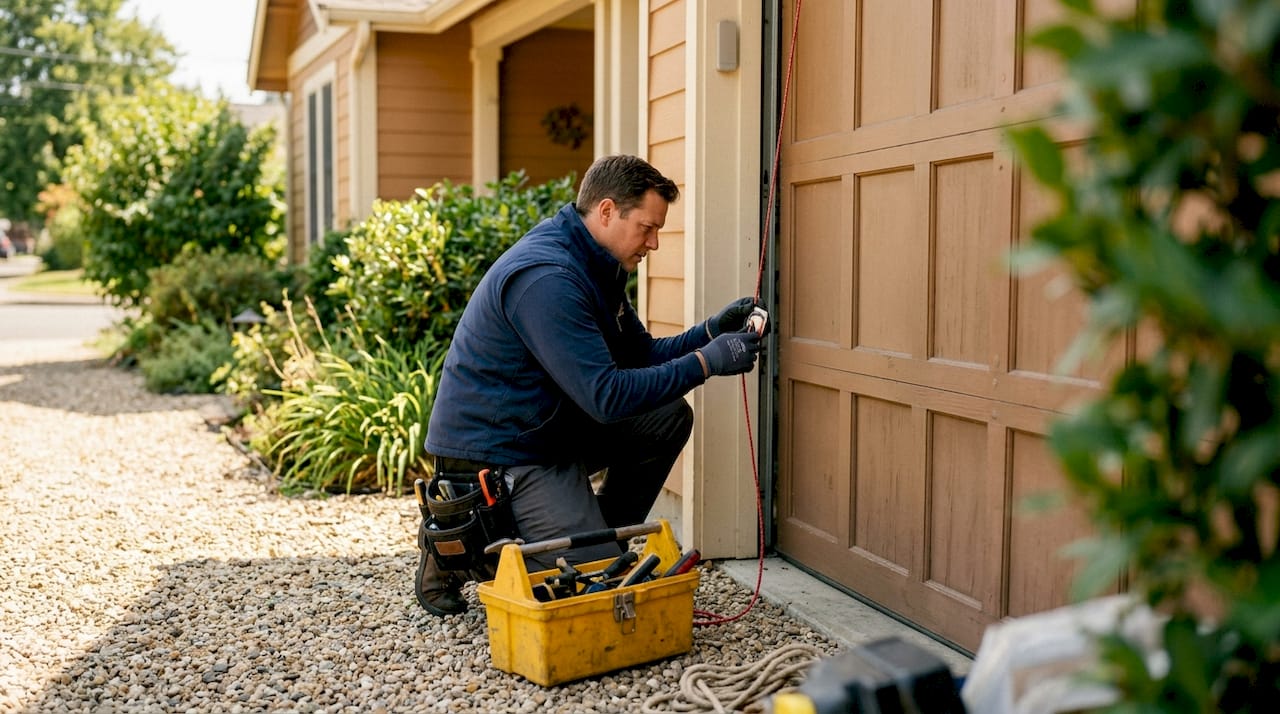
78% of homeowners now recognize a modern garage door opener as a critical security component. That recognition is growing because break-in patterns have shifted. Burglars no longer rely solely on brute force. They use mechanical tricks that take seconds, not minutes, to execute. The importance of garage door security goes beyond protecting your car. A compromised garage door gives an intruder direct access to your home’s interior, your stored valuables, and in many cases, an unlocked door straight into your living space.
Property managers face an additional layer of risk. A single unsecured garage on a multi-unit property can expose multiple residents to theft and liability. Treating garage door security as a standard part of property maintenance is not optional. It is a professional obligation.
What makes garage doors vulnerable to break-ins?
Several specific weaknesses make garage doors easier to breach than most homeowners expect. Knowing them is the first step toward fixing them.
-
The coat hanger exploit. The emergency release mechanism on older garage doors can be bypassed in under 10 seconds using a wire coat hanger slipped through the top gap of the door. A burglar pulls the release cord, disconnects the opener, and lifts the door manually. This technique is widely known and takes no special skill.
-
Outdated opener technology. Older openers use fixed codes that never change. A thief with a code grabber device can capture your signal and replay it to open your door at will. Pre-2020 systems are especially vulnerable because they predate rolling code encryption.
-
Poor door fit and hardware wear. Gaps in weatherstripping, loose hinges, and worn tracks create physical weaknesses. A door that does not sit flush in its frame can be pried open with minimal force. Regular hardware fatigue goes unnoticed until it becomes a security gap.
-
Unsecured interior connecting doors. Interior doors linking the garage to the home are often hollow-core slabs with basic knob locks. Once a burglar is inside the garage, that door is the only thing between them and your home. Most of these doors offer less resistance than a standard exterior door.
-
Human error. The majority of garage break-ins happen because the door was simply left open. Forgetting to close the door, even briefly, creates an open invitation.
Pro Tip: Install an emergency release shield, sometimes called a garage door defender, to block the coat hanger exploit without disabling the safety release function. These shields are inexpensive and take under an hour to install.
What are the key secure garage door features to look for?
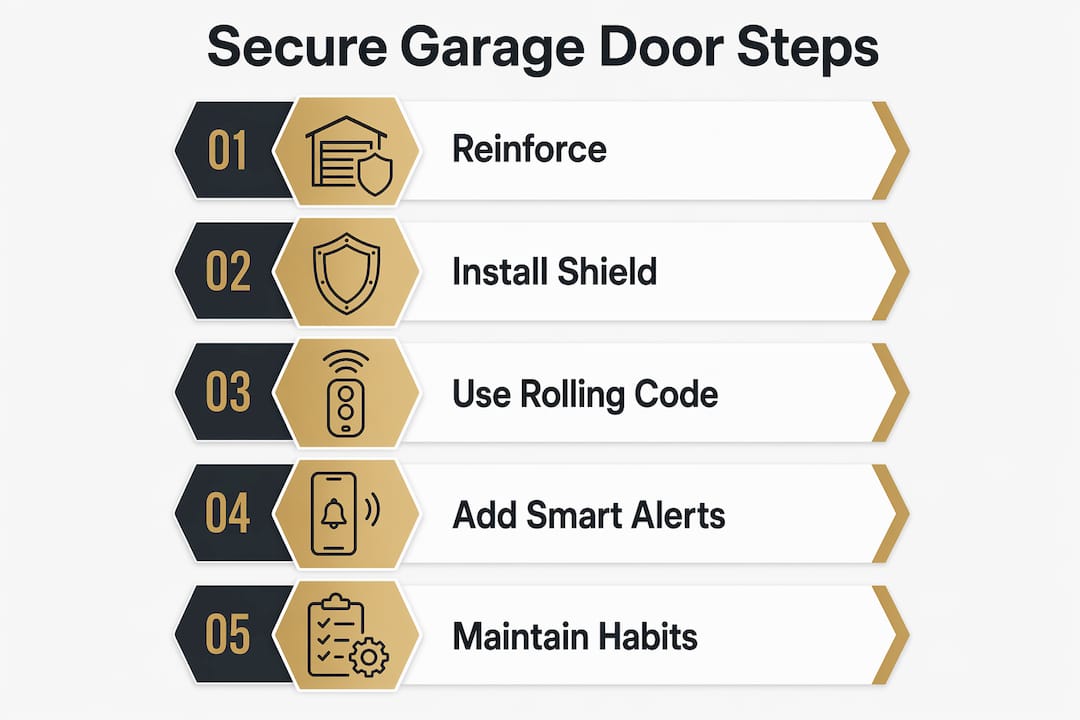
Modern garage door security combines physical reinforcement with electronic deterrents. The best setups use both layers together.
Physical reinforcements
- Steel door construction. Multi-layer steel doors resist denting and prying far better than single-layer aluminum or wood panels. Look for doors rated with a high R-value for insulation, which also indicates denser, more rigid construction.
- Reinforced tracks and hardware. Heavy-gauge steel tracks and tamper-resistant bolts prevent the door from being forced off its rails. Standard track hardware is often the first component to fail under pressure.
- Slide bolt locks and T-handle locks. These manual locks secure the door from the inside and prevent it from being lifted even if the opener is bypassed. They are especially useful for vacation properties or extended absences.
- Frosted or tinted windows. Garage windows let in light but can reveal stored valuables to anyone walking past. Frosted glass or window film blocks the view without sacrificing natural light.
Electronic deterrents
Rolling code technology generates a new encrypted signal every time you use your remote. Even if a thief captures the signal, it is already invalid for the next use. This single upgrade eliminates the replay attack vulnerability that affects millions of older openers.
Smart openers add another layer by sending real-time alerts to your phone when the door opens or closes. You can monitor activity remotely and close a door you accidentally left open from anywhere. Motion-activated lighting and cameras are effective first-line deterrents because they make a burglar visible before any break-in attempt begins. A well-lit garage with a visible camera changes the risk calculation for a would-be intruder immediately.
Pro Tip: Pair your smart opener with a garage security camera that stores footage to the cloud. Local storage can be stolen along with your property, but cloud footage survives a break-in.
How to effectively secure your garage door: practical steps
Improving garage door security does not require a full replacement. A systematic approach covers the most critical gaps first.
-
Inspect physical components every six months. Check hinges, springs, tracks, and weatherstripping for wear. Regular maintenance prevents small issues from becoming security vulnerabilities. A loose hinge or a warped panel creates the kind of gap a burglar can exploit.
-
Upgrade your opener if it predates 2020. Replace fixed-code systems with a rolling code or smart opener. The cost is modest compared to the value of what you are protecting. Most modern openers install in a few hours with basic tools.
-
Secure the interior connecting door. Replace hollow-core interior doors with a solid-core slab. Add a Grade 1 deadbolt to the door between your garage and your home. This creates a critical secondary barrier if the garage itself is breached.
-
Manage remote access carefully. Delete old codes from keypads when they are no longer needed. Change the keypad PIN at least once a year. Never store a garage remote in your car where it can be stolen along with your vehicle registration, which shows your home address.
-
Use auto-close features. Smart openers with auto-close timers address the most common vulnerability: forgetting to close the door. Set a 10-minute auto-close as a default and rely on app alerts as a backup.
-
Schedule a professional inspection. A qualified technician can identify hardware fatigue, alignment issues, and security gaps that are easy to miss during a DIY check. Annual inspections are a sound investment for any property.
Pro Tip: Cover your keypad with a weatherproof lock box when not in use. This prevents shoulder-surfing and protects the keypad from weather damage that can cause button wear patterns to reveal your PIN.
Why layered security is the most effective approach
No single security measure protects a garage completely. Layered security is the standard because each layer increases the time, effort, and noise required for a break-in.
A burglar who encounters a reinforced door, a rolling code opener, a motion-activated light, and a visible camera faces a very different risk calculation than one who finds a standard door with an old opener. Layered security combining mechanical, electronic, and behavioral measures significantly increases the difficulty for intruders. Most opportunistic burglars move on when a target looks too complicated or too visible.
The layers work together in a specific way:
- Mechanical barriers (reinforced doors, slide bolts, emergency release shields) slow physical entry.
- Electronic deterrents (rolling code openers, smart alerts, cameras) create visibility and eliminate technical exploits.
- Behavioral practices (closing the door, managing codes, monitoring alerts) close the gaps that technology alone cannot fix.
Visible garage security systems can reduce break-in risk by up to 50%. That figure reflects the power of deterrence. A burglar who sees cameras and motion lights rarely tests whether the door itself is secure.
Layered security also integrates naturally into a broader smart home security setup. Smart openers connect to home automation platforms, cameras feed into centralized monitoring apps, and motion sensors trigger lighting across the entire property. The garage becomes part of a unified security network rather than an isolated weak point. For property managers, this integration means fewer manual checks and faster response to incidents.
Key Takeaways
Securing your garage door requires physical reinforcement, modern electronic systems, and consistent behavioral habits working together.
| Point | Details |
|---|---|
| Garage doors are primary targets | They are the largest entry point and most commonly exploited by burglars using simple techniques. |
| Outdated openers create real risk | Between 80 and 110 million US garage doors run on pre-2020 systems vulnerable to replay attacks. |
| Rolling codes eliminate a key exploit | Modern openers generate a new encrypted signal with every use, blocking code-grabbing attacks. |
| Interior doors need upgrading too | A solid-core door with a Grade 1 deadbolt is the critical second line of defense inside the garage. |
| Visible deterrents cut risk significantly | Motion lights and cameras reduce break-in risk by up to 50% by discouraging attempts before they start. |
What I have learned from years of watching homeowners get this wrong
Garage door security is the area where I see the most consistent blind spots. Homeowners invest in alarm systems, smart locks, and video doorbells, then leave a 30-year-old garage opener running on a fixed code. That opener is the equivalent of leaving a window unlocked on the second floor. It looks secure from a distance, but anyone who knows what to look for can get through it in seconds.
The coat hanger exploit is the detail that surprises people most. It is not a sophisticated hack. It is a 10-second trick that works on millions of doors right now. Fixing it costs less than a dinner out. Yet most homeowners have never heard of it, let alone addressed it.
The other mistake I see constantly is treating garage security as a one-time project. You upgrade the opener, add a camera, and consider the job done. Security degrades over time. Hardware loosens, weatherstripping cracks, and codes get shared with people who no longer need them. A twice-yearly inspection and a habit of reviewing who has access to your garage remote and keypad code will do more for your long-term security than any single product upgrade.
The peace of mind that comes from knowing your garage is genuinely secure is real and measurable. You stop second-guessing whether you closed the door. You stop worrying when you travel. That mental shift is worth the effort.
— Safes and Security Solutions
Trusted security products for your garage
Knowing the risks is only half the work. The other half is having the right products in place to address them.
Safes and Security Solutions carries professional-grade security cameras, smart monitoring systems, and access control products built for exactly the vulnerabilities covered here. Whether you need a garage camera with cloud storage or a full home security setup that integrates your garage into a unified system, the product range covers every layer. Browse the full catalog at Safes and Security Solutions and find the right fit for your property and budget.
FAQ
Why are garage doors the most common entry point for burglars?
Garage doors are large, mechanical, and frequently left unsecured or running on outdated technology. They offer multiple exploit methods, from the coat hanger trick to code replay attacks, that require no special tools.
What is rolling code technology and why does it matter?
Rolling code technology generates a new encrypted signal every time you use your remote, making it impossible for a thief to capture and reuse your opener code. It is the single most effective electronic upgrade for older garage door systems.
How do I stop someone from using the coat hanger trick on my garage?
Install an emergency release shield that blocks wire access to the release cord from outside the door. These shields are widely available, inexpensive, and do not interfere with the door’s safety function.
Does a garage camera actually deter burglars?
Visible security systems, including cameras and motion-activated lights, reduce break-in risk by up to 50% because most opportunistic burglars avoid properties where they can be identified.
What is the most overlooked garage security weakness?
The interior door connecting the garage to the home is the most overlooked weakness. Most of these doors are hollow-core with basic knob locks, offering almost no resistance once a burglar is inside the garage.
Recommended
- How to prevent break-ins: a practical guide for homeowners – Safes and Security Direct
- How to secure property effectively: A practical guide – Safes and Security Direct
- Step-by-Step Guide to Choosing Safes for Home Security – Safes and Security Direct
- Top Garage Camera: Enhance Security & Peace of Mind – Safes and Security Direct