

What Is a Depository Safe? Your 2026 Buyer's Guide
TL;DR:
- A depository safe has a one-way deposit slot that accepts valuables without opening the main door. It uses anti-fishing baffles to prevent retrieval attempts and is suited for retail, hospitality, and home use. These safes offer increased security, efficiency, and tamper resistance for frequent cash handling.
A depository safe is defined as a specialized secure storage unit with a one-way deposit slot that accepts cash, envelopes, or valuables without requiring the main door to be opened. Unlike a standard home safe, a depository safe separates the act of depositing from the act of retrieving. That single design difference makes it the preferred choice for retail businesses, restaurants, hotels, and households where multiple people handle cash daily. Safes and Security Solutions carries a full range of these units, from compact front-loading models to through-the-wall configurations built for high-volume commercial use.
What is a depository safe and how does it secure deposits?
A depository safe works by routing deposits through a slot or chute in the outer door directly into a locked interior compartment. The deposit path is one-directional. Once an item passes through the slot, it drops into the main body of the safe and cannot be retrieved without unlocking the primary door with an authorized code or key.
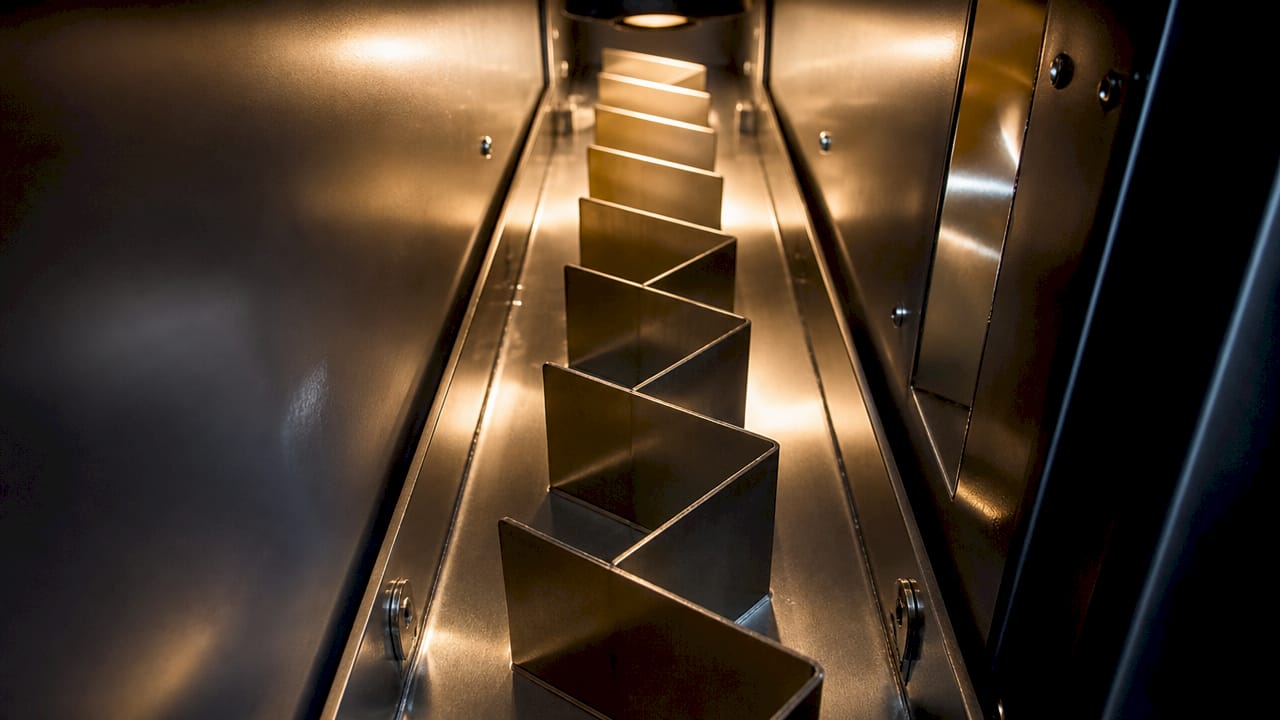
The mechanism that makes this possible is the anti-fishing baffle. Anti-fishing baffles are sawtooth-shaped metal plates positioned inside the deposit path. They allow items to fall under gravity but physically block any attempt to pull them back out. Without these baffles, a slot is just a hole. With them, the safe becomes genuinely secure against common retrieval attacks.
A depository safe is fundamentally different from a simple drop box or a cash drawer with a lock. A drop box offers no meaningful resistance to someone with a wire, a strip of tape, or a flexible probe. A depository safe with certified anti-fishing baffles stops those attempts cold. That distinction matters most in retail and food service environments where employees handle cash at the end of every shift.
Pro Tip: Test any depository safe before purchase by checking whether the manufacturer specifies anti-fishing baffles in the product description. A slot without baffles provides almost no protection against a determined retrieval attempt.
What are the types of depository safes?
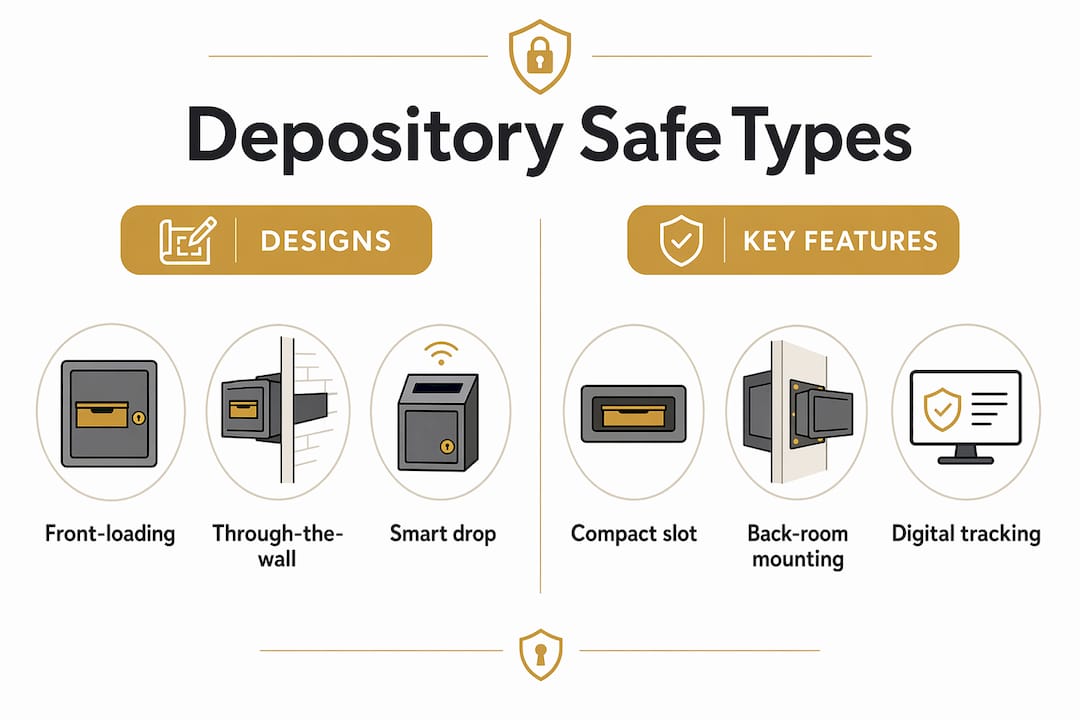
Three main designs cover the majority of use cases: front-loading safes, through-the-wall safes, and smart drop safes. Each suits a different environment and deposit volume.
| Type | Design | Best for | Key feature |
|---|---|---|---|
| Front-loading | Slot on the front door, compact body | Moderate deposit volume, limited space | Quick employee drop without full safe access |
| Through-the-wall | Slot accessible from one room, body in another | Retail counters, bank teller stations | Deposits made from public side, retrieval from secure back room |
| Smart drop safe | Electronic slot with digital tracking | High-volume cash businesses | Logs who deposited, when, and how much |
Front-loading depository safes are compact and well suited for businesses with moderate deposit volumes and limited floor space. Employees drop cash without ever accessing the main compartment, which directly reduces internal theft risk.
Through-the-wall models mount so the slot faces a customer-facing area while the locked body sits in a back room or office. This design is common in pharmacies and bank branches where the person accepting cash should never have access to the stored funds.
Smart drop safes add a layer of digital accountability. Digital tracking in smart safes records who accessed the unit and when, improving cash flow visibility and automating deposit alerts for managers. That level of oversight is valuable for any business running multiple shifts with different cashiers.
Capacity is another variable worth considering. Some units hold a single till’s worth of cash. Others include a large lower compartment that can store multiple cash drawers, making them practical for grocery stores or busy restaurants. Matching the safe’s capacity to your actual deposit volume prevents the unit from filling up mid-shift.
What are the benefits of using a depository safe vs. a regular safe?
The core benefit is simple: deposits without opening the main safe reduces the window of exposure during every cash transaction. A standard home or business safe requires the door to be fully opened for every deposit. That moment of open access is when theft, whether from an outsider or an employee, is most likely to occur.
The advantages stack up quickly for businesses and households with frequent cash handling:
- Reduced theft risk during transactions. The main compartment stays locked at all times during deposits, so no one sees or accesses the stored contents.
- Multi-user access without compromise. Multiple users can deposit valuables without any of them knowing the main combination or key location.
- Tamper-resistant construction. Quality depository safes use reinforced steel bodies and pry-resistant door frames that exceed the protection offered by entry-level home safes.
- Operational efficiency. Deposits happen in seconds. There is no need to call a manager, enter a combination, or wait for a colleague to witness the transaction.
- Fire resistance options. Many models carry UL or ETL fire ratings, protecting documents and cash from heat damage in addition to theft.
The price difference between a depository safe and a basic home safe reflects these added protections. Depository safes typically cost between $1,000 and $3,000, while basic home safes range from $100 to $500. That investment is justified when daily cash handling is part of your routine.
Pro Tip: If your business processes end-of-day cash drops from multiple employees, a depository safe pays for itself quickly by reducing shrinkage and eliminating the need for a manager to be present at every drop.
How to choose and install the right depository safe
Frequency of deposits is the single most important factor when selecting a depository safe. A household that makes one or two deposits per week has very different needs than a restaurant making six drops per shift. Start by counting your actual deposit frequency, then match the safe type and capacity to that number.
Other factors that shape the right choice:
- Types of valuables. Cash envelopes fit most standard slots. Coin bags, USB drives, or jewelry may require a wider chute or a specific slot design.
- Number of users. More users means a higher risk of internal theft. A smart safe with digital logging adds accountability when several people share deposit duties.
- Space constraints. Front-loading models fit under counters. Through-the-wall units need a wall cavity and access from two sides. Measure before you buy.
- Lock type. Electronic keypads offer audit trails and easy code changes. Mechanical locks have no battery dependency. Dual-lock models require both a code and a key, adding a second layer of authorization.
For installation, anchoring is not optional. Professional anchoring to a floor or wall prevents a thief from simply removing the entire unit. Most manufacturers provide anchor bolt kits, but concrete floors and reinforced walls may require a professional installer. Safes and Security Solutions recommends reading the guide on choosing an under counter deposit safe before finalizing your placement decision. For businesses considering wall-mounted configurations, the benefits of wall safes article covers installation requirements in detail.
Placement matters as much as anchoring. Position the safe where the deposit slot is accessible to staff but the main door faces a private, monitored area. A security camera pointed at the safe adds a deterrent layer that costs far less than a single theft incident.
Key Takeaways
A depository safe is the right choice for any individual or business that makes frequent cash deposits and needs to limit access to stored funds between authorized retrievals.
| Point | Details |
|---|---|
| One-way deposit design | The slot and anti-fishing baffles allow deposits but block any retrieval attempt. |
| Three main types | Front-loading, through-the-wall, and smart drop safes each suit different volumes and spaces. |
| Multi-user security | Multiple people can deposit without any of them accessing the main compartment. |
| Installation is critical | Anchor the safe to a floor or wall to prevent removal; professional installation is recommended for commercial use. |
| Cost reflects protection | Depository safes cost $1,000–$3,000, justified by daily cash handling security and tamper resistance. |
The case for taking depository safes seriously
Most people underestimate how much risk lives in the moment a safe door swings open. After years of working with businesses and homeowners on their security setups, the pattern is consistent: the weakest point is not the safe itself. It is the routine of opening it.
A restaurant owner once told me she had a quality safe but still experienced regular cash shortages. The problem was not the safe. It was that three employees watched the manager enter the combination every night. A depository safe would have eliminated that exposure entirely. The manager could have locked the day’s deposits away without anyone seeing the combination or the contents.
The misconception I hear most often is that a depository safe is only for banks or large retailers. That is wrong. A household with a home-based business, a landlord collecting rent, or a family with a teenager who handles petty cash all benefit from the same principle: deposit freely, retrieve securely. The secure storage benefits apply at every scale.
The installation pitfall I see most often is placing the safe in a convenient spot rather than a secure one. Convenience and security are not the same thing. A safe bolted to a concrete floor in a back office is worth far more than an unanchored unit sitting behind a counter where anyone can see it.
— Safes and Security Solutions
Depository safes available at Safes and Security Solutions
Safes and Security Solutions stocks a wide selection of depository safes suited for homes, small businesses, and commercial environments. Whether you need a compact front-loading unit for a retail counter or a through-the-wall model for a high-volume operation, the catalog covers the full range of deposit volumes and security ratings.
Every product listing includes detailed specifications on slot dimensions, lock type, fire rating, and anchoring options so you can match the unit to your exact needs. The team at Safes and Security Solutions also provides pre-purchase guidance to help you select the right model based on your deposit frequency and space. Visit Safes and Security Direct to browse the full depository safe range and get expert support before you buy.
FAQ
What is the difference between a depository safe and a regular safe?
A depository safe has a one-way slot that accepts deposits without opening the main door, while a regular safe requires full door access for every deposit. This design makes depository safes far more secure for frequent cash handling.
Do depository safes really prevent fishing attempts?
Yes. Anti-fishing baffles inside the deposit path are sawtooth-shaped metal plates that block wire hooks, tape, and probes from retrieving deposited items through the slot.
How much does a depository safe cost?
Depository safes typically cost between $1,000 and $3,000, compared to $100–$500 for basic home safes. The higher price reflects reinforced construction, anti-fishing features, and suitability for daily use.
Can multiple employees use the same depository safe?
Yes. The deposit slot is accessible to any authorized employee, while the main compartment stays locked. Smart models log each deposit with a timestamp and user ID for full accountability.
Does a depository safe need to be professionally installed?
Anchoring to a floor or wall is strongly recommended and often requires professional installation, especially in commercial settings with concrete floors or reinforced walls.