

What Is a Cash Box Safe? Your Complete Buying Guide
TL;DR:
- A cash box safe is a portable, lockable container designed to secure cash and valuables for short-term use. It features reinforced steel construction, various locking mechanisms, and organizational trays, making it suitable for retail, home, and event settings. Proper anchoring and regular cash transfer to more secure safes enhance its effectiveness and security.
A cash box safe is a compact, lockable container designed to securely store cash, documents, and valuables to prevent theft and unauthorized access. Unlike a full-size floor safe or wall safe, a cash box safe prioritizes portability and quick access, making it the go-to solution for retail counters, market stalls, home offices, and small businesses. The industry often calls these “portable cash safes” or “cash security boxes,” and both terms describe the same product category. Combining physical durability, intelligent locks, and practical organization creates a reliable tool for day-to-day financial security. Understanding what separates a basic tin box from a genuine cash box safe is the first step toward choosing the right one.
What is a cash box safe, and who needs one?
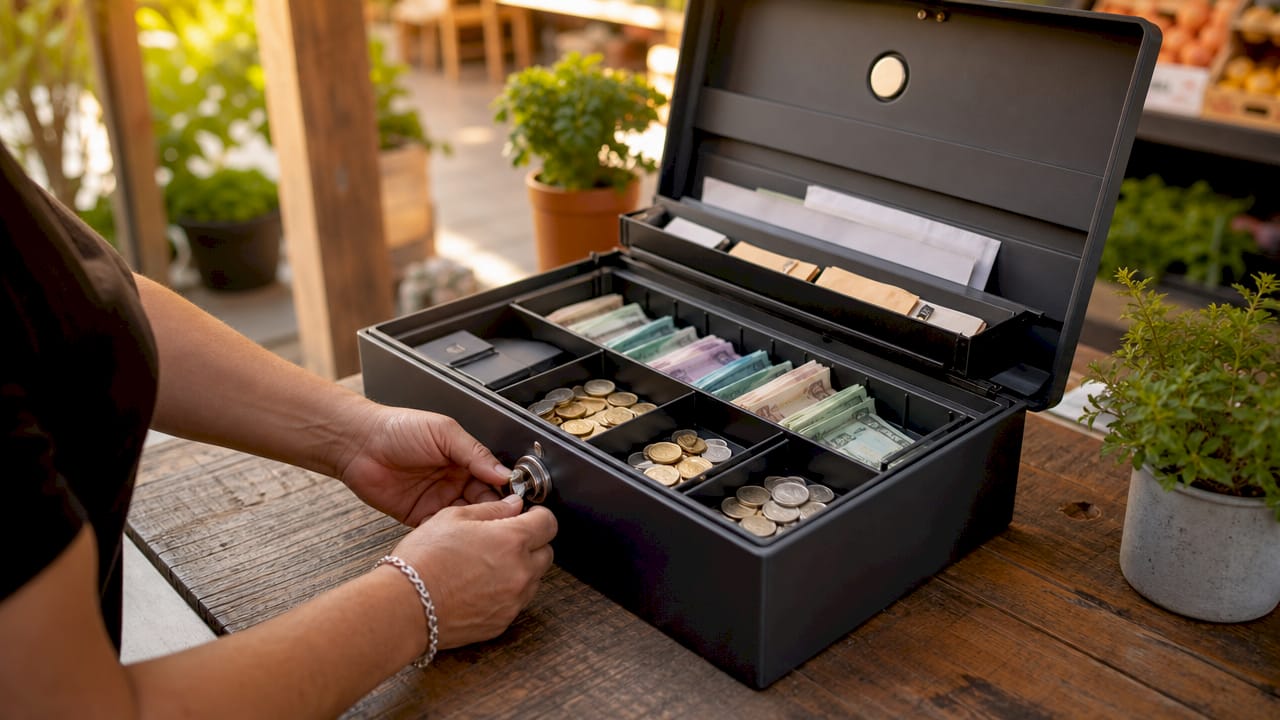
A cash box safe is defined by three core elements: steel construction, a locking mechanism, and internal organization for cash and documents. Retailers, event vendors, nonprofit fundraisers, and homeowners all use them to hold working cash during a shift or event. The key distinction from a decorative tin or simple lockbox is the quality of the steel and the lock. A genuine cash box safe uses reinforced steel walls and a lock rated to resist basic forced entry, not just deter casual snooping.
Small businesses benefit most from cash box safes at the point of sale. A café owner, for example, keeps a cash box safe in the register area to hold float cash at the start of each shift, then transfers excess to a cash deposit safe at the end of the day. Homeowners use them to store emergency cash, spare keys, or important documents away from plain sight. The product fills a specific gap: secure, accessible, and portable storage for amounts that do not justify a full safe installation.
What types of cash box safes are available?
Cash box safes fall into four broad categories based on their locking mechanism and construction grade.
Standard key-lock cash boxes are the most common entry point. They use a steel body with a single key-operated lock. They are affordable and simple, but losing the key creates an immediate problem. These suit low-traffic environments like home offices or small charity events.
Combination lock cash boxes remove the key dependency. A three or four-digit dial or push-button combination opens the lid. They work well in retail settings where multiple staff members need access without handing over a physical key.
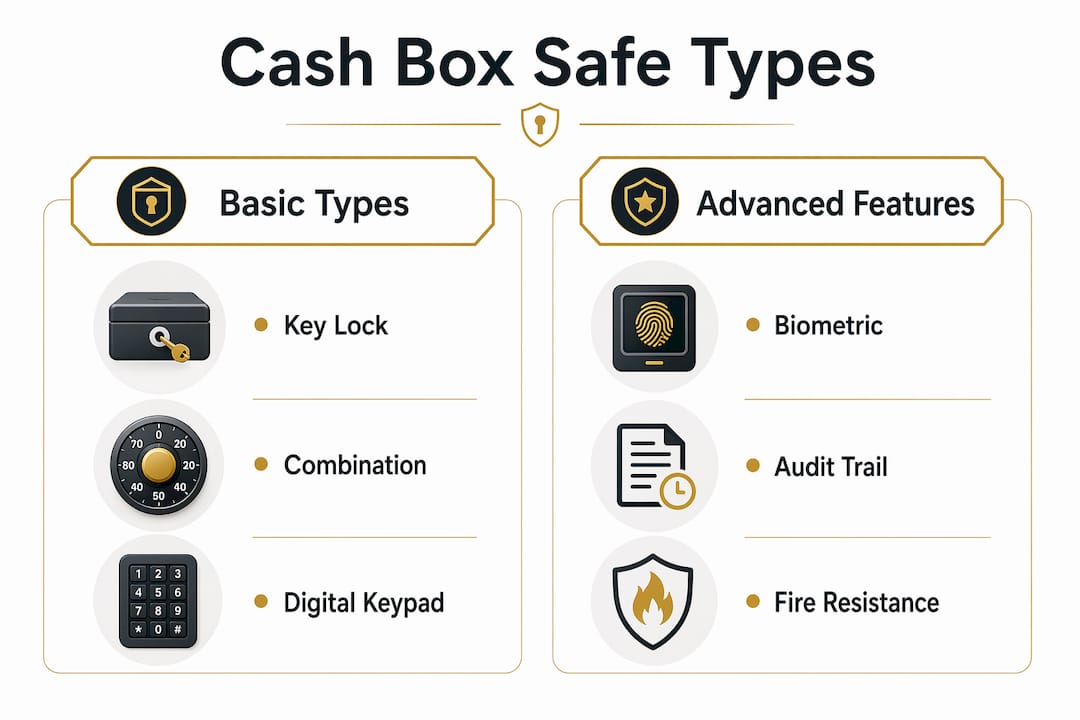
Digital keypad and biometric cash boxes sit at the higher end of the market. Modern cash box safes use various access controls, including keyed, combination, digital keypad, and biometric options, often paired with advanced anti-pick and relocking features. Some digital models include audit trail capabilities, logging each opening with a timestamp. That feature matters in retail accountability, where cash discrepancies need to be traced.
Heavy-duty cash boxes use thicker steel and more complex locking systems. Heavy-duty models protect high-value cash transactions and suit environments like jewelry counters or busy market stalls where the box is handled frequently and faces higher theft risk.
Beyond locking type, buyers should consider these features:
- Deposit slots: Lockable cash boxes with deposit slots allow cash insertion without opening the box, reducing exposure during busy periods.
- Removable coin trays: Compartmentalized trays keep bills and coins organized and speed up cash counting.
- Mounting points: Some models include pre-drilled holes or cable attachments for anchoring to a desk or counter.
- Size: Most cash boxes range from small personal sizes (about 9 inches wide) to larger retail models (up to 15 inches wide) with deeper compartments.
Pro Tip: If you run a retail business with multiple staff shifts, choose a digital keypad model with an audit trail. It removes the need to redistribute keys and gives you a record of every access event.
How does a cash box safe work to secure your assets?
The security of a cash box safe comes from two places: physical construction and the locking mechanism. Cash box safes generally feature steel construction with sturdy hinges and locking bolts that secure the lid when locked. Reinforced hinges are critical because the hinge is the most common point of failure when someone tries to pry a box open. A box with a strong lock but a weak hinge offers false security.
The locking bolt is the second line of defense. When you turn a key or enter a code, internal bolts slide into the frame and hold the lid shut. Higher-grade models add anti-pick pins inside the lock cylinder, which resist the standard tools used in opportunistic theft. Some models also include a relocking device: if someone drills the lock, a secondary bolt fires automatically and keeps the box sealed.
Mounting options add another layer of protection. A cash box left loose on a counter can be grabbed and carried away in seconds. Anchoring it to a fixed surface with a cable lock or through-bolt removes that risk entirely. For retail and event settings, a cable tether to a fixed structure is the minimum standard worth applying.
Pro Tip: Never rely on the lock alone. Anchor your cash box safe to a fixed surface whenever possible. A thief who cannot open a box on the spot will simply take the whole box if it is not secured.
Cash box safes do not replace broader security practices. They work best as part of a system that includes surveillance cameras, staff cash-handling procedures, and regular bank deposits. Safes and Security Solutions recommends treating a cash box safe as the first layer of protection, not the only one. For home users, pairing a cash box with a home cash safe provides a two-tier approach: the cash box holds daily working cash, and the home safe holds larger reserves.
Best practices for using and maintaining a cash box safe
Getting the most from a cash box safe requires consistent habits, not just good hardware. Follow these steps to keep your cash secure and your box in good working order.
- Organize by denomination. Place bills in descending order from largest to smallest, face up. Use the coin tray for change. This speeds up counting and makes discrepancies obvious at a glance.
- Change codes or keys regularly. For combination and digital models, update the code every 30–90 days or whenever a staff member leaves. For key-lock models, rekey the lock if a key is lost rather than assuming it will not be found.
- Anchor the box at the start of every shift. Attach the cable tether or place the box in its fixed mounting point before opening for business. Never leave it loose on a counter.
- Transfer cash frequently. Cash boxes serve as temporary holding places and are most effective when cash moves promptly to permanent secure storage like a bank deposit or a certified safe. For retail, this means mid-shift drops as well as end-of-day deposits.
- Inspect the lock and hinges monthly. Look for signs of wear, rust, or tampering. A sticky lock or a hinge that does not sit flush is a warning sign. Address it before it becomes a failure point.
- Store the box out of sight when not in use. A cash box left visible on a desk overnight invites opportunistic theft. Lock it in a drawer, cabinet, or larger safe when the business is closed.
For retail and event settings, assign one person per shift as the cash box custodian. That single point of accountability reduces the chance of cash going missing without a clear trail. Pair this with a cash drop safe for retail to handle mid-shift deposits without exposing the main safe to staff access.
What are the limitations of a cash box safe?
Cash box safes are effective for their intended purpose, but they have real limits that buyers must understand before relying on them.
- Not fireproof by default. Standard metal cash boxes are not fireproof. Fire resistance requires explicit UL or ETL certification. A standard steel cash box will fail quickly in a house fire, destroying cash and documents inside. If fire protection matters, buy a certified fireproof safe instead.
- Not waterproof by default. Most cash boxes are not waterproof. Buyers concerned about moisture, flooding, or outdoor use need to seek weather-resistant models specifically rated for that exposure.
- Limited resistance to determined theft. A cash box safe deters opportunistic theft effectively. It does not stop a determined thief with tools and time. The lock and steel gauge on most portable cash boxes are not rated to the same standard as a certified burglary safe.
- Not suited for overnight large-cash storage. Cash boxes are best understood as part of a financial workflow, not a long-term vault. Leaving significant amounts of cash in a portable cash box overnight creates unnecessary risk.
- Key management is a vulnerability. Key-lock models depend entirely on key control. A copied or lost key bypasses all physical security instantly.
The right mental model is this: a cash box safe is a holding station, not a vault. It buys time and deters casual theft. For anything beyond that, a certified burglary or fire-rated safe is the correct tool. Many users also benefit from tracking safe access through a beneficiary access management system, which adds a digital record layer to physical security.
Key Takeaways
A cash box safe is a temporary, portable security tool that works best when paired with regular cash transfers, proper anchoring, and a certified safe for overnight or high-value storage.
| Point | Details |
|---|---|
| Definition and purpose | A cash box safe is a lockable steel container for short-term, portable cash and document storage. |
| Lock type determines security level | Digital keypad and biometric models offer the highest access control and audit capability. |
| Not fireproof or waterproof by default | Only UL or ETL-certified models provide fire or moisture protection; standard boxes do not. |
| Anchor and transfer cash regularly | Secure the box to a fixed surface and move cash to a certified safe or bank deposit frequently. |
| Part of a wider security system | A cash box safe works best alongside surveillance, staff procedures, and a permanent safe. |
What I have learned from years of advising on cash security
The single most common mistake buyers make is treating a cash box safe as a permanent solution. A business owner buys a solid steel box with a digital lock, feels secure, and then leaves three days of cash receipts inside over a long weekend. The box gets taken. The lock never failed. The strategy did.
A cash box safe is a tool for managing cash flow during active hours, not for storing it. The moment a shift ends or a business closes, that cash should move somewhere with a higher security rating. I have seen retailers invest in quality cash boxes and then undermine the whole setup by skipping the end-of-day bank deposit. The box is only as effective as the habits around it.
The other mistake is overestimating fire protection. Many buyers assume that a metal box protects against fire. It does not. If protecting documents or irreplaceable records matters, a certified fireproof safe is a separate purchase. Safes and Security Solutions stocks both categories, and the difference in construction is significant. Do not conflate them.
My practical advice: match the lock type to your risk level, anchor the box every single time, and treat it as a relay point for cash, not a destination.
— Safes and Security Solutions
Secure your cash with the right products from Safes and Security Solutions
Safes and Security Solutions carries a full range of cash box safes and permanent security safes suited for homes and businesses of every size. Whether you need a portable cash box for a market stall or a certified fireproof safe for overnight business cash, the product range covers both ends of the spectrum.
Browse the full selection at Safes and Security Solutions to find the right fit for your security needs. The site includes detailed product specifications, so you can compare steel gauge, lock type, and certification ratings before buying. If you handle cash regularly, pairing a quality cash box with a permanent safe is the setup that actually protects your assets.
FAQ
What is the difference between a cash box and a cash box safe?
A cash box is a general term for any lockable container used to hold cash. A cash box safe specifically refers to models with reinforced steel construction and security-grade locking mechanisms designed to resist forced entry.
Are cash box safes fireproof?
Standard cash box safes are not fireproof. Fire resistance requires a UL or ETL certification, which is only found on specialized fireproof safes, not standard portable cash boxes.
How much cash should I keep in a cash box safe?
A cash box safe should hold only the working float needed for active transactions. Excess cash should transfer to a certified safe or bank deposit at regular intervals throughout the day.
Can I bolt a cash box safe to a desk or counter?
Many cash box safes include pre-drilled mounting holes or cable attachment points for anchoring to a fixed surface. Anchoring is strongly recommended to prevent the entire box from being taken.
What locking mechanism is most secure for a cash box safe?
Digital keypad and biometric models with anti-pick pins and relocking devices offer the highest security. They also eliminate the key management risk that comes with standard key-lock models.