

Best Wesco.com Alternatives for Safes & Surveillance
TL;DR:
- Choosing a security-focused retailer with verified certifications and professional support ensures better asset protection than general industrial distributors or online marketplaces. Safes and Security Direct offers certified safes, clear specs, and installation referrals, making it the top recommendation for buyers in the United States. Always verify UL or ETL ratings and ask detailed questions about warranties, installation, and product certifications before purchasing.
For buyers searching for wesco.com alternatives to purchase security safes and surveillance systems in the United States, the practical shortlist comes down to five supplier categories: security-specialist retailers, national electrical/industrial distributors (like Grainger), big-box home improvement stores (like The Home Depot), national alarm and integration firms (like ADT), and large online marketplaces and electronics resellers (like Amazon and B&H Photo Video). Of these, Safes and Security Direct stands out as the recommended security-focused option because it combines detailed UL/ETL-certified product specs, documented fire and burglary ratings, and access to professional installation partners in one place.
Why Safes and Security Direct earns that top spot:
- Verified certifications front and center. Product pages list UL fire ratings, burglary classifications, and boltwork specs rather than burying them in downloadable PDFs.
- Dedicated security focus. Every SKU is chosen for asset protection, not as a secondary line item in a broader industrial catalog.
- Post-sale support. Installation partners, warranty documentation, and responsive customer service are part of the purchase, not an afterthought.
A side-by-side comparison of all supplier categories follows below, along with a technical checklist for safes and cameras so you can evaluate any vendor’s product pages on your own terms.
Table of Contents
- How do wesco.com alternatives compare for safes and surveillance?
- How to choose the right supplier for your situation
- What specs should you verify on any product page?
- Vendor profiles: who sells what and who it is best for
- What should you budget for safes and installation?
- Key Takeaways
- A note on how this comparison was put together
- Safes and Security Direct: security-grade products, ready to order
- Authoritative sources and standards to verify specs
How do wesco.com alternatives compare for safes and surveillance?
Different supplier categories serve very different buyers. The table below maps each category to what it actually delivers on the specs and support that matter for security hardware.
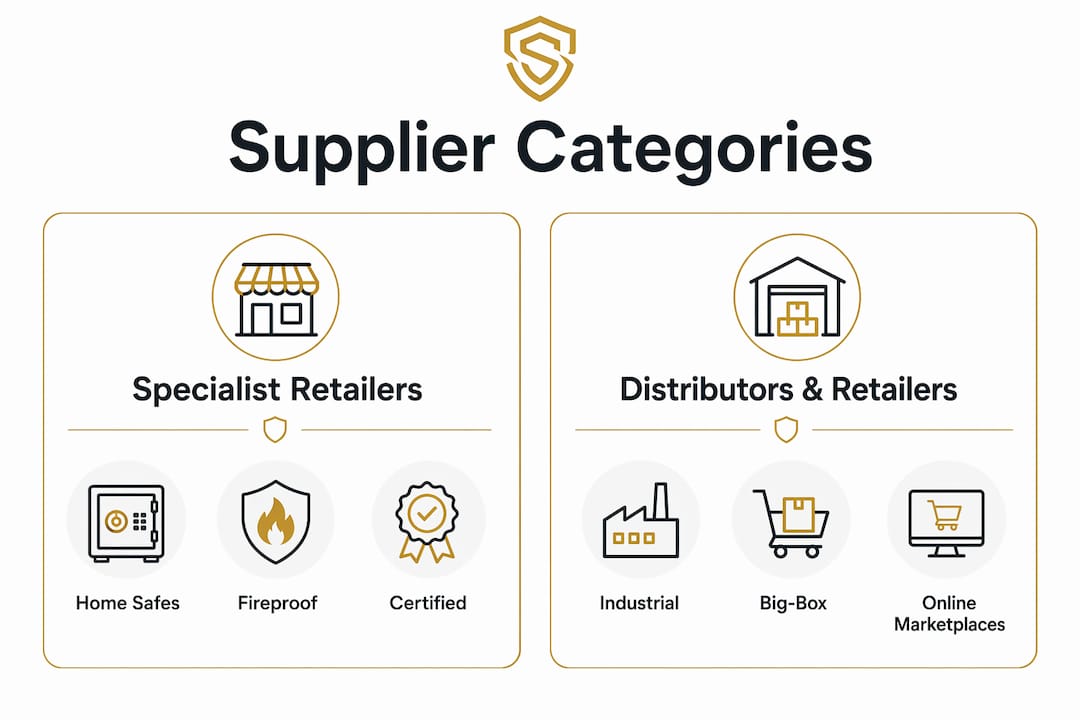
| Supplier Category | Best For | Product Range | Security Specialization | Pricing Tier | Installation & Support |
|---|---|---|---|---|---|
| Security-specialist retailer (e.g., Safes and Security Direct) | Homeowners, small businesses, regulated professionals | Safes, vault doors, surveillance systems | High — curated, certified, asset-protection focused | Mid to premium | Pro-install partners, full warranty, responsive support |
| Industrial/electrical distributor (e.g., Grainger) | Facilities, MRO buyers, commercial contractors | Broad industrial catalog; safes as secondary SKUs | Low — volume supply, limited security guidance | Varies widely | Minimal post-sale security support |
| Big-box retailer (e.g., The Home Depot) | DIY homeowners, entry-level buyers | Consumer-grade safes, basic cameras | Low — general merchandise | Entry to mid | In-store pickup; limited pro-install options |
| National alarm/integration firm (e.g., ADT) | Homeowners and businesses wanting monitored systems | Integrated alarm, cameras, monitoring contracts | High — monitoring-focused | Subscription-based | Full professional installation; ongoing monitoring |
| Online marketplace/electronics reseller (e.g., Amazon, B&H Photo Video) | Price-sensitive buyers, tech-savvy shoppers | Widest selection; quality varies significantly | Low to moderate — depends on individual seller | Entry to premium | Seller-dependent; no standard install support |
Industrial distributors often lack the curated expertise that security-specialist retailers provide for residential and small-business asset protection, particularly around fire-resistance ratings and cloud surveillance configuration. Security-focused vendors prioritize risk mitigation with engineered solutions rather than volume supply, which is a meaningful difference when the product is supposed to protect your assets.
Pro Tip: When evaluating any supplier, filter by UL or ETL certification first. A safe listed without a published fire rating or burglary classification is not a security product — it is a metal box.
How to choose the right supplier for your situation
The right supplier depends on your risk profile, not your budget alone.
Match your scenario to a supplier category:
- Homeowner protecting documents and small valuables: A security-specialist retailer or a big-box store for entry-level fire safes. Prioritize a UL 72 fire rating and a clear return policy.
- Small business needing cameras plus professional installation: A security-specialist retailer or a national alarm firm. You need someone who will show up after the sale.
- Regulated professional (pharmacist, attorney, healthcare office) needing certified safes: Security-specialist retailer only. You need documented UL/ETL certifications and a supplier who can provide those records on request.
Questions to ask any vendor before you buy:
- What is the exact UL or ETL certification for this product, and can you provide the test report?
- What are the warranty terms, and who handles claims — the retailer or the manufacturer?
- Do you offer professional installation, and can you provide local references?
- What is the return policy for a product that arrives damaged or does not meet spec?
- Do you offer financing or payment terms for commercial orders?
Red flags to walk away from:
- “Fireproof” or “high-security” labels with no published rating or test standard cited
- No documented warranty or a warranty that requires you to ship a 500-pound safe back at your expense
- No installation support or referral for heavy commercial safes
- Vague specs (“large capacity,” “heavy-duty steel”) with no dimensions, weight, or gauge listed
- Supplier domain confusion — confirm you are buying from the right company, since several unrelated brands share similar names
What specs should you verify on any product page?
The single most important spec for a safe is a certified fire and burglary rating. For cameras, it is secure storage with encryption. Everything else builds on those two anchors.
Safe specs checklist
- UL 72 fire rating: Look for the duration (30, 60, 120 minutes) and the internal temperature threshold. A fire-resistant safe rated for 60 minutes at 1,550°F external temperature protects paper; digital media needs a lower internal threshold (125°F).
- Burglary rating: UL RSC (Residential Security Container), TL-15, TL-30, or RC (Robbery/Composite) ratings tell you how long the safe resists a tool attack. “Heavy gauge steel” is not a rating.
- Boltwork and anchoring: Number and diameter of live bolts, anchor bolt holes, and whether anchor hardware is included.
- Internal dimensions and weight: Verify usable interior space, not just external dimensions. Weight matters for floor-load and anchoring decisions.
- Deposit functionality: Relevant for cash-handling businesses — confirm drop slot type and re-locker mechanism.
- Warranty and return terms: Minimum one year on parts and labor; confirm who pays freight on a warranty claim.
Camera system specs checklist
- Resolution: 4MP or higher for license plate and facial recognition at distance; 1080p is acceptable for general area coverage.
- Night performance: Look for true low-light specs (lux rating or Starlight/ColorVu designation), not just IR range in feet.
- Wired vs. wireless: Wired PoE systems are more reliable for continuous recording; wireless is faster to install but vulnerable to signal interference.
- Encryption and cloud storage: Confirm AES-128 or AES-256 encryption for stored footage. Ask whether cloud storage is included or billed separately.
- ONVIF/RTSP support: Ensures the camera integrates with third-party NVRs and video management software.
- Mobile alerts and NVR compatibility: Verify the app is actively maintained and the NVR model is on the manufacturer’s compatibility list.
Pro Tip: Manufacturers often list temperature operating ranges and continuous recording limits in footnotes or the installation manual, not the main spec sheet. Download the full datasheet before you buy — that is where the real limits live.
Vendor profiles: who sells what and who it is best for
Safes and Security Direct carries fireproof safes for home and commercial use, gun safes, pharmacy and jewelry safes, deposit safes, wall and in-floor models, vault doors, and surveillance camera systems with cloud storage and mobile alerts. Every product listing includes detailed specs, certifications, and purchase options. Pro-install referrals and documented warranties make it the right call for buyers who need more than a box shipped to their door.
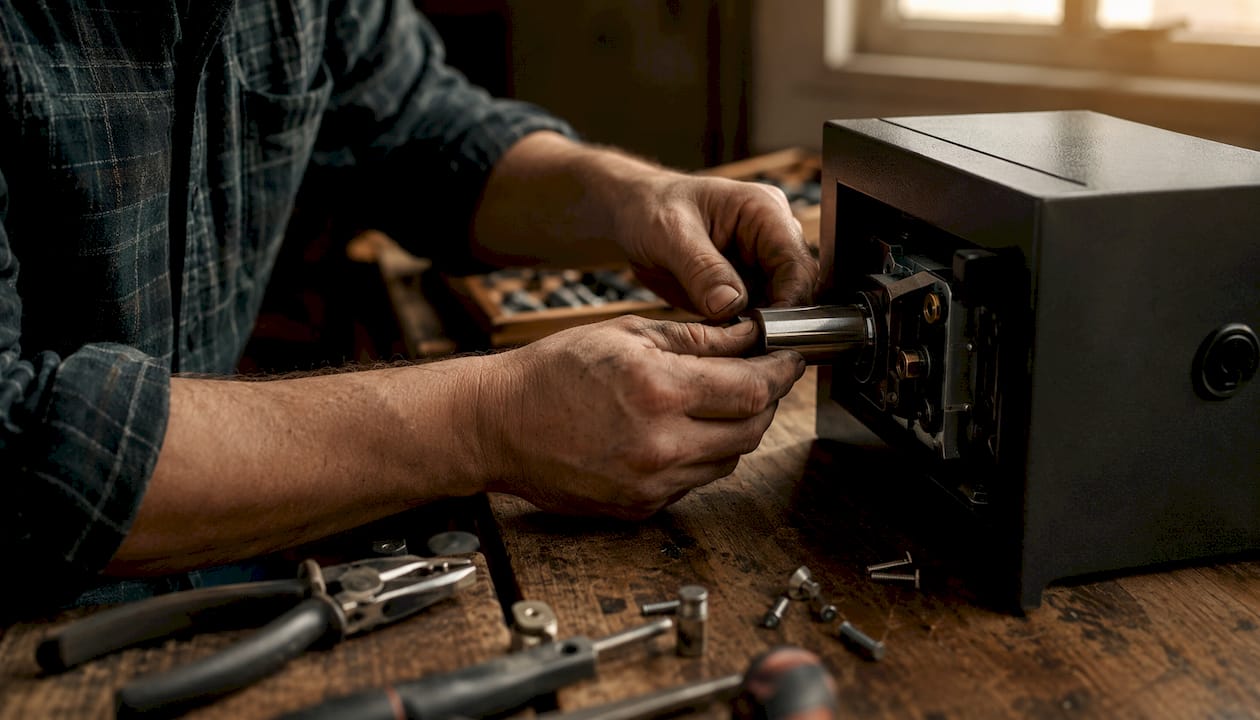
Industrial/electrical distributors (national scale, broad catalog) are built for MRO and facilities management. Safes appear in their catalogs, but large wholesalers often treat safes as secondary SKUs with limited installation or long-term maintenance support. Best for: commercial contractors sourcing hardware alongside electrical supplies.
Big-box retailers stock consumer-grade fire safes and basic camera kits at entry-level price points. Convenient for pickup, but specs are often thin and pro-install is not standard. Best for: homeowners buying a first safe under $300.
National alarm and integration firms (ADT and similar) excel at monitored systems with professional installation. The tradeoff is a subscription model and less flexibility on hardware selection. Best for: buyers who want a fully managed security system with 24/7 monitoring.
Online marketplaces and electronics resellers (Amazon, B&H Photo Video) offer the widest selection and fastest shipping. B&H is notably stronger on camera specs and professional-grade equipment. The gap is post-sale support — vendor reputation and available technical documentation are strong predictors of successful procurement, and marketplace sellers vary widely on both. Best for: tech-savvy buyers who know exactly what they need and can self-install.
Pro Tip: When switching from a large industrial distributor, request manufacturer test reports and local install references before committing. Integration gaps are the most common and most expensive post-purchase surprise.
What should you budget for safes and installation?
| Product Category | Typical U.S. Price Range | Typical Installation Time |
|---|---|---|
| Small home fire safe (under 1 cu ft) | $150–$400 | Self-install, 30–60 min |
| Mid-range home/office safe (1–3 cu ft) | $400–$1,000 | Pro anchor install, 1–2 hours |
| Commercial or high-security safe (TL-rated) | — | White-glove delivery + pro anchor, 2–4 hours |
| Residential camera kit (2–4 cameras, NVR) | $300–$1,000 | DIY or pro, 2–4 hours |
| Commercial surveillance system (pro install) | — | Site survey + pro install, 1–3 days |
Heavy safes (above 500 lbs) require freight with lift-gate or white-glove delivery. Factor that into your quote — it can add $150–$400 to the delivered cost. Camera system installs for commercial properties may also require a site survey, network bandwidth planning, and in some cases a licensed electrician for hardwired runs. Post-purchase support is a frequent hidden cost that buyers routinely underestimate when comparing sticker prices across supplier categories.
Key Takeaways
For safes and surveillance in the U.S., a security-specialist retailer with verified UL certifications, pro-install support, and documented warranties consistently outperforms a general industrial distributor on every dimension that matters for asset protection.
| Point | Details |
|---|---|
| Prioritize certified ratings | Always verify UL 72 fire rating and UL RSC/TL burglary rating before purchasing any safe. |
| Ask about installation upfront | Heavy safes and commercial camera systems need professional anchoring or site work — confirm availability before ordering. |
| Compare warranties carefully | Confirm who handles claims and who pays freight; vague warranty terms are a red flag. |
| Avoid spec-free listings | “Fireproof” or “high-security” labels without published test standards are marketing terms, not protection. |
| Safes and Security Direct | Offers certified safes, surveillance systems, and pro-install referrals — a security-specialist alternative to general distributors. |
A note on how this comparison was put together
This article is published by Safes and Security Solutions, the company behind Safes and Security Direct. The supplier categories and evaluation criteria here reflect the standards that matter for genuine asset protection: published certifications, transparent specs, and post-sale support. For tailored recommendations based on your specific risk profile or property type, contact Safes and Security Direct directly — the team can point you to the right product category and connect you with local installation resources.
Safes and Security Direct: security-grade products, ready to order
If the comparison above confirmed what most security buyers already sense — that a specialist beats a generalist when the stakes are real — Safes and Security Direct is the direct path to a certified, spec-verified purchase.
The catalog covers fireproof and burglary-resistant safes for homes and businesses, gun safes, pharmacy and deposit safes, vault doors, and surveillance camera systems with cloud storage and mobile alerts. Every listing includes full technical specs, UL/ETL certifications where applicable, and clear warranty terms. Pro-install referrals are available for heavy safes and commercial camera deployments. Browse the full catalog or contact the team for a product recommendation at safesandsecuritydirect.com.
Authoritative sources and standards to verify specs
Use these resources to independently check certifications, ratings, and vendor reputations before you buy:
- UL Product iQ — Search any UL-certified safe or security product by model number to confirm the certification is current and the rating matches what the vendor claims.
- GlobalData: WESCO International Competitors — Market-level context on industrial distributor categories and how they compare by customer type.
- CB Insights: WESCO Alternatives — Industry analysis on distributor vs. specialist retailer positioning for security hardware buyers.
- Owler: Wesco Competitors — Useful for understanding the industrial distribution landscape and confirming category fit before shortlisting a supplier.
- Semrush Competitor Overview — Helpful for checking web presence and traffic context; note that it requires an account for full detail and does not indicate product quality.
- Safes and Security Direct: Fire-Resistant Safe Checklist — A printable buyer’s checklist covering the key specs to verify on any safe product page.
Save the checklists from the specs section above, download datasheets from every shortlisted supplier, and request manufacturer test reports for any safe or camera system rated for commercial or regulated-professional use. A supplier who cannot produce those documents on request is not a supplier worth trusting with your assets.