

Five to Ten Watches: Watch Winder Safes for Luxury Collectors
A dedicated watch winder safe beats a display cabinet every time collections carry six figures or more, because it pairs certified burglary and fire protection with room for winders to keep complex movements running. Among practical, buyable options, American Security’s BFS2214 and BFS912 burglary and fire safes, along with the UL1511, cover most collections when configured with the right interior. The three factors that decide fit are interior depth for your winder modules, a real burglary/fire certification, and power planning so motors don’t stall during an outage.
TL;DR:
- Properly fitted safe interiors must accommodate stacked winder modules with sufficient depth, be certified for burglary and fire, and allow power pass-throughs without drilling.
- Measuring actual winder dimensions, verifying UL or recognized burglary ratings, and planning power needs upfront prevent costly retrofits or sizing errors.
- Adjustable TPD, rest cycles, noise levels, and high-quality materials are essential features for protecting watch movements and ensuring longevity.
- Heavy safes should be professionally anchored using certified hardware to prevent easy removal, especially for in-wall or second-floor installations.
- Trusted brands with proven support and clear warranty terms offer greater reliability when repairs or technical issues arise, safeguarding high-value collections.
Table of Contents
- What Makes a Safe Actually Winder Compatible?
- How Do You Choose a Watch Winder Safe?
- What Winder Settings Protect Your Watch Movements?
- How Do You Plan Power and Installation for a Watch Safe?
- How Often Should You Service a Winder Safe?
- Do Anchoring and Weight Actually Improve Safe Security?
- Which Lock Type Is Most Reliable for a Watch Safe?
- Why Does Brand Reputation Matter More With Winder Safes?
- What Do Watch Owners Value Most in a Safe?
- Which Safes and Security Solutions Model Fits Your Collection?
- Sources
What Makes a Safe Actually Winder Compatible?
Not every fireproof box can double as a winder home. The safes that work share three traits: enough interior clearance for winder modules stacked two or three high, a power routing option that doesn’t require drilling through a fire-rated door, and shelving that can be reconfigured rather than fixed steel dividers designed for stacks of cash.
Certain safes offer configurable interiors that accept winder modules without custom retrofitting, making them suitable for a five-to-ten-piece rotation. Some models trade a bit of interior volume for two hours of UL-listed fire protection, which is important if the safe shares space with important paperwork. Compact options provide certified burglary and fire construction with a smaller footprint, built for collectors who want serious protection without giving up a whole closet.
Beyond those three, the broader watch-safe category splits into two useful groups worth knowing about. Vault-style watch safes prioritize raw security mass, thick composite walls, and high TL burglary ratings, at the expense of some interior customization. In-wall deep safes trade portability for a lower profile, disappearing behind a panel or closet wall while still offering enough depth for winder stacks. Neither approach is wrong; the choice comes down to whether you want the safe visible and imposing or hidden and forgettable.
Lead times on certified burglary and fire safes typically run longer than standard home safes because the steel and fire-lining components are manufactured to spec rather than stocked in volume. Ask about customization options early. Interior configuration, winder module mounts, and power routing are far easier to plan before delivery than to retrofit afterward.
How Do You Choose a Watch Winder Safe?
Getting this right means measuring before you shop, not after. A safe that looks roomy in photos can turn out two inches too shallow for a stacked winder module once you account for the door swing and hinge clearance.
- Measure your winders first. Stack your winder boxes as you’d actually arrange them and measure total height, width, and depth, adding at least an inch of clearance on each side for cabling and airflow.
- Check the certification, not just the marketing copy. Look for a UL rating or a recognized burglary rating (TL15, TL30, or similar) rather than a vague “heavy duty” label. Insurers underwriting high-value collections often ask for the specific rating, not a description.
- Match fire duration to what you’re actually storing. A 30 minute fire rating protects against a quick kitchen fire; a 2 hour UL-listed rating matters more if the safe sits in a home with limited fire department response time or shares space with irreplaceable documents.
- Inspect interior materials for off-gassing risk. Cheap foam and raw adhesives can release compounds that dull metal and crystal finishes over years of enclosed storage.
- Confirm power routing before you buy. Ask whether the safe supports internal wiring pass-throughs or whether winders need to run on battery inside a sealed compartment.
- Plan for delivery weight. Certified safes in this category often weigh several hundred pounds, which means specialist freight and, in many cases, professional installation.
Pro Tip: Bring a tape measure and your actual winder boxes, not their listed dimensions, when you visit a showroom. Manufacturer spec sheets round numbers, and an eighth of an inch matters when you’re stacking three winders against a fire-rated door seal.
What Winder Settings Protect Your Watch Movements?
TPD stands for turns per day, and getting it wrong is the single most common mistake collectors make with a new winder. Watches vary in recommended TPD depending on their movement; chronometer-grade movements typically require moderate rotations, while some sports models with heavier rotors need fewer turns to stay wound. Winders with adjustable TPD and rotation direction exist specifically because a one-setting winder will overwork some movements and underwind others.
Intermittent cycling matters just as much as the number itself. A quality winder rotates for a period, then rests, mimicking the natural stop-start motion of a wrist rather than spinning constantly. Programmable rest cycles protect the movement far better than nonstop rotation, and most modern automatics include a slipping bridle that prevents true overwinding regardless.
A few technical thresholds worth checking before you buy:
- Noise output under 10 to 20 decibels for bedroom-adjacent placement.
- Anti-magnetic shielding or EMI/RFI dampening to protect movements from motor interference.
- Interior lining in Italian Nappa leather, Alcantara, or high-quality microfiber, never raw foam or cheap plastic.
Premium winder motors advertise very low noise operation, quiet enough that a safe full of running winders won’t register as background noise in a bedroom closet.
How Do You Plan Power and Installation for a Watch Safe?
Placement decisions come down to depth and access. A freestanding safe gives you more interior room to work with, while an in-wall installation saves floor space but limits how deep your winder stack can go, so measure the wall cavity before committing to that route.
- Heavy certified safes generally require specialist freight and, often, professional rigging to get through doorways and up stairs.
- Size your UPS by adding up the wattage draw of every winder motor inside the safe, then adding 20 to 30 percent overhead for inverter losses, a rule manufacturers of multi-winder installations recommend rather than guessing at a round number.
- Match UPS runtime to the outages typical in your area. Ten minutes covers a flickering grid; several hours covers a storm-related outage.
- Hire a licensed electrician for any wiring pass-through into the safe interior. This isn’t a DIY wiring job, especially on a fire-rated door seal.
If you’re finishing a closet or built-in around the safe, a custom cabinetry partner can integrate the unit so it disappears into the room rather than standing out as a steel box.
How Often Should You Service a Winder Safe?
Winders reduce wear on complex movements, but they don’t eliminate the need for regular watchmaker service, typically every three to five years depending on the movement.
- Inspect on delivery: check motor shielding, cushion fit around each watch, lock function, and interior finish for shipping damage.
- Drop silica gel packets inside and check them quarterly. Humidity control matters more in enclosed safes than in open cabinets because airflow is limited.
- Decide which pieces stay on active winding and which go into simple long-term storage; not every watch in the collection needs to run.
- Schedule motor replacement or safe servicing the moment you notice grinding, uneven rotation, or a rise in noise level.
Pro Tip: Rotate which watches sit on active winders every few months. It spreads wear evenly across your collection instead of running the same three pieces year-round while others sit idle.
Do Anchoring and Weight Actually Improve Safe Security?
Weight alone doesn’t stop a determined burglar, but it does eliminate the “grab and go” theft scenario that accounts for a lot of home safe losses. A 300 pound safe sitting unanchored on a closet floor can still be dollied out on moving blankets in under ten minutes by two people who know what they’re doing.
Anchoring closes that gap. Most certified burglary safes ship with pre-drilled anchor holes in the base, designed to bolt into concrete slab or into engineered lag points in wood subflooring. A properly anchored safe forces a burglar to attack the safe in place, which takes tools, time, and noise, all things a rushed break-in doesn’t have.
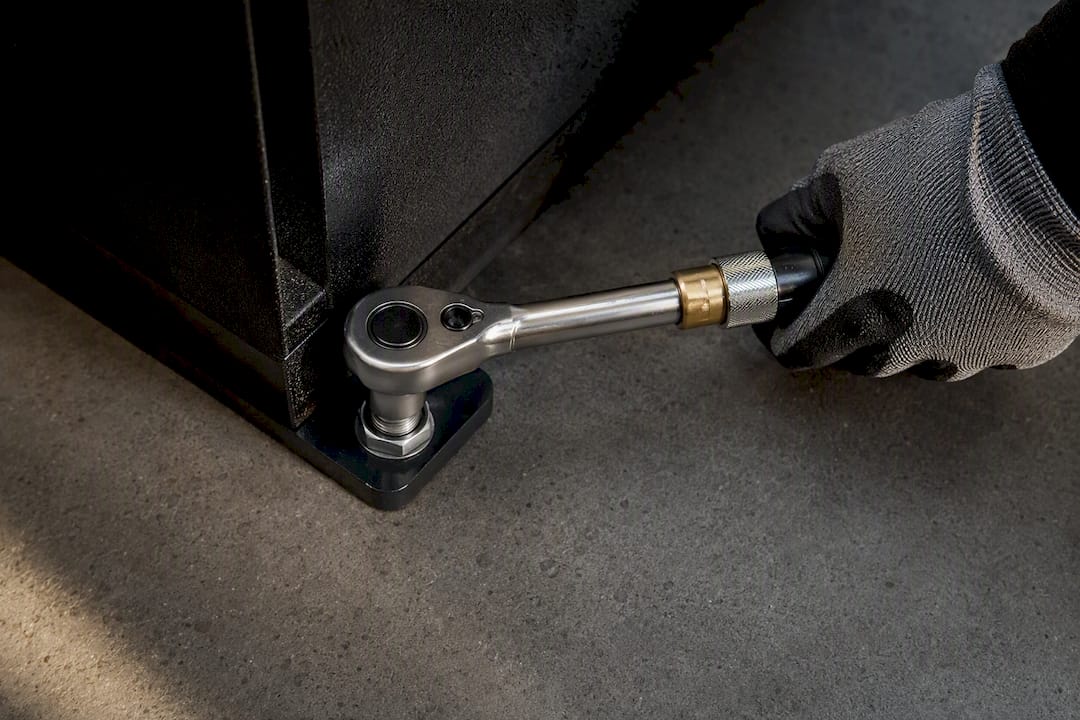
For in-wall installations, the wall structure itself does double duty as anchoring. A safe recessed into framed wall cavity and bolted to studs or blocking is functionally harder to remove than a freestanding unit twice its weight, simply because there’s nowhere to slide it out to.
A few practical anchoring notes for collectors:
- Concrete slab anchoring uses expansion bolts rated for the safe’s weight class, not generic hardware store lag bolts.
- Upper-floor installations need a structural assessment first. A 600 pound safe on a second-floor closet can be a legitimate load concern in older homes.
- Freestanding safes in basements or ground-floor closets over slab are the easiest anchoring scenario and the one most installers recommend for heavy watch safes.
Ask your retailer whether anchoring hardware ships with the unit or needs to be sourced separately. It’s a small detail that gets skipped surprisingly often.
Which Lock Type Is Most Reliable for a Watch Safe?
Traditional mechanical dial locks remain the most battle-tested option in this category, and for good reason: there’s no battery to die, no biometric sensor to misread a hand, and decades of certification history behind the mechanism. The tradeoff is speed. Dialing a combination takes longer than most owners want when they’re grabbing a watch on the way out the door.
Electronic keypad locks solve the speed problem and dominate the mid-to-upper range of certified safes today. A quality keypad lock includes redundant power (battery backup plus a manual key override) so a dead battery never locks you out permanently. The risk with keypad locks is entirely about quality tier: cheap electronic locks fail at a higher rate than mechanical dials, so this is one area where paying for a recognized lock brand inside the safe matters more than the safe’s exterior finish.
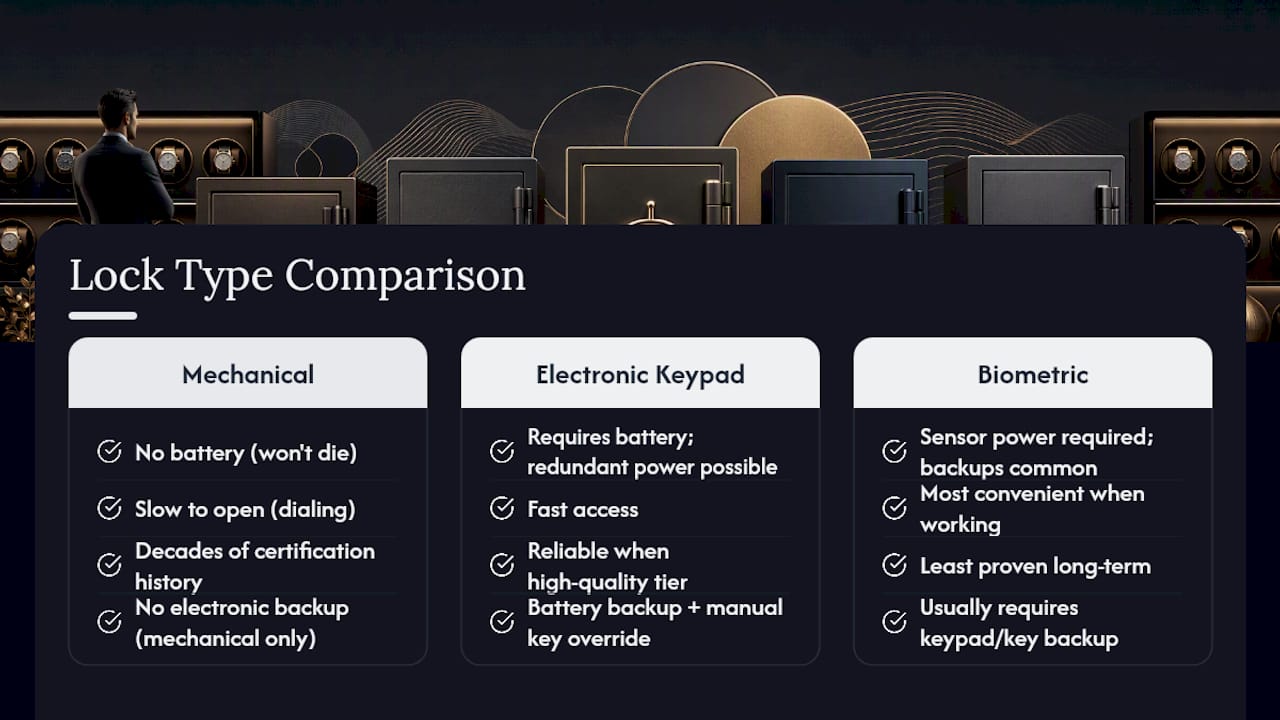
Biometric locks, fingerprint or palm readers, are the newest addition and the most convenient when they work. They’re also the least proven over long timeframes in this category. Humidity, cold hands, and sensor wear can all cause misreads, and most biometric safes still require a keypad or key backup, which somewhat undercuts the pitch of pure convenience. For a primary watch safe holding a serious collection, a certified electronic keypad with mechanical key override remains the safer bet; biometric access is better suited as a secondary, faster-access layer than the sole entry method.
Why Does Brand Reputation Matter More With Winder Safes?
A safe brand’s reputation gets tested the day something goes wrong, a motor fails, a lock sticks, a hinge seal loosens, and that’s when warranty terms and support responsiveness actually matter. Generic safe brands with no history in the watch-storage niche often can’t answer basic questions about winder wiring pass-throughs or interior humidity control, because they never designed for that use case.
Brands with an established track record in security hardware, the kind that carry UL listings and published burglary ratings rather than vague marketing claims, tend to back their products with clearer warranty documentation. That matters practically: a warranty that specifies coverage on the fire-rated seal separately from the lock mechanism tells you the manufacturer actually tested those components independently, rather than bundling everything under one vague “lifetime warranty” claim that’s hard to enforce.
Support responsiveness is the other half of reputation that’s easy to overlook until you need it. A stuck lock on a safe holding a six-figure collection isn’t a problem you want to sit in a generic call center queue over. Ask any retailer directly how warranty claims get handled and how fast a technician can reach your location, before you buy, not after something fails.
What Do Watch Owners Value Most in a Safe?
Buyers who come to us aren’t shopping on price alone. They want certified security they can document for insurance, a finish that doesn’t scream “safe” from across the room, and confidence that winders will keep running without babysitting.
Models are typically checked for realistic winder compatibility, not just interior square footage, and installation and custom interior configuration services may be offered rather than leaving buyers to figure out module mounting alone. Orders often ship and install within a few weeks, backed by direct support if anything needs adjustment after delivery.
Which Safes and Security Solutions Model Fits Your Collection?
Once you’ve measured your winders and settled on a certification level, the decision usually comes down to picking the right size within our lineup rather than starting a fresh search. That’s the advantage of working with a retailer that stocks certified, winder-ready safes directly instead of hunting through a fragmented market of custom fabricators and long backorders.
The BFS2214 Burglary and Fire Safe is our most popular pick for a five-to-ten-watch rotation, thanks to configurable interiors that adapt to winder modules without a custom retrofit. If your priority is maximum fire protection, the UL1511 delivers a full two hours of UL-listed protection, a meaningful upgrade for anyone storing watches alongside estate documents or deeds. For a tighter footprint, the BFS912 gives you the same certified construction in a size that fits a closet shelf rather than a dedicated room.
All three ship with configuration support, so you’re not left figuring out winder mounting alone, and our team can walk you through anchoring and power routing before delivery. If you’re ready to compare models against your actual collection size, request a quote and we’ll help you match the right configuration the first time.
Sources
Recommended
- Gardall JS1718-W-C Jewelry Safe – Elegant Home Jewelry Storage Safe
- Best Home Vaults & Safes 2026: Top 5 Ranked