

Best Vaultek Safe Alternatives for Home Security in 2026
What are the top alternatives to Vaultek biometric and gun safes?
If you’re shopping for biometric or gun safes and Vaultek’s pricing gives you pause, you have real options. The best vaulteksafe.com alternatives in 2025 include the Barska AX13092, Barska HQ200, Awesafe Gun Safe, Browning M49 Gun Safe, Vaultek VTi, and Vaultek RS500i. Each brings a different mix of locking technology, steel construction, and price point to the table.
Here’s a quick-reference comparison to start your evaluation:
| Model | Best For | Locking Mechanism | Steel Gauge | Authorized Users | Battery Life | Price Range |
|---|---|---|---|---|---|---|
| Barska AX13092 | Budget biometric access | Biometric + key backup | 16-gauge | Up to 20 fingerprints | Not publicly listed | Budget |
| Barska HQ200 | Quick-access handgun storage | Biometric + key backup | 16-gauge | Up to 120 fingerprints | Not publicly listed | Budget–Mid |
| Awesafe Gun Safe | Entry-level home storage | Biometric + keypad + key | 18-gauge | Up to 20 fingerprints | Not publicly listed | Budget |
| Browning M49 Gun Safe | Long gun and rifle storage | Electronic keypad + key | 14-gauge | Single user keypad | Not publicly listed | Mid–High |
| Vaultek VTi | Smart home integration | Biometric + Bluetooth + keypad | 16-gauge | Up to 20 fingerprints | Not publicly listed | Mid–High |
| Vaultek RS500i | High-capacity smart storage | Biometric + WiFi + Bluetooth | 14-gauge | Up to 20 fingerprints | Not publicly listed | High |
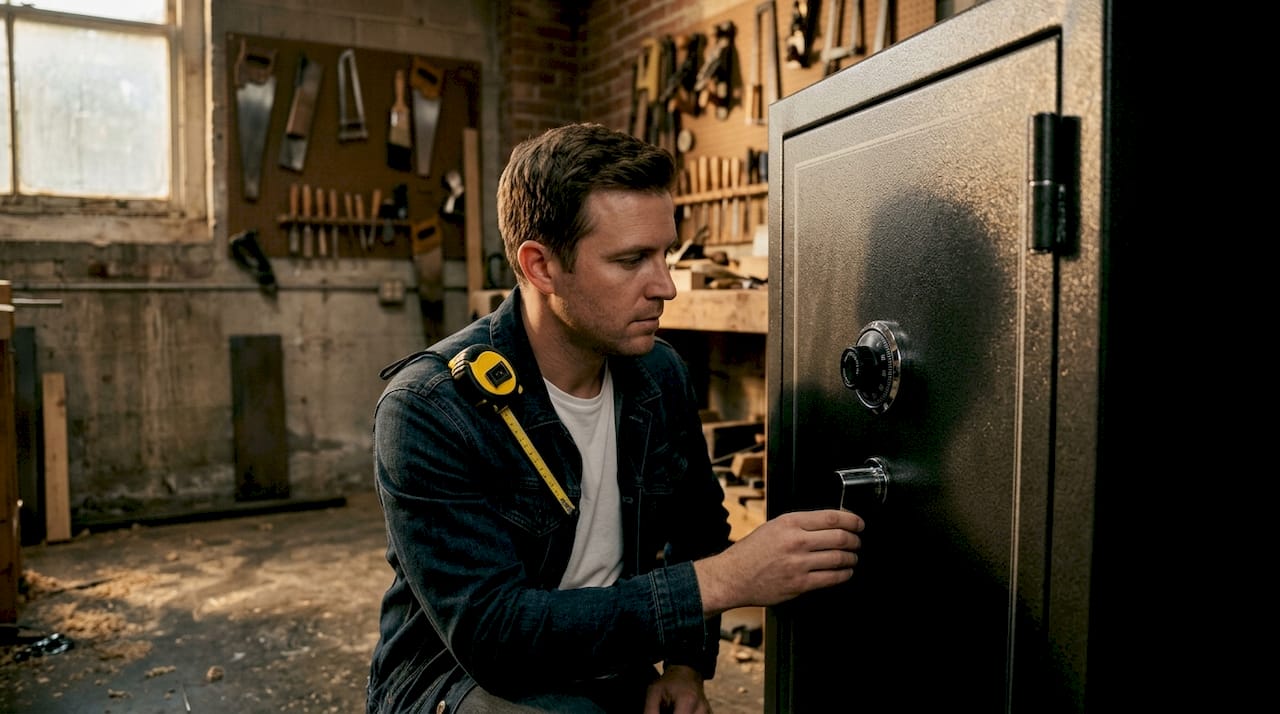
A few things stand out immediately. The Browning M49 and Vaultek RS500i both use 14-gauge steel, which is heavier and harder to breach than the 16-gauge or 18-gauge found in budget models. The Barska HQ200 supports a higher number of fingerprints than many safes in its price range. And if smart connectivity matters to you, the Vaultek VTi and RS500i are the only models here with Bluetooth and WiFi built in.
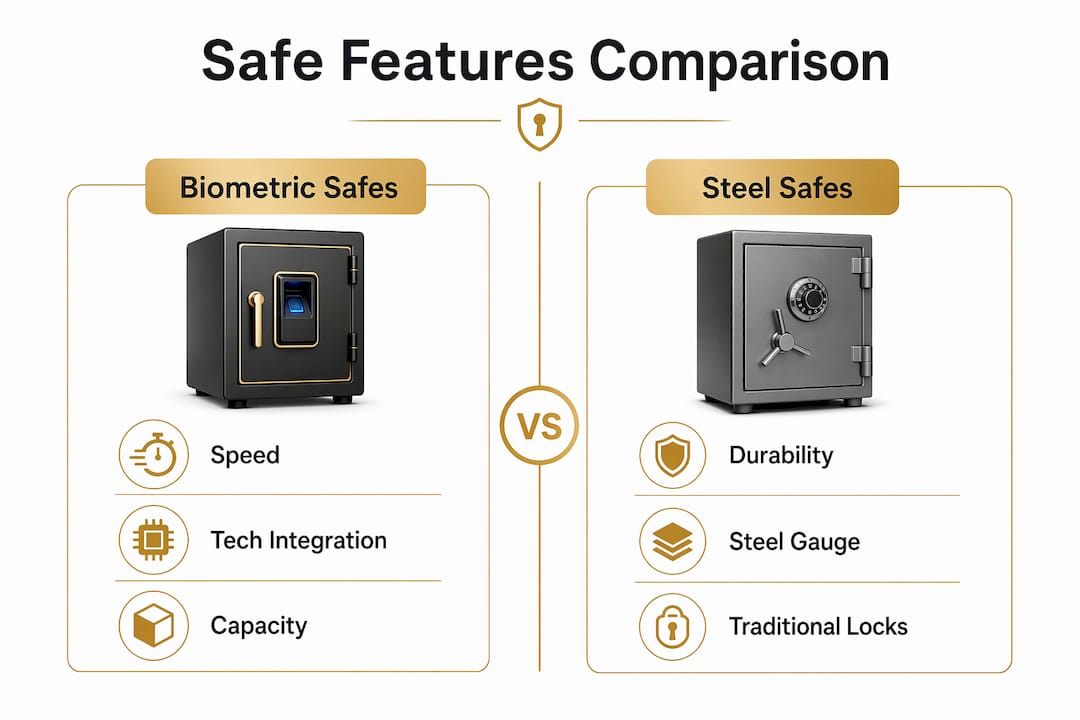
Pro Tip: Steel gauge works inversely: a lower number means thicker steel. A 14-gauge wall resists prying and drilling far better than an 18-gauge one, so prioritize gauge when burglary resistance is your main concern.
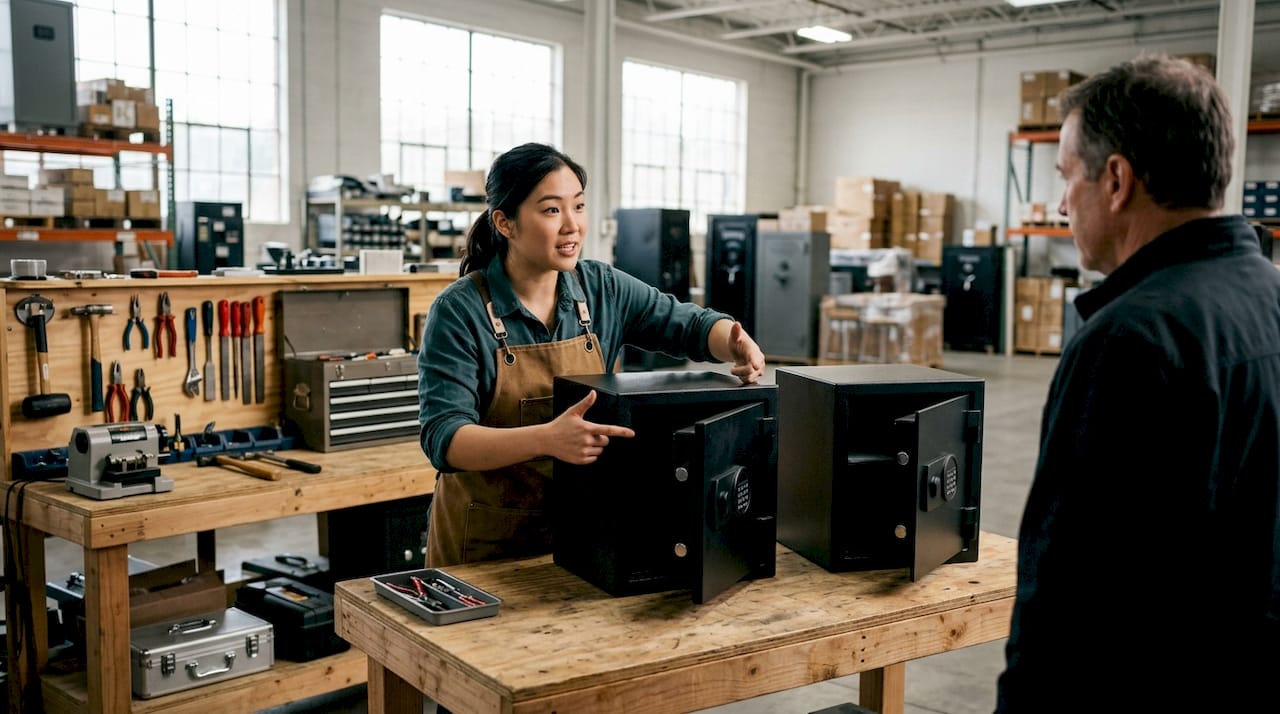
Table of Contents
- How do these biometric gun safes compare in detail?
- How to choose the right biometric or gun safe for your home
- How reliable are biometric safes, and how do they actually work?
- How Safes and Security Solutions evaluates and recommends these safes
- Safes and Security Solutions carries the safes worth buying
- Key Takeaways
How do these biometric gun safes compare in detail?
Barska AX13092
The AX13092 is Barska’s entry into the quick-access biometric market, and it earns its place as a reliable biometric option for homeowners who want fingerprint access without spending heavily. It stores fingerprints for multiple users, covering a typical household comfortably. The 16-gauge steel body is solid for the price tier, and a backup key ensures you’re never locked out if the battery dies. It’s a straightforward safe: no app, no Bluetooth, no frills. That simplicity is actually a selling point for buyers who don’t want to manage firmware updates or connectivity issues.
Barska HQ200
Where the AX13092 keeps things minimal, the HQ200 scales up. The 120-fingerprint capacity is the headline feature here, making it practical for small businesses, shared households, or anyone who wants multiple authorized users without the complexity of a networked system. The 16-gauge construction is consistent with the AX13092, but the larger interior gives you room for a full-size handgun plus spare magazines or documents. Key backup is included. For buyers who want biometric access at a mid-range price with genuine multi-user flexibility, the HQ200 is hard to beat.
Awesafe Gun Safe
The Awesafe is the most accessible price point on this list. It combines biometric, keypad, and physical key entry in one unit, which means you have three ways to get in if one method fails. The 18-gauge steel is thinner than the competition, so this safe is better suited to deterring opportunistic theft than resisting a determined attack. Think of it as a quick-access solution for a nightstand or closet shelf rather than a primary home security vault. The triple-entry system is genuinely useful for households where different family members prefer different access methods.
Browning M49 Gun Safe
The Browning M49 is built for long guns. Its 14-gauge steel construction puts it in a different class from the budget biometric options, and the interior is configured for rifles and shotguns rather than handguns. The locking mechanism is electronic keypad with a physical key backup, not biometric, so access speed depends on entering a code rather than a fingerprint scan. That’s a reasonable trade-off for a safe designed to store long guns securely rather than provide sub-second access. Browning’s reputation in the firearms industry carries weight here, and the M49 reflects that with heavier construction and a more serious price tag.
Vaultek VTi
The VTi is Vaultek’s answer to buyers who want smart home integration without stepping up to the RS500i’s price. Bluetooth connectivity lets you manage access through the Vaultek app, and the biometric scanner handles up to 20 fingerprints. The 16-gauge steel is consistent with mid-range competitors. What sets the VTi apart is the anti-impact interior, which protects firearms from damage during a break-in attempt, and the rechargeable battery system. Vaultek’s smart connectivity features like app control and Bluetooth entry are genuinely useful if you want to monitor access history or add and remove users remotely.
Vaultek RS500i
The RS500i is the most capable safe on this list. It adds WiFi to the Bluetooth and biometric combination, which means remote monitoring and access management from anywhere with a signal. The 14-gauge steel matches the Browning M49 for construction quality, and the interior is designed for multiple handguns with a modular layout. The RS500i also includes an anti-theft cable for travel use, which is a practical touch for anyone who moves firearms between locations. The price reflects all of this. If you’re comparing the RS500i to other high-end options, the WiFi connectivity and modular interior justify the premium for buyers who want full smart-home integration.
| Model | Security Certification | Warranty | Notable Feature |
|---|---|---|---|
| Barska AX13092 | Not publicly listed | Limited manufacturer | 120 fingerprints |
| Barska HQ200 | Not publicly listed | Limited manufacturer | 120-fingerprint capacity |
| Awesafe Gun Safe | Not publicly listed | Limited manufacturer | Triple-entry system |
| Browning M49 | Not publicly listed | Limited manufacturer | 14-gauge long gun storage |
| Vaultek VTi | Not publicly listed | Limited manufacturer | Bluetooth + anti-impact interior |
| Vaultek RS500i | Not publicly listed | Limited manufacturer | WiFi + modular interior |
UL Residential Security Container (RSC) certification is the standard to look for when evaluating burglary resistance. None of the budget-tier models on this list publicly advertise RSC ratings, which is typical for quick-access handgun safes. The Browning M49 and Vaultek RS500i are more likely to meet higher resistance standards given their 14-gauge construction, but buyers should confirm certification status directly with the manufacturer before purchasing.
How to choose the right biometric or gun safe for your home
Picking the right safe comes down to four practical questions: How fast do you need access? How much do you want to spend? Where will it live? And how seriously do you need to resist a determined break-in?
Lock type and access speed
Biometric locks win on speed. A fingerprint scan takes under a second when the sensor reads cleanly, which matters if you need a firearm quickly in an emergency. Electronic keypads are slightly slower but more consistent, since they don’t depend on finger condition. Digital vs. mechanical lock trade-offs are worth understanding before you commit: electronic locks offer convenience and multiple access methods, while mechanical locks never need batteries and are harder to defeat electronically.
Steel gauge and construction quality
For home security, 14-gauge steel is the threshold where a safe starts to genuinely resist prying tools. Anything thinner works as a deterrent against casual theft but won’t stop someone with time and basic tools. If the safe is going in a bedroom nightstand for quick access, 16-gauge is acceptable. If it’s storing multiple firearms in a garage or basement, 14-gauge is worth the extra cost.
Size, capacity, and portability
Installation and portability vary widely across this category. Portable cable-tethered safes like the Vaultek RS500i work for travel but won’t stop someone from walking off with the whole unit if it’s not anchored. Heavier safes like the Browning M49 need to be bolted to a floor or wall to be effective. Measure your storage space before buying, and factor in whether you need to move the safe between locations.
Battery life and backup access
Every electronic safe on this list includes a physical key backup, which is the minimum acceptable standard. Battery life varies by model and usage frequency, and a dead battery at the wrong moment is a real scenario. When evaluating how a moving company handles valuables, professionals consistently note that secure storage during transit depends on both the lock mechanism and the physical anchoring of the container. The same logic applies at home: the lock is only part of the equation.
Key decision criteria:
- Steel gauge: 14-gauge for primary home security, 16-gauge acceptable for quick-access nightstand use
- Lock type: biometric for speed, keypad for consistency, mechanical backup for reliability
- User capacity: match fingerprint slots to the number of authorized household members
- Certification: look for UL RSC rating when burglary resistance is the priority
- Battery backup: confirm physical key override is included before purchasing
- Installation: bolt-down capability is necessary for any safe storing multiple firearms
Pro Tip: Don’t buy a safe based on the lock alone. A biometric lock on an 18-gauge steel box is still an 18-gauge steel box. Match the construction quality to the actual threat you’re protecting against.
How reliable are biometric safes, and how do they actually work?
Biometric safes use optical or capacitive fingerprint sensors to read the unique ridge patterns on your fingertip. The sensor captures an image, converts it to a digital template, and compares it against stored templates in under a second. Most consumer-grade biometric safes store fingerprint templates for multiple authorized users, depending on the model.
The reliability concern most buyers have is legitimate: dirty or cut fingers can affect sensor accuracy. Optical sensors, which use light to capture the fingerprint image, are more sensitive to surface conditions than capacitive sensors, which measure electrical differences across the ridgeline pattern. Higher-end safes tend to use capacitive sensors for this reason.
Factors that affect biometric safe performance:
- Sensor type: capacitive sensors outperform optical sensors in real-world conditions
- Enrollment quality: registering multiple fingers and enrolling each finger twice improves read rates
- Finger condition: cuts, dirt, lotion, or extreme cold can reduce accuracy on any sensor type
- Template storage: more stored templates mean more authorized users but can slightly slow matching speed
- Firmware quality: better-built safes update sensor algorithms to improve accuracy over time
The practical takeaway is that biometric access is fast and convenient under normal conditions, but every safe on this list includes a backup entry method for good reason. Register at least two fingers per authorized user, and keep the backup key in a separate secure location.
How Safes and Security Solutions evaluates and recommends these safes
The recommendations on this list follow the same framework that OSHA’s product evaluation guidance applies to safety equipment: prioritize measurable performance metrics over brand recognition. That means steel gauge, lock type, user capacity, and battery backup get weighted more heavily than marketing claims or brand loyalty.
Selecting a safe based on concrete performance metrics like steel gauge and lock type, rather than brand alone, is the approach that consistently produces better hazard reduction outcomes. A heavier gauge, a certified lock, and a reliable backup mechanism are the three variables that actually determine whether a safe does its job.
The team at Safes and Security Solutions has direct experience with the product categories covered here, including hands-on evaluation of biometric sensors, steel construction, and locking mechanisms across price tiers. That experience informs the rankings and the buying criteria outlined in this article.
Affiliate disclosure: This article contains affiliate links. Safes and Security Solutions may earn a commission if you purchase through links on this page, at no additional cost to you. This does not influence which products are recommended or how they are ranked.
Pro Tip: When comparing safes, ask the manufacturer directly whether the model carries a UL RSC or TL certification. Certified safes have been physically tested against burglary methods. Uncertified models have not, regardless of how the marketing copy reads.
Safes and Security Solutions carries the safes worth buying
Sorting through six safe models across three price tiers takes time, and the stakes are real when you’re storing firearms at home. Safes and Security Solutions cuts through that by stocking a curated selection of burglary-resistant safes that have been evaluated against the criteria covered in this article: steel gauge, lock type, certification status, and practical usability.
The difference between browsing a general retailer and shopping at Safes and Security Solutions is specificity. Every product listing includes the construction details that actually matter for a buying decision, not just the feature highlights. You get the gauge, the lock type, the backup mechanism, and the certification status in one place, without having to cross-reference manufacturer spec sheets. Browse the full safe selection at Safes and Security Solutions and find the model that fits your home security setup.
Key Takeaways
The most reliable biometric gun safe alternative to Vaultek depends on steel gauge, lock type, and whether you need smart connectivity, not on brand name alone.
| Point | Details |
|---|---|
| Steel gauge is the primary security indicator | 14-gauge steel resists prying tools; 16-gauge suits quick-access nightstand use only. |
| Biometric sensors have real limitations | Dirty or cut fingers reduce accuracy; register multiple fingers and keep a backup key. |
| Smart connectivity adds cost and complexity | WiFi and Bluetooth features in the Vaultek RS500i and VTi suit tech-forward buyers willing to pay a premium. |
| Certification matters more than marketing | UL RSC certification confirms tested burglary resistance; uncertified models have not been physically tested. |
| Safes and Security Solutions | Stocks evaluated safes with full construction specs listed, so you can compare gauge, lock type, and certification in one place. |
Recommended
- Top Vault Door Security Features for Homes & Saferooms – Safes and Security Direct
- Top 4 Safes for Home Protection in 2026 for Secure Living – Safes and Security Direct
- Top 8 Burglary-Resistant Safe Options 2026 – Safes and Security Direct
- Top 4 Best Burglary-Resistant Safes in 2026 – Safes and Security Direct