

Types of Indoor Safes: A Practical Buyer's Guide
TL;DR:
- Indoor safes are categorized into fire-resistant, burglary-resistant, and specialty safes, each designed to protect against specific threats. Choosing the correct safe type is essential because fire safes do not resist break-ins, and burglary safes do not withstand fires; proper certification like UL or ETL is critical to verify claims. The most effective safes match their protection rating to the specific risk and are properly anchored to prevent removal by thieves.
Indoor safes are classified into three primary categories: fire-resistant, burglary-resistant, and specialty safes, each engineered to address a distinct threat. Choosing the wrong type means your valuables may survive a fire but not a break-in, or vice versa. The types of indoor safes available in 2026 span a wide range of sizes, locking mechanisms, and certification standards, from UL-rated fireproof models by SentrySafe to high-security TL-30 units by Liberty Safe. This guide cuts through the confusion by matching each safe type to real-world use cases, so you buy exactly what your situation requires.
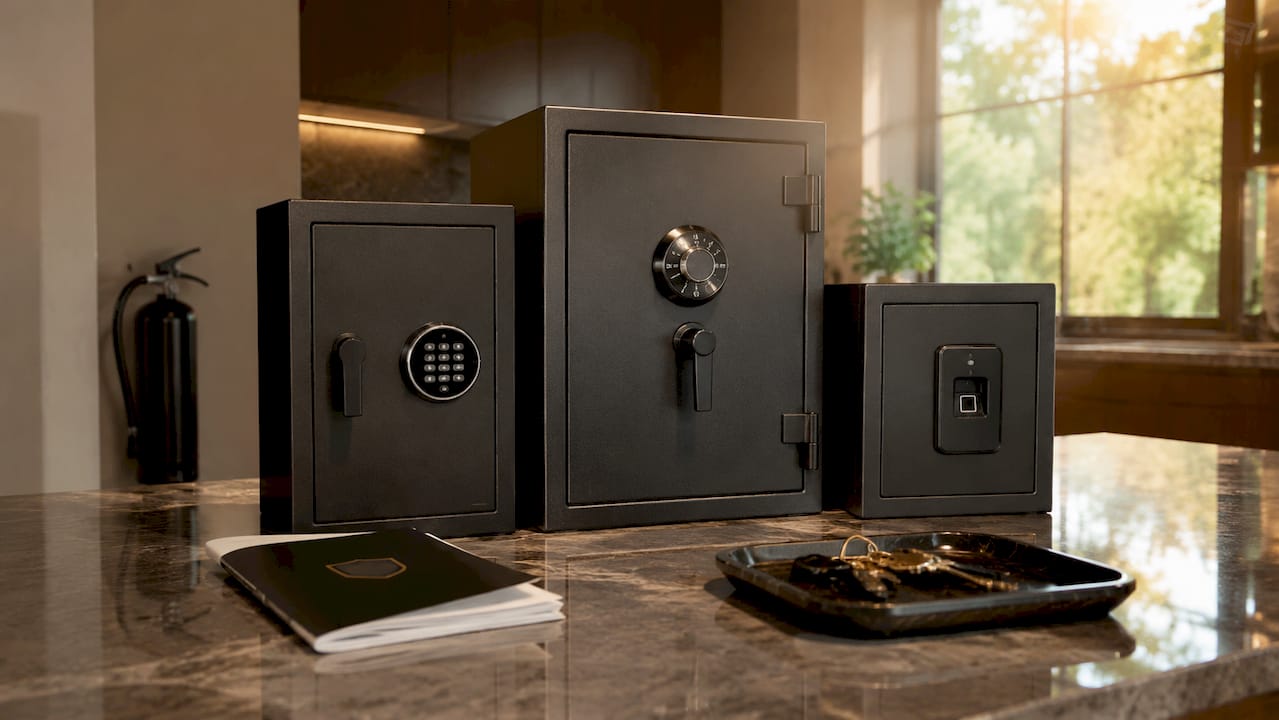
1. What are the main types of indoor safes?
Indoor safes fall into three core categories based on their primary protection goal. Fire-resistant safes protect contents from heat and smoke. Burglary-resistant safes resist physical attack. Specialty safes, including gun safes, wall safes, and media safes, address specific storage needs that overlap with both categories.
Most buyers make the mistake of treating these categories as interchangeable. A fire safe is not a burglary safe. A gun safe is not automatically fire-rated. Understanding which category solves your actual problem is the first decision you need to make before comparing brands or prices.
2. Fire-resistant indoor safes and their protection levels
Fire-resistant safes use the UL 72 standard to classify protection by interior temperature during a fire. UL 72 Class 350 keeps the interior below 350°F, which protects paper documents. Class 150 protects DVDs, CDs, and photographs. Class 125 keeps temperatures below 125°F, protecting USB drives and hard drives. Each step down in temperature threshold requires heavier insulation and more complex construction, which is why Class 125 safes cost significantly more.
- Class 350: Best for paper documents, legal files, and cash
- Class 150: Protects photographs, film, and optical media
- Class 125: Required for USB drives, SSDs, and external hard drives
Duration ratings matter as much as temperature class. A safe rated for 30 minutes at Class 350 offers far less protection than one rated for 60 or 120 minutes. House fires typically burn for 20–60 minutes before suppression, so a 60-minute rating is the practical minimum for home use.
Independent certification from UL or ETL is the only reliable way to verify fire claims. Many low-cost safes carry manufacturer-only ratings with no third-party testing. Those ratings are marketing, not engineering.
Pro Tip: Look for the UL or ETL certification mark physically stamped on the safe, not just printed in the product description. If the mark is absent, the fire rating is unverified.
A critical limitation: fire safes are not burglary safes. Most fire safes under $300 can be pried open in under two minutes. If you need both protections, you need a composite-rated safe or two separate units.
3. How burglary-resistant safes differ and what ratings show real protection
Burglary-resistant safes are built to resist physical attack, not heat. The UL 1037 standard covers Residential Security Containers (RSC), which must withstand a five-minute attack using common tools. TL-15 and TL-30 ratings under UL 687 represent higher resistance, requiring 15 and 30 minutes of sustained tool attack respectively.
The engineering difference between fire and burglary safes is significant. Burglary safes use hardened steel plates, re-lockers, and anti-drill protection. Fire safes use thick insulation that is actually softer and easier to penetrate. A composite safe rated for both threats is heavier, more expensive, and the right choice when you need genuine dual protection.
Common burglary-resistant safe categories include:
- RSC-rated residential safes: Entry-level burglary protection for homes; suitable for jewelry, cash, and documents
- TL-15 and TL-30 commercial safes: For businesses storing cash, contracts, or high-value items
- Gun safes with RSC ratings: Designed to prevent unauthorized firearm access, often with long-gun capacity
Proper anchoring dramatically increases burglary resistance. A safe that can be carried out of the building provides almost no protection, regardless of its rating. Pre-drilled anchor holes and bolt-down kits are a baseline requirement, not an optional upgrade. You can find real-world examples of burglary-resistant safes tested under UL 1037 and UL 687 standards to compare options before buying.
Pro Tip: Never place a burglary-resistant safe in a closet without anchoring it to the floor or wall. Thieves prioritize speed. A bolted safe adds critical delay that most burglars will not wait out.
4. What lock types are available for indoor safes and how to choose
Lock type determines how fast you access your safe and how reliable that access is under pressure. Electronic keypad locks open a safe in 2–5 seconds but require batteries. Mechanical dial locks take 15–30 seconds but are battery-free and extremely reliable. Biometric locks offer the fastest access but carry a higher risk of fingerprint recognition failure.
- Electronic keypad: Best for home use and business environments where speed matters; change the code easily; replace batteries annually
- Mechanical dial: Best for long-term storage where access speed is not critical; zero battery dependency; preferred for high-security commercial applications
- Biometric: Best for gun safes and emergency access scenarios; backup lock options are strongly recommended due to occasional recognition failure
The right lock type depends on your scenario, not just your preference. A gun safe in a bedroom benefits from biometric access because seconds matter in an emergency. A business safe storing weekly cash deposits benefits from a mechanical or electronic lock with an audit trail. Never choose a lock based on novelty. Choose it based on how you will actually use the safe under stress.
User experience factors like battery dependency and maintenance frequency affect long-term practicality. A dead battery at the wrong moment is a real failure mode, not a hypothetical one.
5. How to choose indoor safe size and features for your valuables
Safe sizing starts with your contents, not the space available. For documents only, 0.5–1.0 cubic feet is sufficient. Documents plus valuables require 1.0–2.0 cubic feet. Firearms require purpose-built gun safes sized by the number and type of weapons stored.
- List every item you plan to store before measuring. Most buyers underestimate volume by 30–40% and outgrow their safe within two years.
- Measure your largest item and add clearance on all sides. A standard letter-size document folder requires at least 12 inches of interior width.
- Map your delivery path. A safe that cannot fit through your doorway or down your hallway is useless regardless of its specs.
- Check anchor points in your chosen location before ordering. Concrete floors and wall studs are ideal. Hollow walls are not.
Additional features worth evaluating include water resistance, interior lighting, adjustable shelving, and dedicated digital media compartments. Water resistance is especially relevant for safes stored in basements or areas prone to flooding. A fireproof safe selection guide can help you match specific features to your storage environment.
Pro Tip: Buy one size larger than you think you need. Storage needs grow over time, and upgrading a safe is far more expensive than buying the right size initially.
6. Comparison of popular indoor safe types
The table below compares the four main indoor safe categories across the criteria that matter most for real buying decisions.
| Safe type | Primary protection | Typical lock options | Best use case | Price range |
|---|---|---|---|---|
| Fire-resistant (Class 350) | Heat and smoke | Keypad, mechanical | Paper documents, cash | $100–$500 |
| Fire-resistant (Class 125) | Heat, smoke, digital media | Keypad, mechanical | USB drives, hard drives | $300–$1,200 |
| Burglary-resistant (RSC) | Tool attack (5 min) | Keypad, mechanical, biometric | Jewelry, home valuables | $200–$800 |
| Burglary-resistant (TL-30) | Tool attack (30 min) | Mechanical, keypad | Business cash, contracts | $1,500–$5,000+ |
| Composite (fire + burglary) | Heat, smoke, and tool attack | Keypad, mechanical | All-around home and business | $500–$3,000 |
Key selection principles:
- For digital media: Choose Class 125 fire-rated safes. Standard Class 350 safes will destroy USB drives and SSDs even while protecting paper.
- For businesses: TL-15 or TL-30 ratings are the minimum credible standard. RSC is a residential grade.
- For budget buyers: A certified RSC safe plus a separate Class 350 fire safe often costs less than a composite unit and provides comparable protection.
- For all buyers: UL and ETL certification is non-negotiable. Fire and burglary ratings measure different threats and cannot substitute for each other.
The most common buying mistake is purchasing a fire safe and assuming it also resists burglary. These are separate engineering problems requiring separate solutions unless the safe carries both ratings.
Key takeaways
The most effective indoor safe matches its UL-certified protection rating to the specific threat you face, whether fire, burglary, or both, because no single rating covers all risks.
| Point | Details |
|---|---|
| Match safe type to threat | Fire safes protect against heat; burglary safes resist tool attack. They are not interchangeable. |
| Verify independent certification | Only UL or ETL certification confirms that fire and burglary claims are real, not marketing. |
| Choose lock type by use case | Biometric for emergency access, mechanical for reliability, electronic keypad for everyday speed. |
| Size up, not down | Buy larger than your current needs. Storage requirements grow and upgrading is costly. |
| Anchor every burglary safe | A bolted safe resists removal. An unanchored safe offers minimal protection regardless of its rating. |
What I’ve learned from years of watching buyers get this wrong
The single most common mistake I see is buyers choosing a fire safe and calling it done. They assume the safe protects against everything because it looks solid and heavy. It does not. A crowbar defeats most fire safes in under two minutes. That is not a flaw in the safe. It is a fundamental design difference. Fire safes are built to insulate, not to resist force.
The second mistake is ignoring certification. A manufacturer can print any rating on a box. UL and ETL certification means an independent lab tested that specific model under controlled conditions. When a safe lacks that mark, the rating is a claim, not a fact. I have seen buyers lose irreplaceable documents and valuables because they trusted an uncertified safe that failed exactly as its construction suggested it would.
Lock choice is where buyers overthink things. Biometric sounds impressive, but if your fingerprint fails to register at 2 a.m. during an emergency, the speed advantage disappears. A keypad with a backup key is more reliable for most home scenarios. Mechanical dials suit long-term storage where you access the safe infrequently.
The right approach is simple: identify your primary threat, find a certified safe that addresses it, choose a lock type that fits your access habits, and anchor the safe properly. Everything else is secondary.
— Safes and Security Solutions
Certified indoor safes for every protection level
Choosing a certified safe is straightforward when you have access to a curated selection organized by protection type and use case.
Safes and Security Solutions carries a full range of fire-resistant, burglary-resistant, and composite indoor safes, all independently certified to UL or ETL standards. Whether you need a compact Class 125 safe for digital media, an RSC-rated unit for home valuables, or a TL-30 commercial safe for business use, the catalog covers every protection level. Sizes range from under one cubic foot to large-capacity gun safes, with electronic keypad, mechanical, and biometric lock options available. Browse the full selection at Safes and Security Direct and filter by certification, size, and lock type to find the right fit for your situation.
FAQ
What is the difference between a fire safe and a burglary safe?
A fire safe uses insulation to keep interior temperatures below a set threshold during a fire. A burglary safe uses hardened steel and mechanical barriers to resist tool attacks. The two designs solve different problems and require separate certifications.
What UL rating do I need to protect USB drives and hard drives?
You need a UL 72 Class 125 fire-rated safe. Class 350 safes protect paper but reach temperatures that destroy digital media. Class 125 keeps the interior below 125°F, which is the threshold for USB drives and hard drives.
How long should a fire safe’s duration rating be?
A 60-minute fire rating is the practical minimum for home use. House fires typically burn for 20–60 minutes before suppression, so a 30-minute safe may not provide adequate protection in a real fire event.
Are biometric locks reliable enough for a home safe?
Biometric locks are fast but can fail to recognize fingerprints due to moisture, cuts, or sensor issues. Always choose a biometric safe that includes a backup keypad or key override for situations where the fingerprint reader does not respond.
Do I need to anchor my indoor safe to the floor?
Anchoring is strongly recommended for any burglary-resistant safe. An unanchored safe can be carried out of the building intact, which eliminates the protection the safe’s rating is designed to provide. Most quality safes include pre-drilled anchor holes and bolt-down hardware.
Recommended
- Fireproof Safe Selection Guide for Secure Home Protection – Safes and Security Direct
- How to Choose a Business Safe: 2026 Buyer’s Guide – Safes and Security Direct
- 7 Types of Burglary-Resistant Safes Every Owner Should Know – Safes and Security Direct
- Wall safe guide: secure storage and expert installation – Safes and Security Direct