

The Role of Outdoor Cameras in Property Security
TL;DR:
- Outdoor cameras are weatherproof devices mounted on building exteriors to monitor and deter property crimes. Visible cameras paired with active monitoring significantly reduce crime, with deterrence increasing when combined with signage and real-time alerts. Proper placement, high resolution, and integration with other security layers maximize their effectiveness in preventing theft and vandalism.
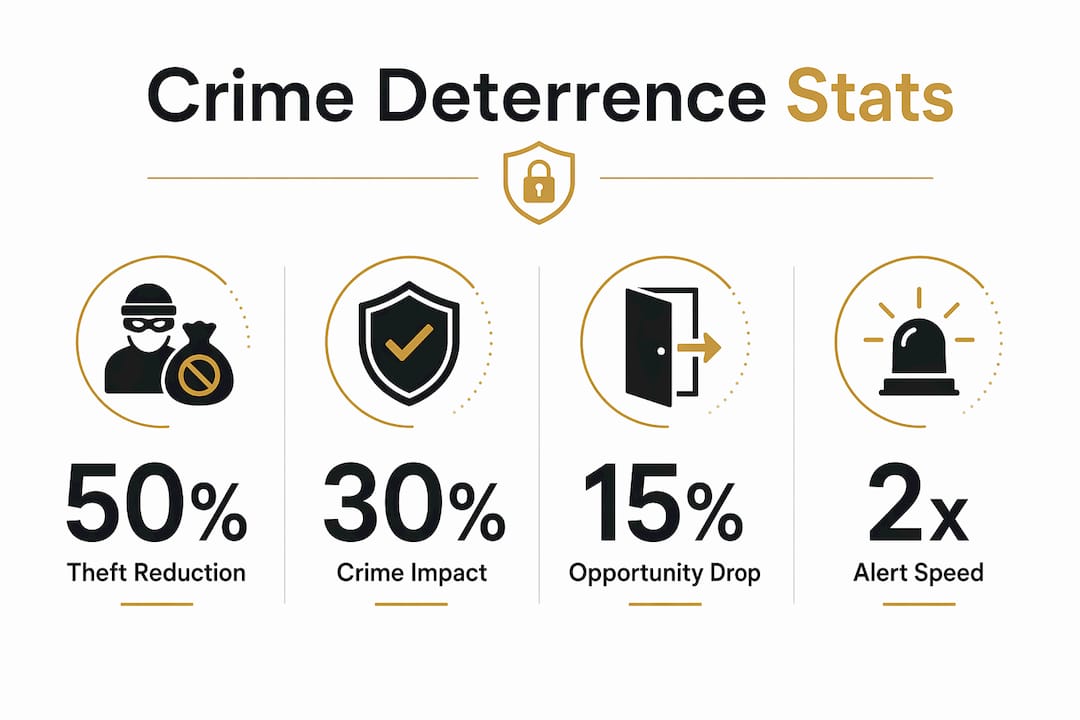
Outdoor cameras are defined as weatherproof surveillance devices mounted on building exteriors to monitor, record, and deter criminal activity on private property. The role of outdoor cameras extends well beyond simple recording. Crime reduction studies show visible, well-placed cameras consistently cut opportunistic property crimes by 15–50%. That range reflects real differences in placement quality, camera density, and whether the system includes active monitoring. This article covers how outdoor cameras deter crime, which features matter most in 2026, where to mount them, and how to connect them with alarms and lighting for maximum protection.
How do outdoor cameras deter crime?
Outdoor cameras deter crime by changing the math for potential offenders. Rational choice theory, a framework used in criminology, holds that most property criminals weigh perceived risk against expected reward before acting. A visible camera raises that perceived risk immediately.
Surveillance visibility shifts offenders’ cost-benefit calculations, making the presence of a camera often as powerful as the footage it captures. Signage that announces surveillance can reinforce this effect even further. A sign reading “24-hour video surveillance” paired with a mounted camera tells a potential burglar that the risk of identification is high.
The data behind deterrence is specific:
- Crime drops by 15–50% in areas with visible, well-positioned cameras, according to research from the Urban Institute and Campbell Collaboration.
- Passive recording-only systems produce more modest results, typically in the 6–15% reduction range.
- Active monitoring raises deterrence by 30–50% compared to passive setups, because real-time human response signals to offenders that someone is watching right now.
“Cameras that are monitored in real time are not just recording devices. They are active participants in crime prevention.”
The takeaway is direct: visibility matters, but pairing cameras with live monitoring or real-time alerts is what pushes deterrence from moderate to strong. A camera no one watches is a camera that only helps after the fact.
What features make outdoor cameras most effective?
Technology has moved fast. The best outdoor camera features in 2026 go well beyond motion detection and night vision. The gap between a basic camera and a well-specified one is the difference between footage that identifies a suspect and footage that shows a blurry shape.
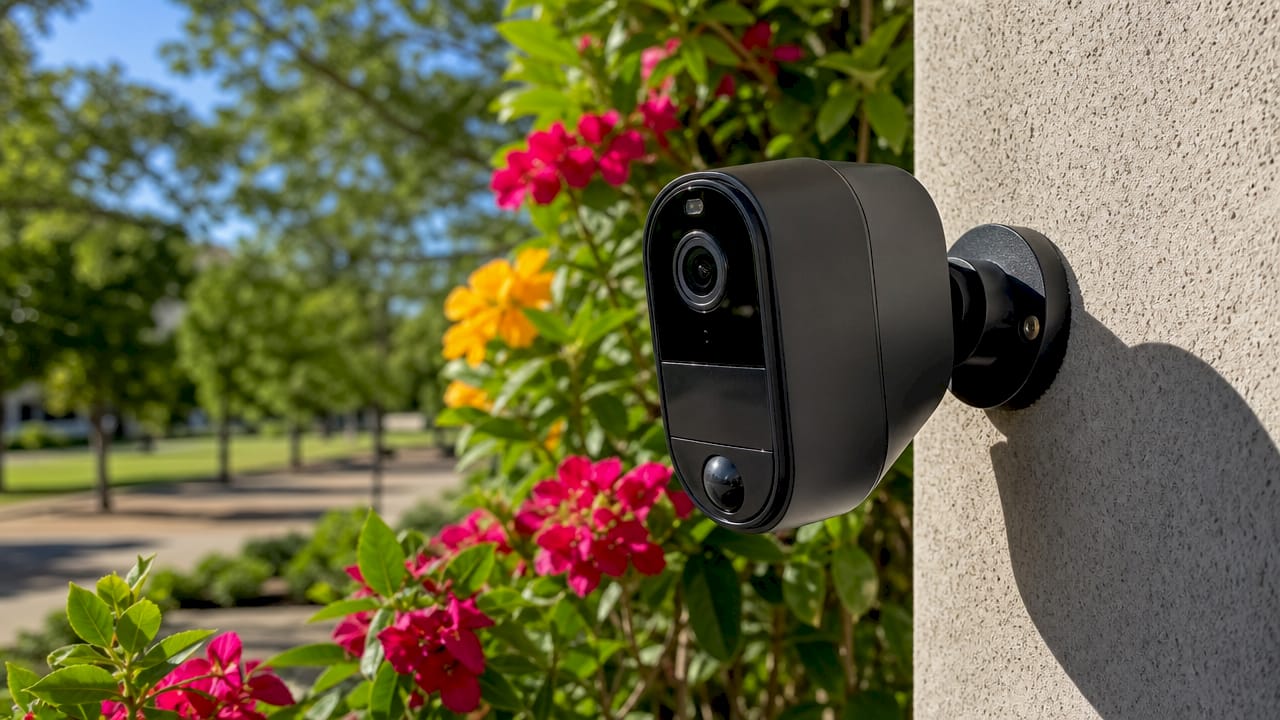
AI-based object recognition is now a standard feature in mid-range and higher cameras. It distinguishes between humans, vehicles, and pets, which cuts false alerts dramatically. Without it, a camera triggers every time a cat crosses the yard. With it, you only get notified when a person approaches your front door.
Key features worth prioritizing:
- 4K or 4MP resolution: Captures enough detail for facial recognition and license plate identification at realistic distances.
- Infrared (IR) night vision: Provides clear footage in complete darkness without visible light that could alert intruders.
- Virtual tripwires and motion zones: Let you define exactly which areas trigger alerts, reducing noise from street traffic or neighboring properties.
- Real-time mobile alerts: Push notifications to your phone the moment activity is detected, enabling immediate response.
- Cloud storage: Protects footage from being lost if a camera is stolen or physically damaged.
Local storage on SD cards is a vulnerability. If a burglar takes the camera, the evidence goes with it. Cloud or network video recorder (NVR) storage keeps footage safe regardless of what happens to the hardware.
Pro Tip: Set motion zones to cover entry points and chokepoints only. Broad detection areas generate alert fatigue, and alert fatigue means you stop checking notifications.
For residential use, advanced camera features like AI recognition and real-time alerts are no longer luxury additions. They are the baseline for a system that actually responds to threats.
Where should you position outdoor cameras for best results?
Camera placement is the most commonly neglected part of any outdoor security setup. A high-quality camera mounted at the wrong angle produces footage that is nearly useless for identification.
The core rule is to mount cameras perpendicular to movement paths, not aimed straight down them. Side-angle mounting extends the time a subject is visible in the frame, giving the camera more opportunity to capture a clear face or distinguishing detail. A camera aimed straight down a driveway sees the top of a person’s head. A camera mounted on a building corner captures their full face as they approach.
Follow this placement sequence for a standard property:
- Front entry points: Mount at 8–10 feet high on the corner of the building, angled to capture faces at the door and the approach path.
- Driveway and parking areas: Position cameras to capture license plates at the entry point, not just general movement.
- Side gates and fence lines: These are common access points that homeowners frequently overlook.
- Rear of property: Cover back doors and any secondary entry points with cameras angled across the path, not down it.
- Interior-facing windows (for businesses): Capture activity at cash registers, safes, or high-value storage areas.
Pro Tip: Mount cameras just out of easy reach but low enough to capture usable facial detail. Above 12 feet, most cameras lose the ability to identify individuals reliably.
Weatherproofing matters as much as angle. Look for an IP65 or IP66 rating, which means the camera resists dust and heavy rain. WiFi connectivity is convenient, but a wired Power over Ethernet (PoE) connection is more reliable and harder to jam. For a full breakdown of optimal camera setup, combining cameras with lighting and alarms makes every component more effective.
How do outdoor cameras integrate with broader security systems?
A camera alone is a single layer. Layered security combining cameras with alarms, motion-activated lighting, and smart locks produces significantly stronger deterrence than any single component. The logic is simple: each layer adds a new obstacle and a new risk for the offender.
Integrated security solutions reduce crime impact by over 30% more than single-layer systems. That gap exists because integration enables automated responses. When a camera detects motion, it can trigger floodlights, send a mobile alert, and arm a perimeter alarm simultaneously. That combination is far harder to defeat than a camera recording silently in the dark.
| Security layer | Primary function | Integration benefit |
|---|---|---|
| Outdoor cameras | Visual monitoring and evidence capture | Triggers lights and alerts on detection |
| Motion-activated lighting | Eliminates concealment at night | Improves camera footage quality |
| Perimeter alarm | Audible deterrent and alert signal | Confirms camera-detected intrusion |
| Smart locks | Controls access at entry points | Locks down remotely when camera detects threat |
| Professional monitoring | Human response to verified alerts | Reduces false alarm dispatches |
Multi-sensor verification is one of the most practical benefits of integration. When a camera detects motion and an alarm sensor confirms a door has opened, the system knows with high confidence that an intrusion is real. That reduces false alarm dispatches and keeps response resources focused on genuine threats. For a deeper look at why layered security works, the combination of visibility, detection, and response is what separates effective systems from ineffective ones.
What practical benefits do outdoor cameras provide?
The benefits of outdoor cameras reach well beyond deterrence. For homeowners and business owners, cameras serve as a daily operational tool, not just a crime prevention measure.
- Insurance claims: High-resolution footage documents the timeline and extent of damage or theft, increasing the likelihood of a successful claim. Well-maintained footage improves both claim success rates and investigation closure rates.
- Delivery and visitor monitoring: Cameras let you see who is at the door or gate without being present, which is useful for managing deliveries, contractors, and guests remotely.
- Employee and asset monitoring (businesses): Cameras at loading docks, storage areas, and entry points reduce internal theft and provide accountability records.
- Dispute resolution: Footage from outdoor cameras has resolved property line disputes, parking conflicts, and liability claims without litigation.
- Community safety: Cameras on one property create a spillover effect. Offenders who see cameras on your property often move on entirely rather than targeting a neighbor.
Peace of mind is a real and measurable benefit. Remote access through live camera feeds lets you check on your property from anywhere, whether you are traveling for work or away on vacation. That access reduces anxiety and enables faster responses when something does happen.
Key Takeaways
Outdoor cameras reduce opportunistic property crime by 15–50% when placed correctly and paired with active monitoring, making placement and integration the two factors that determine whether a camera system actually works.
| Point | Details |
|---|---|
| Deterrence depends on visibility | Cameras must be visible and paired with signage to influence offender decisions before a crime occurs. |
| Active monitoring multiplies effectiveness | Real-time alerts and human response raise deterrence by 30–50% over passive recording alone. |
| Placement angle determines footage quality | Mount cameras perpendicular to movement paths at 8–10 feet to capture usable facial detail. |
| Layered security outperforms single systems | Combining cameras with alarms, lighting, and smart locks reduces crime impact by over 30% more than cameras alone. |
| Cloud storage protects your evidence | Local SD card footage is lost if a camera is stolen; cloud or NVR storage keeps evidence retrievable. |
What I’ve learned from years of watching security systems succeed and fail
The most common mistake property owners make is treating a camera purchase as the finish line. They mount a camera, connect it to an app, and assume the work is done. The camera sits at the wrong angle, points straight down a path, and produces footage that shows nothing useful when something finally happens.
Visibility is the first job of any outdoor camera. A camera hidden under an eave, painted to blend in, or mounted too high to see faces is not doing its primary job. Offenders need to see it. That visibility is what changes behavior before a crime starts.
The second thing I’ve seen consistently is that cameras without integration underperform. A camera that records silently while a burglar works through a back door for six minutes is not a security system. It is a documentation tool. When that same camera triggers a floodlight, sends a push alert, and trips a perimeter alarm, the situation changes completely.
Physical security still matters alongside cameras. A camera cannot stop a door from being kicked in. A solid deadbolt, a reinforced door frame, and a visible alarm panel do things a camera cannot. The best setups treat cameras as one part of a system, not the whole answer.
Regular maintenance is the part nobody talks about. Lenses get dirty. Mounts shift. Firmware goes unupdated. A camera that worked perfectly at installation may be producing blurry, poorly angled footage six months later. Schedule a quarterly check of every camera on your property. Clean the lens, verify the angle, confirm cloud storage is recording, and test the alert system. That habit is worth more than any single hardware upgrade.
— Safes and Security Solutions
Outdoor cameras and security systems from Safes and Security Solutions
Safes and Security Solutions carries a full range of weatherproof outdoor cameras built for both residential and commercial use, including models with AI object recognition, 4K resolution, IR night vision, and cloud storage compatibility.

Every camera in the catalog is selected for durability, image quality, and integration capability with alarms, smart locks, and motion-activated lighting. Whether you are securing a single-family home or a multi-site business, the right camera setup starts with hardware that performs in real conditions. Browse the full outdoor security camera range at Safes and Security Solutions to find models matched to your property size, layout, and monitoring needs.
FAQ
Can outdoor cameras actually prevent theft?
Visible cameras reduce opportunistic theft by 15–50% by raising the perceived risk for potential offenders. The effect is strongest when cameras are visible, well-placed, and paired with active monitoring or real-time alerts.
How high should outdoor cameras be mounted?
Mount outdoor cameras at 8–10 feet for the best balance between reach and facial detail. Above 12 feet, most cameras lose the resolution needed to identify individuals reliably.
What is the best storage option for outdoor camera footage?
Cloud or NVR storage is the most secure option. SD card footage is lost if a camera is stolen or damaged, while cloud storage keeps evidence retrievable regardless of what happens to the hardware.
Do outdoor cameras work better with other security devices?
Yes. Layered security systems combining cameras with alarms, lighting, and smart locks reduce crime impact by over 30% more than cameras used alone. Integration enables automated responses that passive recording cannot provide.
What camera resolution do I need to identify faces and license plates?
A 4K or 4MP camera provides enough detail for facial and license plate identification at realistic outdoor distances. Lower-resolution cameras may capture movement but often fail to produce footage usable for investigation or insurance claims.
Recommended
- How security cameras deter theft and protect your property – Safes and Security Direct
- Why surveillance cameras protect your property and why it matters – Safes and Security Direct
- Types of Security Cameras: Choosing the Best Fit – Safes and Security Direct
- Best Outdoor Security Camera for Apartment: Top Picks – Safes and Security Direct