

The Role of Night Safe Deposit Boxes for Businesses
TL;DR:
- A night safe deposit box is a secure exterior bank receptacle used for after-hours deposits. It protects valuables by requiring dual control and tamper-evident seals, reducing internal and external theft risks. Businesses value them for off-hours cash handling, as they carry low costs and enhance asset security.
A night safe deposit box is defined as a secure, tamper-resistant receptacle built into the exterior wall of a bank, allowing deposits outside regular banking hours. The role of night safe deposit boxes is to eliminate the risk of holding large amounts of cash or sensitive documents on-site overnight. Small businesses, retailers, and individuals with high-volume physical payments rely on these facilities daily. Funds are processed and credited the next business day, making them a practical bridge between closing time and the next morning’s banking window.
How do night safe deposit boxes work to protect valuables?
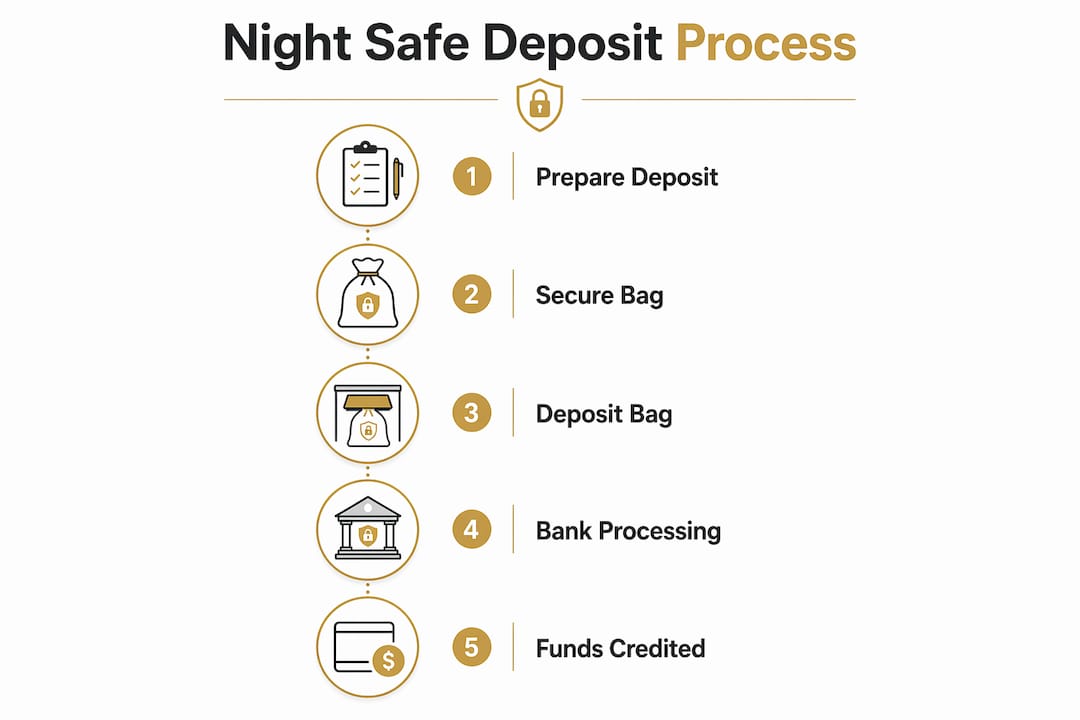
A night depository works through a simple but tightly controlled process. You place cash, checks, or documents into a lockable deposit bag, seal it, and drop it through a slot in the bank’s exterior wall. The bag falls into a secured vault inside the building, completely out of reach once deposited.
The security features built into this system are worth understanding in detail:
- Tamper-evident seals on deposit bags show any unauthorized access before bank staff open them.
- Sturdy steel construction on the vault door and chute prevents forced entry from outside.
- Time-locked access on some systems restricts vault opening to specific hours, reducing internal theft risk.
- Dual control processing requires two authorized employees to open and count deposits together, creating a clear audit trail.
- Deposit slips inside each bag document the contents, so discrepancies surface immediately during processing.
Dual control is the most underappreciated security layer in the entire system. It means no single bank employee can access your deposit alone, which protects both you and the bank from internal fraud.
Night depositories also differ significantly from ATMs. A night depository handles bulk, manually processed deposits, while an ATM is built for limited-amount, automated transactions. If you are depositing a day’s worth of restaurant receipts or a stack of checks from a weekend market, an ATM is the wrong tool. The night depository is designed for exactly that volume.
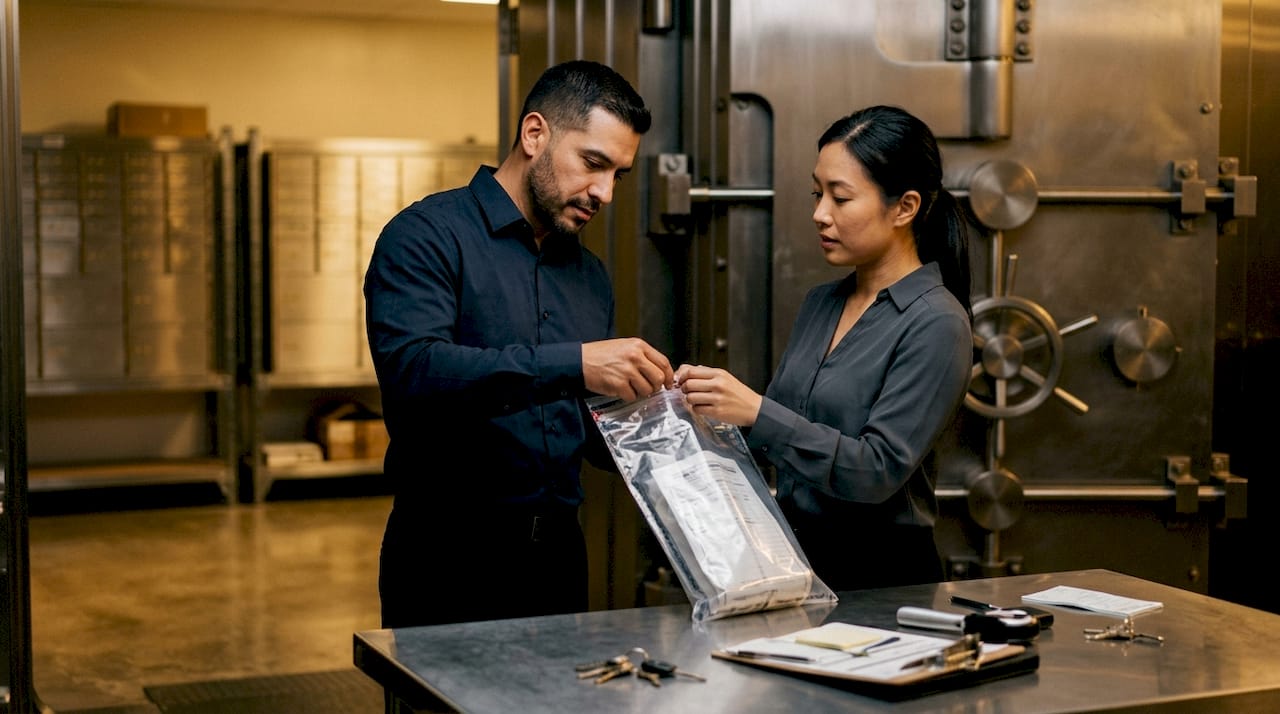
Pro Tip: Always include a completed deposit slip inside the bag, not just the cash or checks. If the bag tears or contents shift during processing, the slip is the only record of what you deposited.
What are the benefits of night safe deposit boxes vs. other options?
The core advantage of night deposit box services is timing. Banks close. Your business does not. Being able to deposit at 10:00 PM instead of waiting until 9:00 AM the next morning removes hours of exposure for cash sitting in a register or back office.
Night depositories remain essential for small businesses managing cash and check deposits, even as digital payments grow. The reason is straightforward: not every customer pays digitally, and not every business has the infrastructure to process card payments exclusively. Restaurants, parking operators, event venues, and service businesses still handle significant physical currency.
The advantages of night safe deposit options compared to alternatives break down clearly:
- Versus keeping cash on-site: A night depository removes the theft target entirely. Cash left in a register or a basic office safe is vulnerable to break-ins overnight.
- Versus standard ATMs: ATMs cap deposit amounts and cannot handle bulk check deposits or mixed-currency bags. Night depositories handle larger volumes and sensitive items without those limits.
- Versus cash drop safes: On-site cash drop safes provide a strong internal solution, but the cash stays on your premises until a bank run. A night depository moves the liability to the bank immediately.
- Versus waiting until morning: Every hour cash sits on-site is an hour of risk. Night depositories eliminate that window entirely.
For businesses handling high volumes of payments, the combination of an on-site drop safe and a nightly bank deposit creates a two-layer system. The safe holds cash during the day; the depository clears it each night.
What are the typical costs of night safe deposit box services?
Night deposit box services are among the most affordable banking products available. Banks charge nominal fees such as $5 for a key and $5–$15 for reusable lockable deposit bags. Some credit unions offer the service at no charge depending on their membership policies.
The fee structure typically includes three components:
| Fee Type | Typical Range | Notes |
|---|---|---|
| Key deposit | Around $5 | Refundable when key is returned |
| Reusable bag deposit | $5–$15 per bag | Refundable; bags returned after processing |
| Monthly service fee | Varies by bank | Some institutions charge nothing |
Customers often purchase or provide refundable deposits for reusable lockable bags, which are distinct from the disposable envelopes some banks provide for smaller deposits. Reusable bags are the better choice for regular business use because they are sturdier and more tamper-resistant.
The practical advice here is to request a full fee disclosure from your bank before signing up. Ask specifically whether the service fee is per transaction or monthly, and whether the key deposit is refundable. For businesses making daily deposits, even a small per-transaction fee adds up across a year. Factoring this into your cash handling budget prevents surprises. For businesses exploring short-term and long-term storage needs, night deposit services fit naturally into a broader asset protection plan.
How to use night boxes effectively and minimize errors
The biggest source of problems with night depositories is not the equipment. It is the paperwork. Errors happen when deposit slips are incomplete, bags are unlabeled, or contact information on file with the bank is outdated.
Follow these steps to get every deposit right:
- Label every bag clearly. Write your account number and business name on the outside of the bag before you leave your premises.
- Complete the deposit slip fully. List every item: cash by denomination, each check by amount, and the total. Place the slip inside the bag.
- Use tamper-evident seals. Tamper-evident seals and proper labeling reduce processing errors and maintain security integrity throughout the chain of custody.
- Keep your contact information current. Banks need current contact details to resolve deposit errors before processing. An outdated phone number means a discrepancy sits unresolved until you notice it yourself.
- Reconcile deposits against your bank statement. Check the credited amount against your deposit slip total within one business day of each deposit.
- Respond to bank queries immediately. If the bank flags a discrepancy, address it the same day. Delays make resolution harder and create accounting headaches.
Internal controls matter as much as the bank’s procedures. Assign one person to prepare deposits and a second person to verify the bag contents before it leaves your building. This mirrors the dual control standard banks use on their end and closes the gap where most errors actually occur.
Pro Tip: Keep a photo log of each deposit bag before you seal it. A quick phone photo of the deposit slip and contents takes ten seconds and gives you undeniable evidence if a discrepancy arises.
For businesses building out their full secure cash handling process, pairing a night depository with an on-site money drop safe creates a complete chain of custody from register to bank.
Key Takeaways
Night safe deposit boxes are the most cost-effective way for businesses to eliminate overnight cash risk, combining tamper-resistant hardware, dual control processing, and next-business-day crediting into a single after-hours deposit system.
| Point | Details |
|---|---|
| Core function | Night depositories accept bulk deposits outside banking hours and credit funds the next business day. |
| Security mechanism | Dual control requires two bank employees to open and process every bag, creating a clear audit trail. |
| Cost structure | Fees are minimal, typically $5 for a key and $5–$15 per reusable bag, with some credit unions charging nothing. |
| Error prevention | Accurate deposit slips, tamper-evident seals, and current contact information prevent most processing discrepancies. |
| Best use case | Businesses handling daily physical payments benefit most by combining an on-site drop safe with nightly bank deposits. |
Why night depositories still matter more than most businesses realize
At Safes and Security Solutions, we see a consistent pattern: businesses invest in surveillance cameras and alarm systems, then leave a day’s worth of cash sitting in a basic register overnight. The night depository solves a problem that technology alone cannot. No camera prevents a break-in from being costly if the cash is still there when it happens.
The argument that digital payments have made night depositories obsolete does not hold up in practice. Restaurants, markets, parking facilities, and service businesses still collect significant physical currency in 2026. The infrastructure to go fully cashless is not universal, and the customers who pay in cash are not disappearing.
What I find most businesses get wrong is treating the night depository as a passive tool. Drop the bag, forget about it. That approach is where errors compound. The businesses that use these services well treat the deposit process like any other internal control: assigned responsibility, documented steps, and daily reconciliation. The depository is only as reliable as the process behind it.
The other underrated point is combining methods. An on-site money drop safe handles cash during operating hours. The night depository clears it at closing. Together, they create a system where cash is never exposed for long at any point in the day. That layered approach is what serious asset protection looks like.
— Safes and Security Solutions
Protect your assets with the right security setup
Night depositories handle the bank side of cash security. The on-premises side requires equally serious equipment.
Safes and Security Solutions carries a full range of money drop safes, deposit bags, and physical security products built for businesses that handle cash daily. Whether you need a floor-mounted drop safe for a retail location or tamper-resistant deposit bags for nightly bank runs, the product catalog at safesandsecuritydirect.com covers both ends of the cash handling chain. Businesses that combine on-site safes with disciplined night depository use give themselves the strongest possible defense against cash loss, theft, and processing errors.
FAQ
What is a night safe deposit box?
A night safe deposit box, also called a night depository, is a secure slot built into a bank’s exterior wall that accepts deposit bags outside regular banking hours. Funds are processed and credited the next business day.
How does night depository security work?
Banks use dual control, requiring two authorized employees to open and process every deposit bag together. This creates an audit trail and prevents internal theft or unauthorized access.
Are night deposit box services free?
Some credit unions offer the service at no charge, while most banks charge around $5 for a key and $5–$15 for reusable deposit bags. Monthly service fees vary by institution, so request a full fee disclosure before enrolling.
How is a night depository different from an ATM?
An ATM handles limited-amount, automated transactions. A night depository accepts bulk deposits of cash, checks, and documents that are processed manually by bank staff the following business day.
What should I do if my night deposit is processed incorrectly?
Contact your bank immediately with your deposit slip and any supporting records. Keeping your contact information current with the bank allows them to flag and resolve discrepancies before processing is finalized.
Recommended
- Why Use a Cash Drop Safe: Essential for Retail Security – Safes and Security Direct
- 6 Essential Types of Safes for Business Owners to Know – Safes and Security Direct
- Secure Cash Handling: Top Money Drop Safes for Businesses – Safes and Security Direct
- 7 Key Types of Business Safes Every Owner Should Know – Safes and Security Direct