

Safe Deposit Box Benefits: Your 2026 Security Guide
TL;DR:
- A safe deposit box provides high-security storage for irreplaceable valuables in bank vaults better protected than home safes. It offers controlled access, protection against disasters, and is ideal for documents and collectibles rarely needed. Combining a home safe with a safe deposit box creates a layered security system for comprehensive asset protection.
A safe deposit box is a locked, individually rented storage unit housed inside a bank vault, designed to protect valuables and documents that are rarely needed but impossible to replace. The safe deposit box benefits are clear: off-site professional security, disaster protection, and controlled access that your home simply cannot replicate. Annual rental fees range from $25 to $800 depending on box size and institution, making this one of the most affordable security tools available. For individuals and businesses alike, understanding exactly what these boxes offer, and where they fall short, is the foundation of a sound asset protection strategy.
1. What are the core safe deposit box benefits?
Safe deposit boxes provide three core advantages: physical security far beyond what most homes offer, protection from disasters like fire and flooding, and a controlled-access environment that limits who can reach your most valuable items. These advantages make them the right choice for irreplaceable documents and high-value assets you do not need on a daily basis. The key is matching the right items to the right storage method. Safes and Security Solutions recommends treating a safe deposit box as one layer in a broader asset protection strategy, not as a standalone solution.
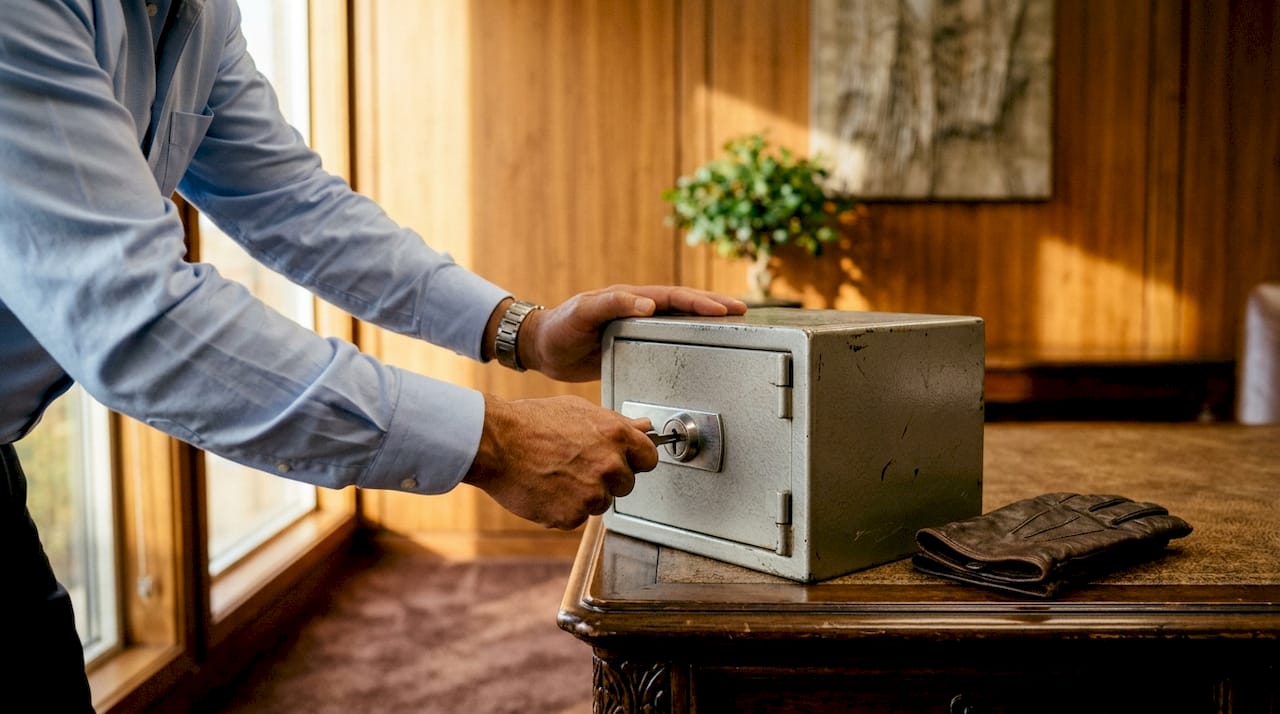
2. What physical security advantages do safe deposit boxes provide?
Bank vaults offer a level of physical security that home storage cannot match. Vault doors exceed 2 tons in weight, and vault walls are typically steel-lined or reinforced concrete. Motion and vibration alarm systems add another layer of detection that activates even when the bank is closed.
Home safes, by contrast, are designed for convenience and moderate protection. A determined burglar with the right tools can defeat most consumer-grade home safes within minutes. Bank vaults require heavy equipment, time, and coordination that makes a successful break-in extremely rare.
Box size also affects your cost and protection level. Standard 3x5 inch boxes cost $25–$75 per year, while larger 10x10 inch boxes run $125–$300 annually. Choosing the right size keeps costs down while giving your items room to stay organized and undamaged.
Pro Tip: Rent the smallest box that fits your items without cramming them in. Overpacking a box can damage fragile documents or collectibles over time.
- Steel-lined or concrete vault walls resist forced entry
- Vault doors weighing over 2 tons deter physical attacks
- Motion and vibration alarms protect the vault 24 hours a day
- Multiple access checkpoints inside the bank add human oversight
3. How do safe deposit boxes protect against fire and flooding?
Bank vaults are built to resist fire and water damage at a structural level. The vault itself provides meaningful protection against most fire and flood events that would destroy a home or office. That said, boxes are not individually fire-rated at the box level, so the protection varies depending on the specific vault construction.
The practical solution is simple: seal your items before placing them inside the box. Use waterproof plastic bags or sealed envelopes for paper documents. Place photographs and certificates in archival-quality sleeves. This adds a second layer of moisture protection that costs almost nothing.
Insurance is a separate issue entirely. Banks do not insure box contents, and the FDIC does not cover items stored in safe deposit boxes. That means a fire, flood, or theft loss inside the vault falls entirely on you unless you have coverage. You need a scheduled personal property endorsement on your homeowner or renter policy to cover stored valuables.
- Seal paper documents in waterproof plastic bags before storage
- Use archival sleeves for photographs and certificates
- Add a scheduled property endorsement to your insurance policy
- Keep a separate inventory of box contents at home for claims purposes
Pro Tip: Photograph every item before placing it in the box. Store those photos in a secure cloud account. If you ever need to file an insurance claim, you will have proof of what was stored and its condition.
4. What are the access benefits and limitations of safe deposit boxes?
Safe deposit boxes use a dual-key security system: your key and the bank’s guard key are both required to open the box. No bank employee can open your box alone. This controlled access is a genuine security feature, not just a procedural formality.
The limitation is real, though. Banks operate on business hours, and your box is only accessible when the branch is open. That restriction matters more than most people realize until they need something urgently.
- Identify every item you plan to store and ask whether you might need it in an emergency.
- Move any item with emergency use potential, such as a passport or medical directive, to a home safe instead.
- Add a trusted co-renter to your box if you want a family member or business partner to have access.
- Store a spare key in a separate secure location, because losing your key means the bank drills the box at your expense.
Pro Tip: Label every document inside the box with a brief description and date. A simple index card listing contents makes retrieval fast and reduces the time you spend inside the vault.
5. What should you store in a safe deposit box?
The best candidates for safe deposit box storage are items that are hard to replace and rarely needed. Deeds, birth certificates, original titles, business contracts, collectibles, and heirlooms all fit this profile well. These are documents and objects where loss or destruction creates serious legal or financial consequences.
Certain items do not belong in a safe deposit box. Passports, medical directives, and power-of-attorney documents should stay accessible at home because you may need them outside of bank hours. Cash is also a poor choice since it earns no interest and carries no insurance protection inside the box.
For businesses, the calculus shifts slightly. Original signed contracts, corporate formation documents, stock certificates, and intellectual property records all benefit from off-site vault storage. These documents are not needed daily, but losing them could have serious legal and financial consequences.
Items well-suited for safe deposit box storage:
- Property deeds and mortgage documents
- Birth, marriage, and death certificates
- Stock certificates and bond documents
- Rare coins, jewelry, and collectibles
- Business contracts and corporate records
- Family heirlooms with sentimental or financial value
Items to keep at home instead:
- Passports and government-issued ID
- Medical directives and living wills
- Power-of-attorney documents
- Frequently accessed financial records
6. Safe deposit box vs home safe: which is right for you?
Security experts recommend a hybrid security model that combines a home fireproof safe for frequently needed items with a safe deposit box for rarely accessed valuables. Neither option alone covers every need. Together, they create a layered defense that addresses both convenience and maximum security.
A home safe gives you 24/7 access and immediate protection for items like cash, a spare passport, and daily-use documents. A fireproof safe selection guide can help you match the right model to your specific needs. A safe deposit box handles the irreplaceable items that you never want exposed to a home burglary or house fire.
| Feature | Home safe | Safe deposit box |
|---|---|---|
| Access hours | 24/7 | Bank hours only |
| Physical security | Moderate | Very high |
| Disaster protection | Varies by model | High (vault-level) |
| Insurance coverage | Homeowner policy | Separate endorsement required |
| Annual cost | One-time purchase | $25–$300/year |
| Best for | Frequently needed items | Rarely accessed valuables |
For individuals, the split is straightforward: daily-use items stay home, irreplaceable documents go to the bank. For businesses, the same logic applies, with the added consideration that multiple authorized signatories can be added to a safe deposit box rental agreement.
Key takeaways
A safe deposit box delivers its greatest value as part of a layered security plan, pairing vault-level protection for irreplaceable items with a home safe for everyday access needs.
| Point | Details |
|---|---|
| Vault security is unmatched | Bank vaults use 2-ton doors, concrete walls, and alarms that home safes cannot replicate. |
| Insurance is your responsibility | Banks do not cover box contents; add a scheduled property endorsement to your existing policy. |
| Access has real limits | Boxes are only accessible during bank hours, so keep emergency documents at home. |
| Hybrid model works best | Combine a home fireproof safe with a safe deposit box for full coverage of all item types. |
| Choose items carefully | Store only rarely needed, hard-to-replace items; avoid passports, medical directives, and cash. |
What I have learned from years in the security industry
The most common mistake I see is treating a safe deposit box as a “set it and forget it” solution. People rent a box, fill it, and never update their inventory or insurance coverage. Then a loss event happens and they discover they have no documentation to support a claim.
The second mistake is storing the wrong items. A client once kept their only copy of a medical directive in a safe deposit box. When a family emergency happened on a Sunday, no one could access it. That is a preventable problem with a simple fix: keep any document that might be needed urgently in a home safe for valuables instead.
The hybrid model is not just a theoretical recommendation. It is the approach that actually works in practice. A fireproof home safe handles the items you might need at 2:00 AM. The bank vault handles the items you hope you never need but cannot afford to lose. Getting both right means thinking through your specific inventory, not just renting a box and assuming you are covered.
— Safes and Security Solutions
Secure storage solutions for homes and businesses
Choosing the right combination of storage tools is easier when you have access to quality products built for the job. Safes and Security Solutions carries a full range of fireproof and burglary-resistant safes designed for both home and business use, from compact wall safes to heavy-duty floor models.
Whether you are building a hybrid security setup or replacing an aging safe, the product range at Safes and Security Solutions covers every size, fire rating, and budget. Each listing includes full specifications so you can match the right safe to your specific storage needs before you buy.
FAQ
What is the main benefit of a safe deposit box?
The primary advantage is off-site, vault-level physical security for irreplaceable items like deeds, certificates, and collectibles. Bank vaults use reinforced walls, 2-ton doors, and alarm systems that far exceed home storage options.
Are safe deposit box contents insured by the bank?
No. Banks do not insure the contents of safe deposit boxes, and the FDIC does not cover stored items. You must add a scheduled personal property endorsement to your homeowner or renter insurance policy.
What should you not store in a safe deposit box?
Avoid storing passports, medical directives, power-of-attorney documents, and cash. These items may be needed outside of bank hours, and cash stored in a box earns no interest and carries no insurance protection.
How much does a safe deposit box cost per year?
Annual rental fees range from $25 to $800 depending on box size and institution. Standard 3x5 inch boxes typically cost $25–$75 per year, while larger 10x10 inch boxes run $125–$300 annually.
Is a safe deposit box better than a home safe?
Neither option is universally better. Security experts recommend combining both: a home fireproof safe for frequently needed items and a safe deposit box for rarely accessed, hard-to-replace valuables.
Recommended
- Asset protection checklist 2026: secure home and business – Safes and Security Direct
- What is secure storage: homeowner and business guide 2026 – Safes and Security Direct
- 7 Key Benefits of Smart Safes for Secure Asset Protection – Safes and Security Direct
- Secure Your Valuables: Home & Business Vaults Benefits – Safes and Security Direct