

Which Residential Vault Door Should You Buy?
For most homeowners building a safe room, a certified welded steel residential vault door with a 1 hour fire rating and multi-bolt boltwork is the right starting point. Choose a retrofit kit only when your wall framing limits what can go in. Two other paths exist: a budget prebuilt vault door for tight budgets, and a premium custom vault door for gun rooms or larger openings.
- Budget route: prebuilt vault door, faster install, fewer customization options
- Standard route: welded steel door, 1 hour fire rating, full boltwork
- Premium route: custom vault door for gun rooms, storm shelters, or oversized openings
Pro Tip: Measure your rough opening, note whether your wall is concrete or wood frame, and send both to Safes and Security Direct before you request a quote. It cuts days back and forth.
TL;DR:
- Most homes should start with a certified welded steel door rated for one hour of fire and equipped with multi-bolt locking systems unless wall constraints favor retrofit kits.
- Approved vault doors vary by build type: retrofit kits for finishing or small openings, block-in full frames in new construction, and custom welded doors for specialized or oversized spaces.
- Door swing direction and wall material influence installation, with outswing doors ideal for tight spaces and inswing doors better for flush wall integration; concrete walls require anchoring into poured slabs.
- When requesting a quote, measure your rough opening carefully, confirm wall type and fire rating, and compare bolt count, steel gauge, and certification details across options, rather than price alone.
- Critical safety features include internal mechanical releases for occupied rooms and sealed gaskets for storm shelters, with door selection tailored to space size and occupant safety needs.
Table of Contents
- Types of Residential Vault Doors and When to Choose Each
- What Fire and Burglary Ratings Actually Tell You
- How Do You Measure for a Residential Vault Door?
- What Does a Residential Vault Door Cost?
- Choosing Locks and Safety Features for an Occupied Room
- What We Recommend and How We Support Your Purchase
- A Buyer’s Checklist Before You Sign Anything
- How to Request a Quote From Safes and Security Direct
- Key Takeaways
- Sources
Types of Residential Vault Doors and When to Choose Each
Door swing direction matters more than most buyers expect. An outswing door opens away from the room, which works well when floor space inside is tight, such as a small gun room. Inswing doors open into the room and suit larger safe rooms where you want the door flush with an exterior wall or hallway.
Beyond swing direction, you’re choosing between three build types:
- Retrofit or kit doors fit into an existing framed opening with minimal structural changes, ideal for finished basements or closets being converted into a safe room.
- Block-in, full-frame vault doors get set during new construction or a major remodel, anchored directly into poured concrete.
- Custom welded doors are built to a specific opening and threat level, common in dedicated gun rooms or high-value storage.
Storm shelters add another layer: sealed gaskets, overpressure tolerance, and a ventilation path that can be manually closed during high wind events matter as much as the lock itself, a point echoed in SafeCave’s storm shelter door specs. Most homeowners land on a mid-weight welded door for safe rooms and a sealed, gasketed door for storm shelters.
What Fire and Burglary Ratings Actually Tell You
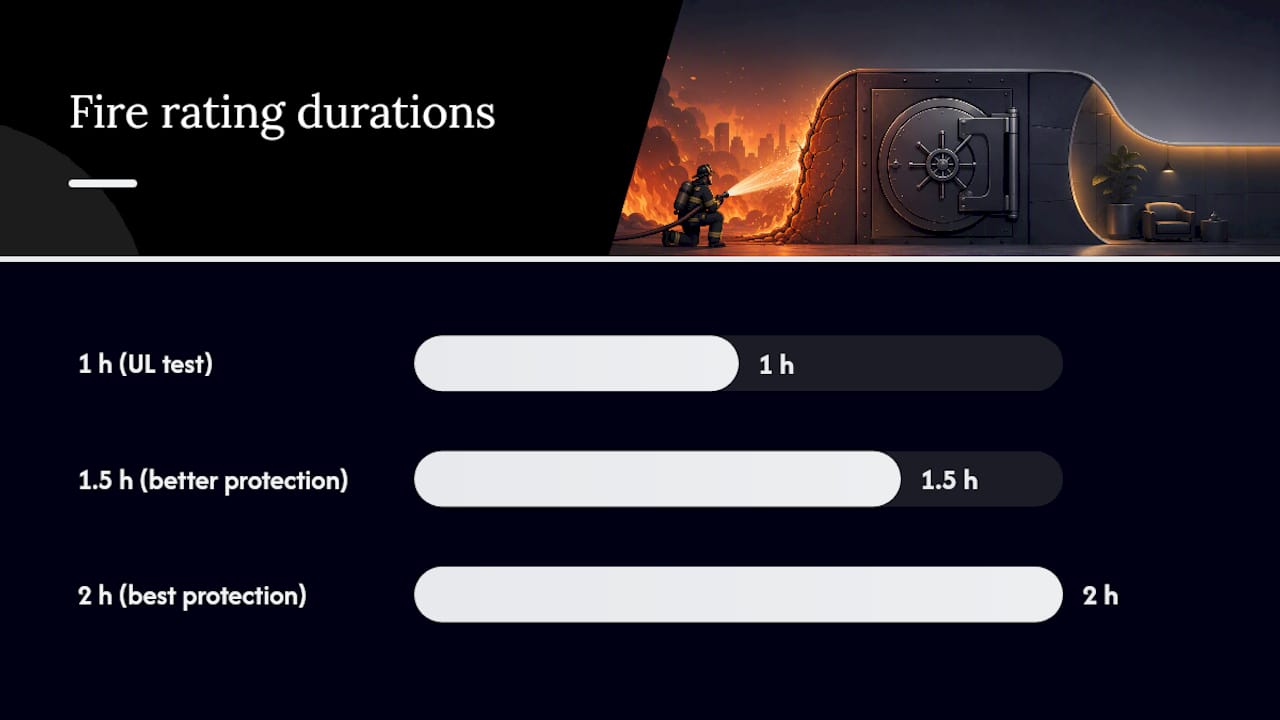
A “1 hour” fire rating means the door assembly held an average interior temperature below a set threshold during a standardized burn test, typically referencing UL, FM, or ASTM test protocols. A 1.5 hour or 2 hour rating means better protection for firearms, documents, or electronics, but it also adds weight and cost. Vendors describe burglary resistance differently. Some cite UL residential security labels, others use internal tier names like “Level 1” or “Level 2.” Neither is standardized the way UL fire ratings are, so treat vendor tier labels as marketing shorthand rather than a certified spec.
What you should actually compare across quotes:
- Steel gauge on the door face and frame (thicker gauge numbers are thinner steel, so 10 gauge beats 12 gauge)
- Frame depth and whether it’s a formed pan or a solid plate
- Bolt diameter and total bolt count, since boltwork is what resists prying, not the door skin alone
- Hinge design, specifically whether hinges are exposed or protected against being drilled out
SafeCave’s product literature shows how vendors typically present these specs, often bundling an eight-bolt locking mechanism with sealed ventilation and concrete-anchoring instructions in one datasheet. Always ask for the certification number and the actual test report, not just a rating claim on a spec sheet.
How Do You Measure for a Residential Vault Door?
Get your rough opening measurements before you contact any vendor. Here’s the order that avoids the most common mistakes:
- Measure width at three points (top, middle, bottom) and use the smallest number.
- Measure height at both sides of the opening; framing settles unevenly over time.
- Measure wall thickness at the opening, since this determines frame depth needed.
- Note finished trim or drywall return thickness if you want a flush look.
- Photograph the opening from both sides and identify wall material: poured concrete, block, or wood frame.
Concrete walls anchor differently than wood frame walls. Concrete needs expansion bolts or epoxy anchors set to a specified depth, while wood frame construction usually needs the frame doubled or reinforced with steel studs to carry the door’s weight. A standard residential vault door can weigh several hundred pounds, so ask your vendor whether delivery includes liftgate service or curbside drop, and whether the install requires a two-person crew or rigging equipment.
Pro Tip: Send your installer a written list: opening dimensions, wall type, floor load rating if it’s an upper story, and door weight. It’s the single fastest way to get an accurate labor quote instead of a rough guess.
What Does a Residential Vault Door Cost?
Entry-level prebuilt vault doors, the kind built for a fast retrofit into an existing opening, typically sit at the lower end of the market. SnapSafe’s vault room door is a good example of this category: a 12 gauge steel door with multiple locking bolts that two people can install in about an hour, according to the manufacturer. Standard residential-rated doors with a certified fire rating and heavier boltwork cost more, and custom or premium doors built for larger openings or higher fire ratings sit at the top of the range.
What pushes a quote higher than the base price:
- Biometric or electronic locks instead of a standard mechanical dial
- Custom exterior finishes or paint matching
- Sealed ventilation systems for storm shelter use
- Reinforced concrete anchoring on thick or unusual wall types
- Installation labor, especially where a crane or extra crew is needed
Evaluate quotes by comparing steel gauge, bolt count, and fire rating side by side rather than comparing sticker prices alone. Two doors priced $500 apart can have very different boltwork underneath the number.
Choosing Locks and Safety Features for an Occupied Room
Mechanical combination locks are the most reliable option long term, since they have no batteries to die and no electronics to fail. Electronic keypads add speed and let you set multiple user codes, but they depend on battery backup. Biometric locks add convenience for a single user but tend to be the least reliable of the three in humid or dusty environments.
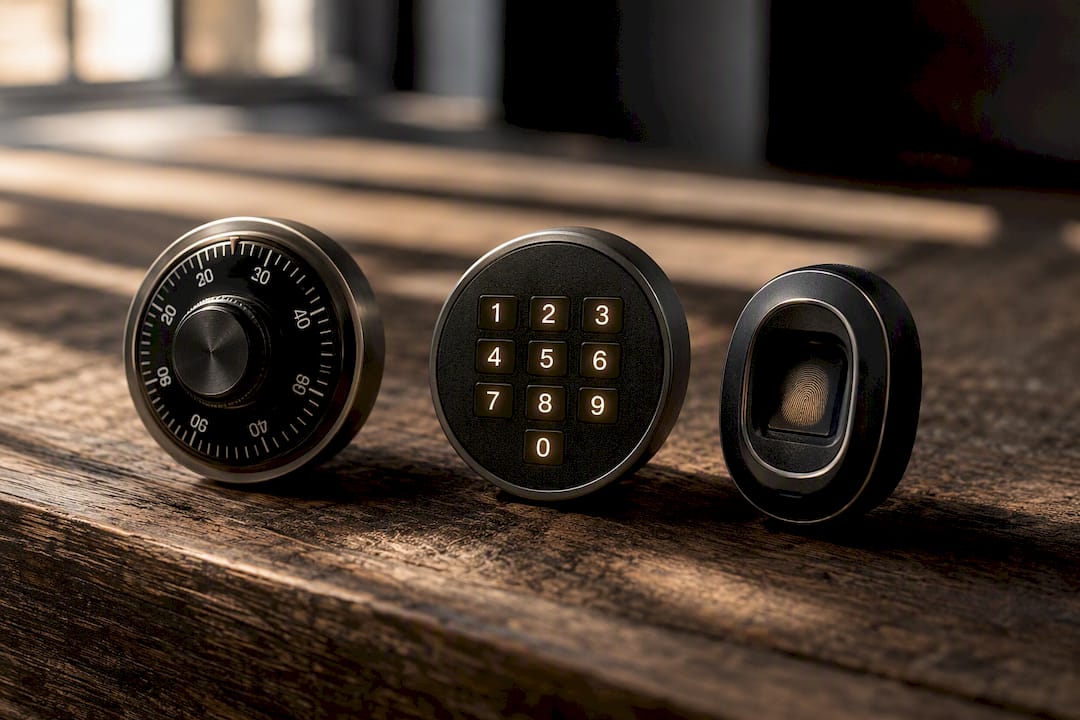
For any door protecting a room people might actually be inside, whether a storm shelter or a panic room, an internal mechanical release is not optional. If the primary lock jams or loses power, occupants need a way out from inside without needing a code.
Useful additions worth specifying up front:
- Sealed ventilation with a manual override, especially relevant given how overpressure affects sealed shelter design)
- Interior lighting on a battery backup circuit
- Tamper alerts tied into an existing home security system
Pro Tip: If the room will ever hold people during a storm, specify the internal release and manual ventilation override in writing on your order, not as an assumed feature.
What We Recommend and How We Support Your Purchase
For a walk-in safe or dedicated gun room, the American Security VD8030BF outswing door suits openings where interior floor space is limited, since the door swings away from the storage area. For larger safe rooms or spaces where an inswing layout fits the framing better, the American Security ProFit inswing door is the stronger match.
Safes and Security Direct verifies your rough opening measurements before production, offers custom fit adjustments for nonstandard framing, and coordinates with your installer on anchoring specs for concrete or wood frame walls.
- VD8030BF: best for gun rooms and walk-in safes with tight floor plans
- ProFit In-Swing: best for larger safe rooms and storm shelters
| Point | Details |
|---|---|
| Door class | VD8030BF suits space-constrained rooms; ProFit In-Swing suits larger safe rooms |
| Fit verification | Safes and Security Direct confirms opening measurements before build |
| Installation support | Wall type and anchoring specs are coordinated with your installer |
A Buyer’s Checklist Before You Sign Anything
Measure first. Confirm your wall type and required fire rating second. Pick your lock and internal safety features third. Schedule installation last, once the door and frame specs match your opening.
Favor a custom door when your opening is nonstandard, your fire rating needs exceed 1 hour, or the room will be occupied during use. A prebuilt option earns its place when your opening is standard and your timeline is short.
— Safes and Security Solutions
How to Request a Quote From Safes and Security Direct
Once you have your measurements and wall type, browsing actual product pages beats guessing at specs from a catalog. Take a look at the American Security BFS2214 Burglary and Fire Safe and the American Security UL1511 UL Listed 2 Hour Home Fire Safe if you’re weighing a standalone safe against a full vault door for the same room.
![CTA Image]
When you’re ready to request a quote, include your rough opening width and height, wall material, desired fire rating, and preferred lock type. Safes and Security Direct’s team reviews your submission and returns a datasheet with certification numbers, a firm price, and a proposed installation timeline. If your project also involves smaller storage needs, the American Security BFS912 Burglary and Fire Safe is worth adding to the same request. Submit your measurements through the online quote form or call the sales line directly, and expect a follow up call to schedule an install consult once your specs are confirmed.
Key Takeaways
A certified welded steel vault door with a 1 hour fire rating and multi-bolt locking is the right default for most residential safe rooms, with retrofit kits reserved for wall-constrained spaces.
| Point | Details |
|---|---|
| Start with measurements | Measure rough opening width, height, and wall thickness before requesting any quote. |
| Match door type to wall | Concrete walls suit block-in frames; wood frame walls often need retrofit kits. |
| Compare specs, not brands | Request steel gauge, bolt count, and fire rating on every quote you review. |
| Plan for occupant safety | Require an internal mechanical release on any door protecting an occupied room. |
| Safes and Security Direct fit | VD8030BF outswing suits gun rooms; ProFit In-Swing suits larger safe rooms. |
Sources
Specs and installation details referenced above draw from SafeCave’s vault door literature, SnapSafe’s retrofit door specs, and background on overpressure in shelter design. For a quote on your own project, visit Safes and Security Direct.