

Home Security During Vacation: A Pre-Trip Checklist
Lock every door and window, confirm your cameras and phone alerts actually work, put your mail on hold, switch your alarm to away mode, and test your smoke and carbon monoxide detectors. Do these five things and you’ve closed the gaps that let a house look empty. The rest of this guide fills in the details, including how USPS Hold Mail works and why testing camera alerts is different from just installing them.
- Lock and verify every entry point, including the garage and any pet doors
- Confirm cameras and doorbells send push notifications to your phone before you leave, not just that they’re installed
- Schedule USPS Hold Mail or arrange a neighbor pickup
- Set your alarm system to away mode and check for temporary monitoring options
- Replace any low or chirping smoke and CO detector batteries
Key Takeaways
Securing your home for a trip works best as a timed sequence, starting a week out with mail holds and camera checks, and ending the morning you leave with a final walk-through and armed alarm.
| Point | Details |
|---|---|
| Test alerts, not just installs | Confirm camera notifications reach your phone from outside your home Wi-Fi before you travel. |
| Use USPS Hold Mail correctly | Requests run 3 to 30 days; keep the confirmation number in case plans change. |
| Vary occupancy signals | Stagger lighting timers across multiple rooms instead of one predictable on/off loop. |
| Never disable detectors | Replace low batteries instead of silencing smoke or CO detector chirps before departure. |
| Match hardware to the plan | Safes and Security Solutions supplies bolt-down safes and monitored camera kits sized for a vacation-ready setup. |
Table of Contents
- Home Vacation Security Tips: The Full 7-Day Countdown
- How Should You Use Cameras and Monitoring While You’re Away?
- Locking Down Doors, Windows, Garages, and Valuables
- Making Your House Look Occupied While You’re Gone
- Life-Safety Checks You Shouldn’t Skip
- What to Do if Your Alarm Triggers While You’re Away
- Securing Landscaping and Removing Easy Access Points
- Planning Pet Care Without Creating a Security Gap
- Sources
Home Vacation Security Tips: The Full 7-Day Countdown
Most break-ins during vacation happen because of small signals: a stuffed mailbox, dark windows every night at the same hour, a car that never moves. A prioritized timeline fixes that, and it starts a week out, not the morning you leave.
Seven days before you leave
- Log into your security app and verify every camera and sensor is online and reporting battery status correctly.
- Schedule your USPS Hold Mail request or confirm a neighbor will grab mail and packages daily.
- Arrange landscaping, lawn care, or snow removal so the yard doesn’t visibly pile up while you’re gone.
- Confirm pet care, whether that’s a sitter, boarding, or a neighbor with a key.
Three days to one day out
- Test smart locks and door/window sensors by walking through each one manually.
- Set lighting timers to mimic your actual routine, not a single lamp on a loop.
- Open the app from outside your home Wi-Fi to confirm camera feeds and alerts reach your phone on mobile data.
- Move cash, jewelry, and documents into a safe or other secure storage.
- Pause any recurring deliveries you can (subscriptions, scheduled grocery drops).
The morning you leave
- Walk every door, window, and the garage one final time.
- Set the alarm to away mode.
- Unplug nonessential appliances and electronics.
- Confirm smoke and CO detectors have fresh batteries and no low-battery chirp.
Pro Tip: Don’t post vacation photos while you’re still gone. PCMag’s security research points out that real-time social posts are one of the easiest ways to tell a stranger your house is empty. Save the album for when you’re back.
One detail trips people up: USPS Hold Mail requests run for a minimum of 3 days and a maximum of 30, and the official USPS page notes online requests may require identity verification through your USPS.com account. Save the confirmation number. You’ll need it if your trip changes or your carrier has questions about resuming delivery.
How Should You Use Cameras and Monitoring While You’re Away?
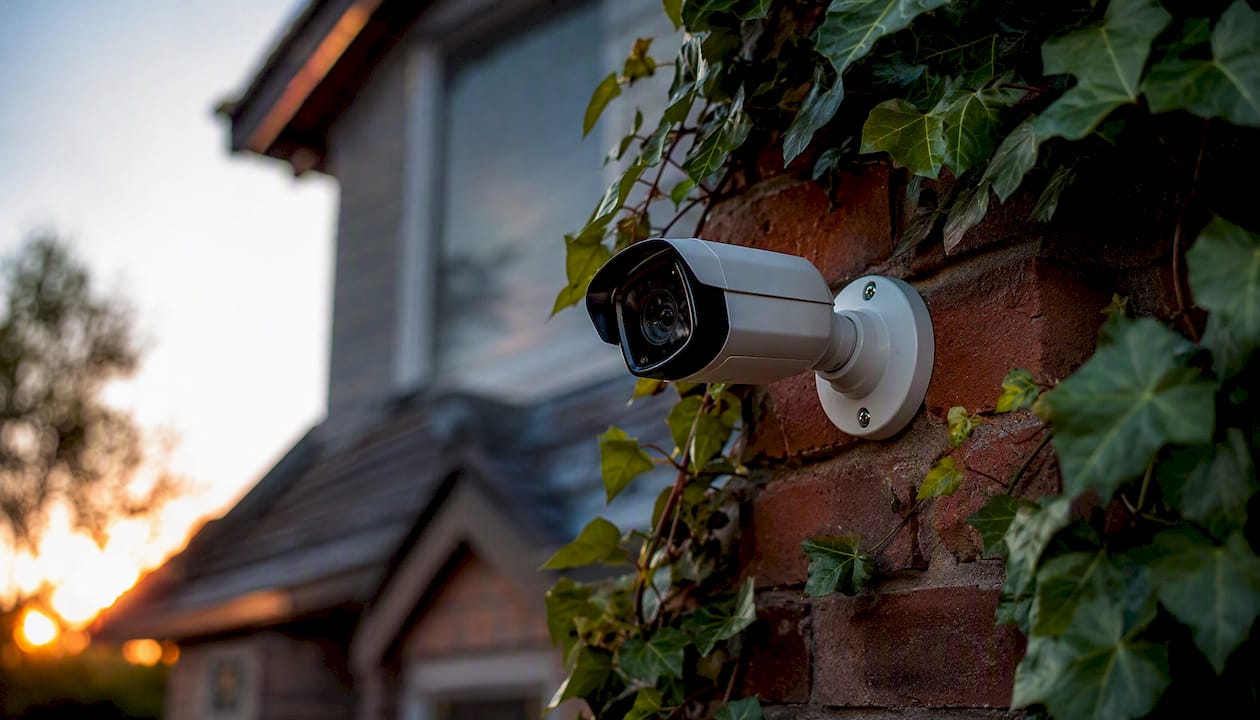
A camera that’s installed but untested is just decoration. Position units to cover every entry point, front door, back door, garage, and any side gate, and check for blind spots created by fences, planters, or parked cars. Night vision matters more on vacation than any other time, since most attempted break-ins happen after dark when you’re not there to notice a light left on.
Testing has to go beyond “is it plugged in.” Confirm:
- The live feed loads on your phone
- Push notifications actually arrive, tested from outside your home network
- Cloud storage or local recording is capturing footage, not just streaming it
- Two-way audio works, if your system has it
That last point about notifications deserves its own step. Reviews treats confirming alerts as separate from confirming installation, and that distinction is worth taking seriously. A camera can be perfectly online while your phone silently fails to receive the alert, usually because of a notification setting buried three menus deep.
From there, you’re choosing between self-monitoring and professional monitoring. Self-monitoring costs less month to month but puts the burden on you to notice and respond to alerts in real time, which gets harder across time zones. Professional monitoring adds a monthly fee in exchange for 24/7 dispatch, and Consumer Reports’ buying guide notes that most modern systems are wireless enough to install yourself either way. A growing middle option is short-term or on-demand professional monitoring, which some providers offer specifically for trips, letting you add coverage for the two weeks you’re gone and drop it after.
Pro Tip: Tighten your motion zones and sensitivity before you leave. A camera that fires ten false alerts a day from blowing branches trains you to ignore notifications, which defeats the entire point of confirming they work.
Locking Down Doors, Windows, Garages, and Valuables
Cameras record a break-in. Good locks prevent one. Check every deadbolt for smooth operation, and if you have smart locks, confirm the app shows the correct locked status rather than trusting the physical click. Sliding doors need a secondary bar or dowel in the track, since the factory lock on most patio doors is trivial to force. Don’t forget garage doors and pet doors, both common entry points that get less attention than the front door.
For valuables, a bolt-down or in-floor safe beats a hidden one every time. A safe someone can carry out under one arm isn’t doing much. Photograph valuables and record serial numbers before you go, and store that inventory somewhere other than the house, a cloud folder or a relative’s email works fine.
- Verify deadbolts and smart lock status match reality
- Add a secondary bar to sliding glass doors
- Check garage door locks and pet door security
- Move high-value items into a bolted-down safe
- Keep a photo inventory backed up off-site
If your door frame flexes when you push on the locked door, that’s a strike plate problem, not a lock problem, and it’s worth fixing before a trip rather than after a break-in. One Day Doors & Closets covers common door vulnerabilities that apply directly here.
Pro Tip: A bolt-down safe reduces theft risk even if someone gets inside your house, since removing it takes tools and time most burglars won’t spend.
Making Your House Look Occupied While You’re Gone
An empty house has a rhythm: no lights after dark, no mail movement, no cars. Breaking that rhythm is cheap and effective. Set lighting timers on multiple circuits, porch, living room, upstairs, so the pattern looks like someone’s actually moving through the house rather than one lamp switching on at 7 p.m. every single night. Nationwide’s home security guidance recommends varying the timing slightly and using more than one device, since a perfectly repeating on/off loop reads as fake to anyone watching closely.
- Set light timers on at least two rooms with staggered, varied timing
- Request USPS Hold Mail online, keeping in mind the 3 to 30 day window
- Arrange a neighbor pickup for packages if you’re gone longer than the hold allows
- Redirect expected deliveries to a locker or your workplace if timing is tight
Packages piling up on a porch are one of the most visible vacancy signals there is, and USPS Hold Mail solves it for a stretch up to 30 days. Beyond that window, your options are a trusted neighbor, carrier redirect to a locker location, or having packages sent to your office. Keep the Hold Mail confirmation number somewhere you can find it, since you’ll need it if you extend the trip or the request needs to be adjusted.
Life-Safety Checks You Shouldn’t Skip
Security means nothing if the house burns down while you’re gone. Test every smoke and carbon monoxide detector before you leave, and replace batteries rather than pulling them out to silence a chirp. Detectors that beep from low batteries can keep going for days in an empty house, and fixing it before departure is far easier than troubleshooting from another time zone.
- Test smoke and CO detectors, replace weak batteries
- Check fire extinguisher access and expiration date
- Set water heater and HVAC to vacation or eco mode
- Shut off main water supply for trips longer than a week to avoid leak damage
- Unplug electronics that don’t need standby power
Never disable a smoke or CO detector to stop a chirp. A dead detector during a real fire is a far worse outcome than an annoying beep, and it’s an unnecessary risk for the sake of five minutes’ convenience. Reviews.org’s checklist flags exactly this: check batteries before the trip so the issue never comes up while you’re away.
What to Do if Your Alarm Triggers While You’re Away
If you self-monitor, check the live camera feed first. If something looks wrong, call a trusted neighbor or your local police non-emergency line before assuming the worst, then escalate to 911 only if the footage shows an actual intrusion.
- Pull up the live feed immediately
- Contact a neighbor or local contact to check in person
- Call police non-emergency unless there’s clear evidence of a break-in, then call 911
- Confirm your monitoring center has current emergency contacts and your travel dates
If you’re professionally monitored, update your emergency contacts before you leave. This matters more than people realize: Consumer Reports explains that e911 for a monitored alarm system routes to the dispatcher covering your home’s address, not wherever you happen to be standing when you call 911 yourself from abroad. If the monitoring center’s contact list is outdated, response gets delayed exactly when you need it fastest.
Pro Tip: Give a neighbor or property manager written, pre-authorized permission with your monitoring company to enter the house for an emergency check. Without it, a monitoring center often can’t act on a triggered alarm beyond calling you.
Securing Landscaping and Removing Easy Access Points

Overgrown shrubs near windows and low tree branches near a second story aren’t just yard maintenance problems, they’re entry aids. Anything a person can climb, hide behind, or use for leverage near a door or window makes forced entry faster and quieter. Trim back bushes near ground-floor windows so there’s no cover for someone working a lock, and cut tree limbs that reach close enough to a balcony or upper window to act as a ladder.
Ladders, patio furniture, trash cans, and even stacked firewood left near the house give an intruder something to stand on or move into position. Lock these away in a shed or garage rather than leaving them in the yard while you’re gone. Gravel or crushed rock under windows is a low-cost addition that makes approaching quietly much harder, since footsteps on loose stone carry.
Motion-activated exterior lighting works alongside your landscaping choices rather than replacing them. A dark side yard with a convenient climbing route is a bigger risk than a well-lit one, even with cameras covering it. Value Blinds Direct’s home security basics guide covers window vulnerability in more depth, particularly around ground-floor and basement windows that landscaping tends to obscure from view.
None of this needs to happen the week you leave. Fold a landscaping check into your regular yard maintenance a few weeks before travel, so it’s one less thing on the pre-trip list.
Planning Pet Care Without Creating a Security Gap
Pets complicate vacation security in ways people don’t plan for. A pet sitter needs house access, which means either a spare key handed off in advance or a smart lock code you can revoke after the trip. Codes are safer, since you’re not tracking down a physical key from someone after the fact.
If you’re using a doggy door, understand it’s also a potential entry point, and one that’s easy to overlook since it’s rarely locked the way a regular door is. Some pet doors can be manually locked or blocked when you’re traveling without the pet, but if a sitter or boarding situation means the animal stays elsewhere, secure that opening completely rather than leaving it accessible.
Coordinate visit timing with your sitter so it doesn’t create a predictable pattern, the same daily arrival at 4 p.m. sharp is its own kind of visible routine. Vary it slightly, and make sure the sitter knows your camera system is active so their visits don’t trip unnecessary alerts or, worse, get mistaken for an intruder if you’re not watching the feed closely. Share basic instructions on how to arm and disarm the system, since a sitter fumbling with an unfamiliar alarm panel is a real and common problem.
If boarding is the better option for a longer trip, it also removes the pet-door access question entirely and simplifies the whole security picture while you’re gone.
Author perspective on trade-offs and when to hire professional help
DIY systems win on cost and customization for shorter trips. Once you’re gone more than two weeks, own a higher-value property, or you’re traveling during a season with more reported burglaries, professional monitoring earns its fee. Short-term monitoring add-ons split the difference well. For configuration help, Safes and Security Direct stocks the cameras, safes, and kits this guide references.
How Safes and Security Direct Can Help Prepare Your Home for a Vacation
Most of what this guide covers, working cameras, a real safe, a system that actually notifies you, comes down to having the right hardware before you’re standing in the driveway with a suitcase. Safes and Security Solutions sells surveillance camera systems with cloud storage and mobile alerts, bolt-down and fire-resistant safes, and starter security kits built for exactly the pre-trip testing this article walks through.
If you’re assembling a vacation-ready setup for the first time, or replacing a camera that never sends alerts reliably, the Safes and Security Direct product catalog covers pre-configured kits with clear specs, so you’re not guessing whether a camera’s night vision range or a safe’s fire rating actually fits your house. Browse the current lineup, check specs against your entry points and valuables, and get an order placed with enough lead time to test everything before your trip, not the night before.