

Three Conditions for a Garage Gun Safe That Actually Lasts
Putting a gun safe in a garage can be acceptable, but only under three conditions: the safe is bolted down, humidity stays controlled, and the unit carries a real fire rating. Skip any one of those and you’re trading convenience for corrosion, sticky electronic locks, or a safe a thief can tip and roll into a truck bed. If you’re set on the garage, treat anchoring, humidity control, and fire protection as non-negotiable, and check your electronic lock’s cold-weather rating before you buy.
TL;DR:
- Garages experience significant temperature swings and high humidity, increasing rust, corrosion, and electronic lock failures in gun safes not designed for harsh environments.
- Proper anchoring of the safe to a concrete slab or structure is essential, with specific hardware needed for different floor types, to prevent theft by easy tipping or removal.
- Humidity control options like desiccants, heater rods, or plug-in dehumidifiers are recommended, especially in humid regions, to prevent internal condensation and rust.
- Mechanical locks are more reliable in garages because they are unaffected by temperature-related electronic failures, though electronic locks offer faster access for everyday use.
- Regular inspections for rust, pest activity, and lock functionality are critical, with monthly checks and seasonal maintenance to ensure safety and longevity of firearms stored in a garage safe.
Table of Contents
- Is a Gun Safe in the Garage Actually Safe for Your Firearms?
- How Do You Anchor a Gun Safe Securely in a Garage?
- What’s the Best Way to Control Humidity Inside a Garage Safe?
- Mechanical, Electronic, or Biometric: Which Lock Handles a Garage Best?
- How Often Should You Inspect a Garage Gun Safe?
- Do Garage Safes Attract Pests, and How Do You Stop Them?
- What Are the Tools and Steps for Installing a Garage Gun Safe?
- What Laws Apply to Storing Firearms in a Garage?
- Which Safe Types Actually Hold Up in a Garage?
- What Setup Should You Actually Buy? Three Real Garage Configurations
- Why the “Just Get Any Safe” Advice Fails Garage Owners
- Ready to Set Up Your Garage Safe the Right Way?
- Sources
Is a Gun Safe in the Garage Actually Safe for Your Firearms?
Garages are the harshest room in most houses for anything made of steel and finished wood. Temperatures swing 40 or 50 degrees between a July afternoon and a January night, and that swing drives humidity risk more than almost anything else you’ll deal with as a safe owner.
Here’s the mechanism. Warm, moist air holds more water vapor than cold air. When a garage cools overnight, the air inside a sealed safe cools too, and any moisture it’s holding condenses on the coldest surfaces it touches, usually the steel walls and your gun barrels. This happens even in safes that look airtight, because no gun safe is actually sealed. Vents, bolt holes, and lock mechanisms all let air exchange slowly with the outside environment. High humidity and temperature swings common in garages accelerate rust and corrosion, and that process doesn’t need a leaky roof or a flood to get started. Ordinary seasonal cycling does it.
Corrosion doesn’t wait for you to notice a problem. Bare steel exposed to condensation can develop visible surface rust in as little as a few weeks under the wrong conditions, and blued finishes aren’t much tougher. Once rust starts pitting a barrel or receiver, you’re looking at refinishing costs or a diminished-value firearm, not just a cleaning job.
Temperature extremes hit more than metal. Wood stocks expand and contract with humidity changes, which loosens bedding and can crack stocks over years of cycling. Lubricants and gun oils thin out in heat and thicken in cold, changing how your action cycles. Electronic lock keypads and circuit boards are rated for specific operating temperature ranges, and a garage that hits 15°F in winter or 110°F in summer can push cheaper electronics outside their spec, causing intermittent failures or dead keypads exactly when you need fast access.
Fire risk in a garage is a different animal than fire risk in a bedroom closet. Garages routinely store gasoline, propane, solvents, and other flammable liquids, which means a garage fire can burn hotter and faster than a typical house fire. Because garages often contain flammable liquids and can expose safes to higher heat, choosing a safe with an appropriate fire rating matters more here than almost anywhere else in the house.
A handful of practical consequences follow directly from this environment:
- Manufacturer warranties on finish and electronics often exclude damage from “extreme” or “uncontrolled” environments, so unmitigated garage humidity can void coverage you thought you had.
- Rust that starts on the exterior shell can migrate to interior hinges and bolt work over time, making the door harder to seal properly.
- Electronic components that fail intermittently in cold weather are often misdiagnosed as lock defects rather than temperature issues.
- A fire-rated safe bought for a climate-controlled closet may not carry a rating suited to a garage fire fed by stored fuel.
None of this means the garage is off the table. It means you’re managing a harsher environment than the safe was probably designed for by default, and every decision downstream (which safe, which lock, which accessories) should account for that.
How Do You Anchor a Gun Safe Securely in a Garage?
Garages are also the easiest room in the house for a thief to work in undetected, which is exactly why anchoring matters more here than in a bedroom or basement. A safe sitting loose on a slab isn’t secure. It’s just heavy, and heavy items get moved with a hand truck and two people in under five minutes.
- Confirm your floor type first. Most garages have a poured concrete slab, but some have a thinner apron slab or even a wood subfloor over a crawl space, and each needs different hardware.
- Drill for concrete anchors on a slab. Heavy-duty concrete anchor bolts through the safe’s pre-drilled floor holes are the standard method, and bolting to concrete with heavy-duty anchors is the preferred installation approach recommended across most how-to guides and manufacturer instructions.
- Use lag bolts into joists for wood subfloors, and confirm you’re hitting structural framing, not just decking, or the anchor point will pull loose under load.
- Level the safe before you bolt it down. Garage slabs often slope slightly toward a drain, and shims under the low side keep the door from swinging open or shut on its own weight.
- Position it away from the garage door’s sightline. A safe visible through a window or an open garage door is a target list item, not just furniture.
- Add a door sensor or motion-triggered camera covering the safe’s location, tied into your existing alarm system if you have one.
If your garage floor is uneven or cracked, don’t skip anchoring. Self-leveling concrete patch under the base plate, combined with longer anchor bolts, solves most of these situations without a full slab repair. For floors that won’t accept a standard concrete anchor at all (some finished garages have decorative overlays or radiant heat lines close to the surface), there are anchoring methods suited to almost any floor type that avoid drilling into vulnerable layers.
Pro Tip: A safe under 750 pounds without anchoring can be tipped by two people in under a minute. Anchoring isn’t about the lock at all. It’s about removing the option to just take the whole box.
For a full walkthrough of torque specs and anchor selection by safe weight, see our step-by-step guide to anchoring a gun safe the right way.
What’s the Best Way to Control Humidity Inside a Garage Safe?
You don’t need to climate-control your whole garage to protect what’s inside the safe. Most gun owners solve this with an interior accessory that costs less than a range trip.
Desiccant packs and rechargeable dehumidifier canisters are the entry point. They absorb ambient moisture inside the safe’s interior air pocket, and rechargeable versions can be dried out in an oven and reused. The catch is maintenance discipline: desiccants are low-cost but need regular replacement or recharging to keep working, and a forgotten, saturated pack does nothing.
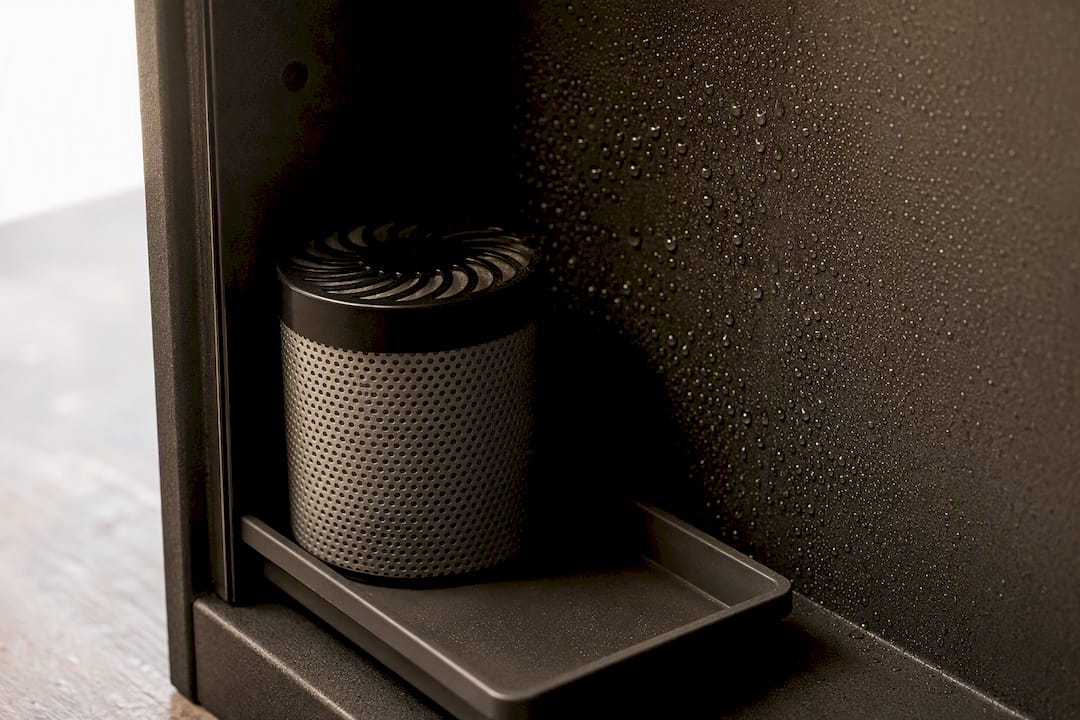
Goldenrod-style heater rods take a different approach. Instead of absorbing moisture, they raise the interior air temperature a few degrees above ambient, which keeps the air below the dew point where condensation would otherwise form. Heater rods reduce condensation risk by raising interior temperature slightly, and they run continuously with no replacement schedule, just a power outlet.
Compact plug-in dehumidifiers designed for safe interiors sit between these two options: more active than a desiccant, less passive than a heater rod, and they often include a small fan for air circulation.
When does accessory-level control stop being enough? If your garage regularly sits above 60% relative humidity for weeks at a time, or if you live somewhere with genuinely humid summers, a whole-garage approach (a standalone room dehumidifier, or insulating and lightly conditioning the garage itself) starts paying for itself in reduced maintenance and fewer ruined desiccant packs. Insulating a garage wall and ceiling section around the safe typically runs a few hundred dollars in materials for a DIY job, considerably less than refinishing a corroded firearm collection.
A few practical notes worth keeping in mind:
- A hygrometer placed inside the safe gives you an actual number instead of a guess, and pairing readings with a replacement schedule turns guesswork into routine maintenance.
- Heater rods draw continuous low-wattage power, so factor that into any battery-backup or outage planning for the garage circuit.
- Combining a heater rod with a desiccant pack covers both moisture removal and condensation prevention, which is more effective than either alone.
Our guide on protecting firearms from humidity breaks down specific product options and replacement intervals in more detail.
Mechanical, Electronic, or Biometric: Which Lock Handles a Garage Best?
Garage conditions punish electronics in ways a climate-controlled bedroom closet never will, and that’s the single biggest factor in choosing a lock for this location.
Mechanical (simplex/dial) locks have no battery to die and no circuit board to fail in the cold. Reviewers commonly advise mechanical locks for critical safes precisely because they avoid the battery-dead failure mode that electronic keypads can hit in freezing temperatures. The tradeoff is speed: dialing a mechanical combination takes longer than punching a code or scanning a fingerprint, which matters if the safe is meant for quick defensive access.
Electronic keypad locks are faster and easier for multiple household members to use, but they depend on a battery that a cold garage will drain faster than a temperature-controlled room. Reviewer testing notes recommend mechanical locks where reliability under power loss is a concern, which is exactly the scenario a garage creates during a winter storm or an extended power outage.
Biometric locks offer the fastest access of the three when they work, reading a fingerprint in under a second on most models. Humidity and temperature swings can affect sensor accuracy over time, though, so a biometric unit in a garage benefits from a backup mechanical override far more than the same lock in a bedroom would. Our breakdown of biometric gun safe advantages covers which models hold up best in variable conditions.
A few habits reduce risk no matter which lock you choose:
- Replace keypad batteries on a fixed calendar schedule, not when they die, since garage cold shortens battery life unpredictably.
- Keep a spare mechanical override key somewhere outside the garage, never taped to the safe itself.
- Test the lock monthly rather than assuming it still works because it worked last time.
- Store ammunition in a separate, locked container from the firearms themselves, a baseline practice safety campaigns like Be SMART recommend regardless of where the safe sits in the house.
Layering a simple lock box or cable lock alongside your main safe adds a second barrier that costs little and complicates any theft attempt further.
How Often Should You Inspect a Garage Gun Safe?
Garage safes need more frequent attention than safes kept indoors, simply because the environment changes faster and does more damage per season.
- Check the hygrometer reading monthly and log it somewhere consistent, so a slow upward drift shows up before it becomes a problem.
- Inspect and recharge or replace desiccant packs monthly, tying the task to a fixed date like the first of the month so it doesn’t slip.
- Test the lock and check battery level monthly, cycling the mechanism even if you haven’t opened the safe for any other reason.
- Do a quick interior visual scan for surface rust on firearms, shelving, and the interior door lining every time you open the safe.
- Run a deeper seasonal inspection each spring and fall: check door seals for gaps, lubricate hinges lightly, and inspect bolt work for binding.
- Document serial numbers, storage conditions, and photos of your firearms periodically, a practice state safe-storage programs specifically recommend for insurance claims and recovery after theft.
Minor surface rust responds well to a light coating of gun oil worked in with fine steel wool or a bronze brush, followed by a fresh application of rust preventive. If you’re seeing pitting, discoloration that won’t buff out, or rust on internal moving parts like the bolt mechanism, stop and take the firearm to a gunsmith rather than risk damaging the finish further or affecting function.
Do Garage Safes Attract Pests, and How Do You Stop Them?
Garages host more insects and rodents than any other part of most homes, and a gun safe sitting against a garage wall becomes an attractive, undisturbed shelter. Mice and roaches are drawn to the dark, still air pocket a large steel box creates, especially near the base where gaps and packing materials sometimes remain from installation.
Rodents chewing through gun cases, silicone-treated gun socks, or foam liner material inside a safe is a real and recurring complaint among garage-safe owners. Insects, particularly ants and roaches, are drawn to the salts and oils on firearm surfaces and can leave residue that promotes corrosion in spots you won’t notice until you do a full inventory.
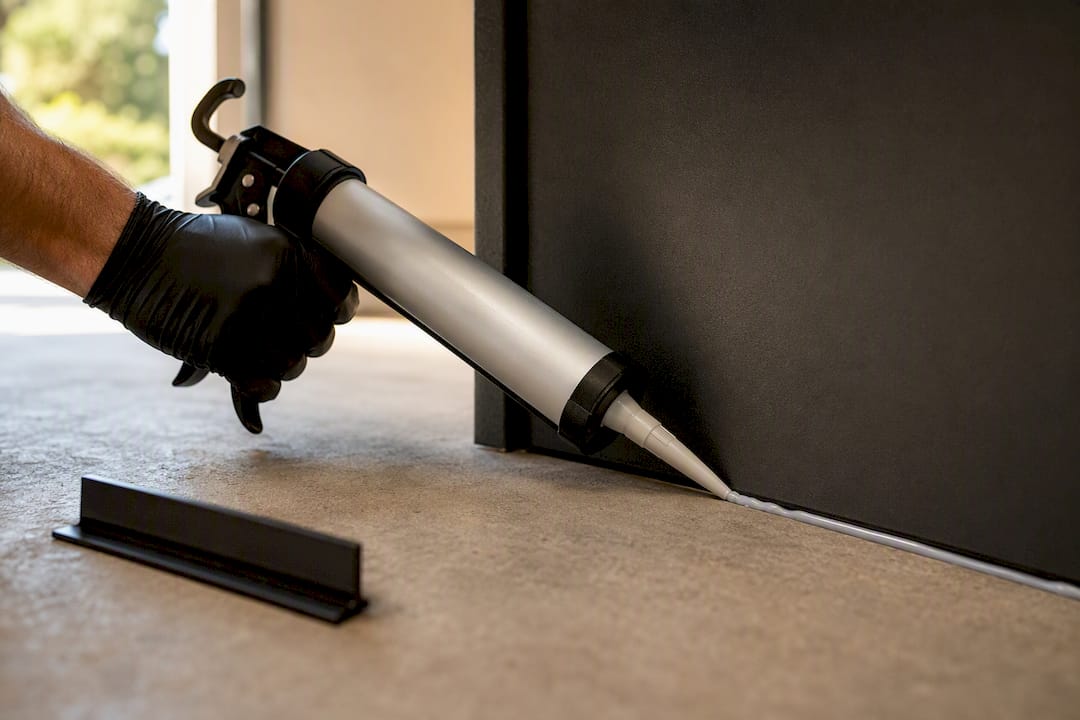
A few prevention steps handle most of this risk. Seal any gap between the safe’s base and the floor with a bead of silicone caulk, which blocks the easiest entry point for crawling insects. Keep the area immediately around the safe clear of cardboard boxes and stored fabric, since those materials are exactly what mice nest in. A cedar-based rodent deterrent or a few pest-repellent packets placed inside the safe (not directly touching firearms) adds a passive layer of protection without introducing moisture the way some sprays do.
Check for pest activity during your monthly interior inspection, looking specifically for droppings, chew marks on gun socks or foam, or insect casings in corners. Catching an infestation in its first weeks means cleaning and resealing. Catching it months later can mean replaced liners, damaged cases, and firearms that need a full cleaning before they’re safe to fire again.
What Are the Tools and Steps for Installing a Garage Gun Safe?
A weekend afternoon and a modest tool list are enough to get a garage safe properly installed, provided you plan the sequence before the delivery truck shows up.
Tools and materials you’ll need:
- Hammer drill with masonry bits sized to your anchor bolts
- Heavy-duty concrete anchor bolts (or lag bolts and a stud finder for wood subfloors)
- Socket wrench or impact driver
- 4-foot level
- Shims for uneven flooring
- Silicone caulk for base sealing
- A hand truck or appliance dolly rated for the safe’s weight, plus a helper or two for anything over 400 pounds
Step-by-step sequence:
- Choose the final location first, factoring in sightlines from the garage door, proximity to flammable storage, and distance from exterior walls where temperature swings are most extreme.
- Confirm floor type and structural support before delivery day, so you’re not improvising an anchoring method with the safe already sitting in place.
- Position the safe using the dolly, then check level in both directions before you commit to drilling.
- Mark and drill anchor holes through the safe’s pre-drilled floor mounting points.
- Set anchors, torque bolts to the manufacturer’s specification, and recheck level.
- Seal the base perimeter with silicone caulk to block pests and reduce airflow underneath.
- Install your desiccant pack or heater rod before loading firearms, so the interior starts drying out immediately.
- Load firearms, set your combination or enroll biometric users, and test the lock several times before considering the job done.
What Laws Apply to Storing Firearms in a Garage?
Federal law doesn’t specify where inside a home a firearm must be stored, but state and local rules vary, and a garage doesn’t get special treatment or special exemption under most of them. If your state has a child-access-prevention or safe-storage statute, those requirements (unloaded, locked, inaccessible to unauthorized users) apply to a garage safe exactly the way they’d apply to a bedroom closet.
A few states impose specific storage requirements when a minor is reasonably expected to be in the home, and some localities layer on additional rules for storage in detached structures or unsecured outbuildings, which can matter if your garage is detached from the main house rather than attached. Homeowners’ insurance policies sometimes have their own storage clauses tied to burglary claims, separate from any state law, so it’s worth confirming what your specific policy requires before you assume a locked, unanchored cabinet satisfies your coverage terms.
Because these rules genuinely differ by state and even by municipality, and because insurance requirements add a second layer on top of the law, check your state attorney general’s office or a licensed firearms attorney for anything specific to your situation rather than relying on general guidance. What’s consistent everywhere: storing firearms unloaded, locked, and separate from ammunition is the baseline safety practice safety campaigns recommend regardless of which room the safe sits in, and satisfying that baseline in a garage takes the extra environmental steps this article covers.
Which Safe Types Actually Hold Up in a Garage?
Not every safe on the market is built for the swings a garage puts it through, and picking the wrong category is the single most common mistake among first-time garage-safe buyers.
Look for a fire rating that matches garage-specific fire risk, not just a generic “fireproof” label. A unit rated for sustained higher-heat exposure, like a UL-listed fire safe built to withstand a two-hour fire test, holds up better against a fuel-fed garage fire than a safe rated only for typical residential fire conditions. The American Security UL1511 UL Listed 2 Hour Home Fire Safe is built around exactly that longer burn-time standard.
For owners who want burglary resistance and fire protection combined in one unit, a dual-rated burglary and fire safe avoids the tradeoff of choosing one protection over the other. Models like the American Security BFS2214 Burglary and Fire Safe pair a reinforced burglary-resistant body with fire-rated insulation, which matters more in a garage than almost anywhere else in the house given the theft and fire risks both concentrate there.
Smaller households or those with limited garage floor space sometimes look at a compact interior safe as a secondary layer rather than a primary storage solution; a furniture-style economical safe option can work as budget-friendly backup storage for smaller valuables alongside a full-size unit, though it shouldn’t replace a properly rated gun safe as your primary firearm storage.
Whatever you choose, confirm the interior is prepped to accept a desiccant or heater rod without voiding the fire insulation, since some budget models pack the door cavity in a way that leaves no practical space for accessories.
What Setup Should You Actually Buy? Three Real Garage Configurations
Anchoring, humidity control, and fire protection work best combined, not chosen individually, and that’s the core idea behind every setup we recommend for garage installations.
Budget setup: A compact fire-resistant safe like the American Security BFS912 Burglary and Fire Safe, anchored with a basic concrete bolt kit, plus a rechargeable desiccant pack replaced monthly. This covers the three essentials without the cost of a full-size unit or continuous-power accessories.
Mid-range setup: A larger dual-rated safe such as the BFS2214, anchored and shimmed level, paired with a Goldenrod-style heater rod running continuously rather than a desiccant you have to remember to swap. Add a door sensor tied into an existing home alarm system for theft deterrence.
Premium setup: A UL-listed two-hour fire safe like the UL1511, professionally anchored into a reinforced slab section, with both a heater rod and a compact plug-in dehumidifier running together, plus a biometric lock with mechanical override for fast, reliable access. This tier suits owners with larger collections or higher-value firearms where replacement cost justifies the extra investment.
Our guide to protecting firearms from humidity and our anchoring walkthrough fill in the specifics for whichever tier fits your garage and budget.
Why the “Just Get Any Safe” Advice Fails Garage Owners
Most safe-buying advice treats the garage like a bedroom with a bigger door, and that’s the mistake that leads to corroded barrels and dead keypads three winters later. A safe built and sold for indoor use assumes indoor conditions. The moment you move it to a garage, you’ve changed the environmental spec sheet without changing the product, and that gap is where most garage-safe complaints come from.
The uncomfortable truth is that a cheap safe with excellent humidity control and solid anchoring will outperform an expensive safe with neither, every time, in a garage setting. Owners fixate on gauge steel thickness and lock brand while skipping the $30 heater rod that would have prevented the actual failure they eventually experience. That’s backwards. Environmental control isn’t an accessory you add later. It’s part of the purchase decision, the same as anchoring hardware and fire rating.
The other overlooked point: electronic conveniences that work perfectly in a house can become the weak link in a garage. A biometric scanner that reads fingerprints instantly in a climate-controlled hallway can misread a cold, dry finger against a sensor that’s also cold. Mechanical backups aren’t a downgrade in this context. They’re the feature that keeps working when everything else in the garage is fighting the weather.
If you’re set on garage storage, buy for the environment first and the features second. Fire rating and anchoring hardware solve problems you can’t fix after a fire or a burglary. Humidity accessories solve a problem that compounds quietly for years if you ignore it.
— Safes and Security Solutions
Ready to Set Up Your Garage Safe the Right Way?
The gap between a garage safe that lasts twenty years and one that rusts out in three usually comes down to three things you buy once: the right fire rating, an anchoring kit, and interior prep for humidity control. This article recommends purchasing burglary and fire-rated safes built with the garage environment in mind, along with appropriate anchoring hardware to secure the safe properly to your slab.

Start by measuring your garage floor space and confirming whether you’re anchoring to concrete or a wood subfloor, since that determines which bolt kit you’ll need. From there, choose a fire rating suited to a garage’s higher fire risk (a two-hour rating like the American Security UL1511 is a solid baseline), decide between mechanical and electronic access based on how much cold your garage sees, and order an anchoring kit alongside your safe rather than as an afterthought. Browse the full lineup of fire and burglary safes built for exactly this kind of installation, and schedule delivery once your floor prep is confirmed.
Sources
For firearm storage options and price ranges, Project ChildSafe’s storage guide breaks down options by budget. The Be SMART campaign and NC S.A.F.E. cover safe-storage rationale and inspection checklists. For garage-specific installation help, see our internal guides on anchoring a gun safe and protecting firearms from humidity.